. 2017 Mar;41(3):516-530.
doi: 10.1111/acer.13316. Epub 2017 Feb 1.

Ethanol Consumption in Mice Lacking CD14, TLR2, TLR4, or MyD88

Affiliations

Ethanol Consumption in Mice Lacking CD14, TLR2, TLR4, or MyD88

Yuri A Blednov et al. Alcohol Clin Exp Res. 2017 Mar.

Abstract

Background: Molecular and behavioral studies support a role for innate immune proinflammatory pathways in mediating the effects of alcohol. Increased levels of Toll-like receptors (TLRs) have been observed in animal models of alcohol consumption and in human alcoholics, and many of these TLRs signal via the MyD88-dependent pathway. We hypothesized that this pathway is involved in alcohol drinking and examined some of its key signaling components.

Methods: Different ethanol (EtOH)-drinking paradigms were studied in male and female control C57BL/6J mice versus mice lacking CD14, TLR2, TLR4 (C57BL/10ScN), or MyD88. We studied continuous and intermittent access 2-bottle choice (2BC) and 1-bottle and 2BC drinking-in-the-dark (DID) tests as well as preference for saccharin, quinine, and NaCl.

Results: In the 2BC continuous access test, EtOH intake decreased in male TLR2 knockout (KO) mice, and we previously reported reduced 2BC drinking in male and female CD14 KO mice. In the intermittent access 2BC test, EtOH intake decreased in CD14 KO male and female mice, whereas drinking increased in MyD88 KO male mice. In the 2BC-DID test, EtOH drinking decreased in male and female mice lacking TLR2, whereas drinking increased in MyD88 KO male mice. In the 1-bottle DID test, EtOH intake decreased in female TLR2 KO mice. TLR2 KO and CD14 KO mice did not differ in saccharin preference but showed reduced preference for NaCl. MyD88 KO mice showed a slight reduction in preference for saccharin.

Conclusions: Deletion of key components of the MyD88-dependent pathway produced differential effects on EtOH intake by decreasing (TLR2 KO and CD14 KO) or increasing (MyD88 KO) drinking, while deletion of TLR4 had no effect. Some of the drinking effects depended on the sex of the mice and/or the EtOH-drinking model.

Keywords: 2-Bottle Choice and Drinking-in-the-Dark; CD14 KO; MyD88 KO; TLR2 KO; TLR4-Deficient (C57BL/10ScN) Mice.


Conflict of interest statement

The authors declare no conflicts of interest.

Figures
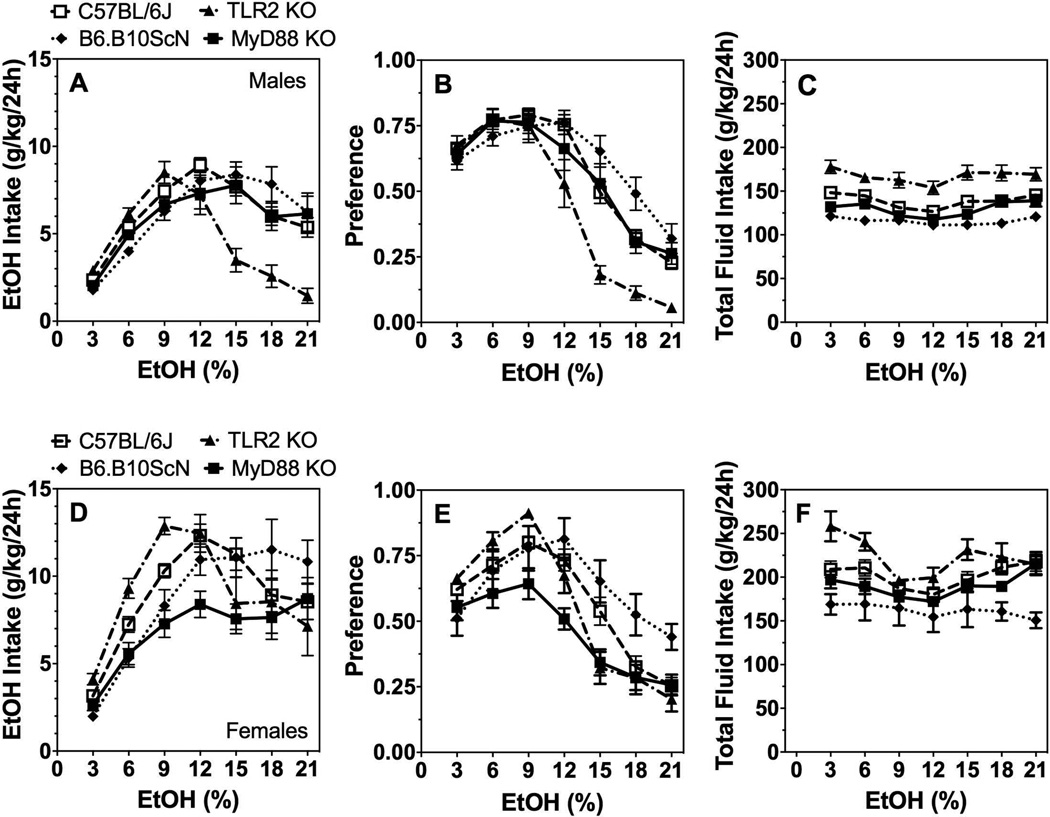
Figure 1
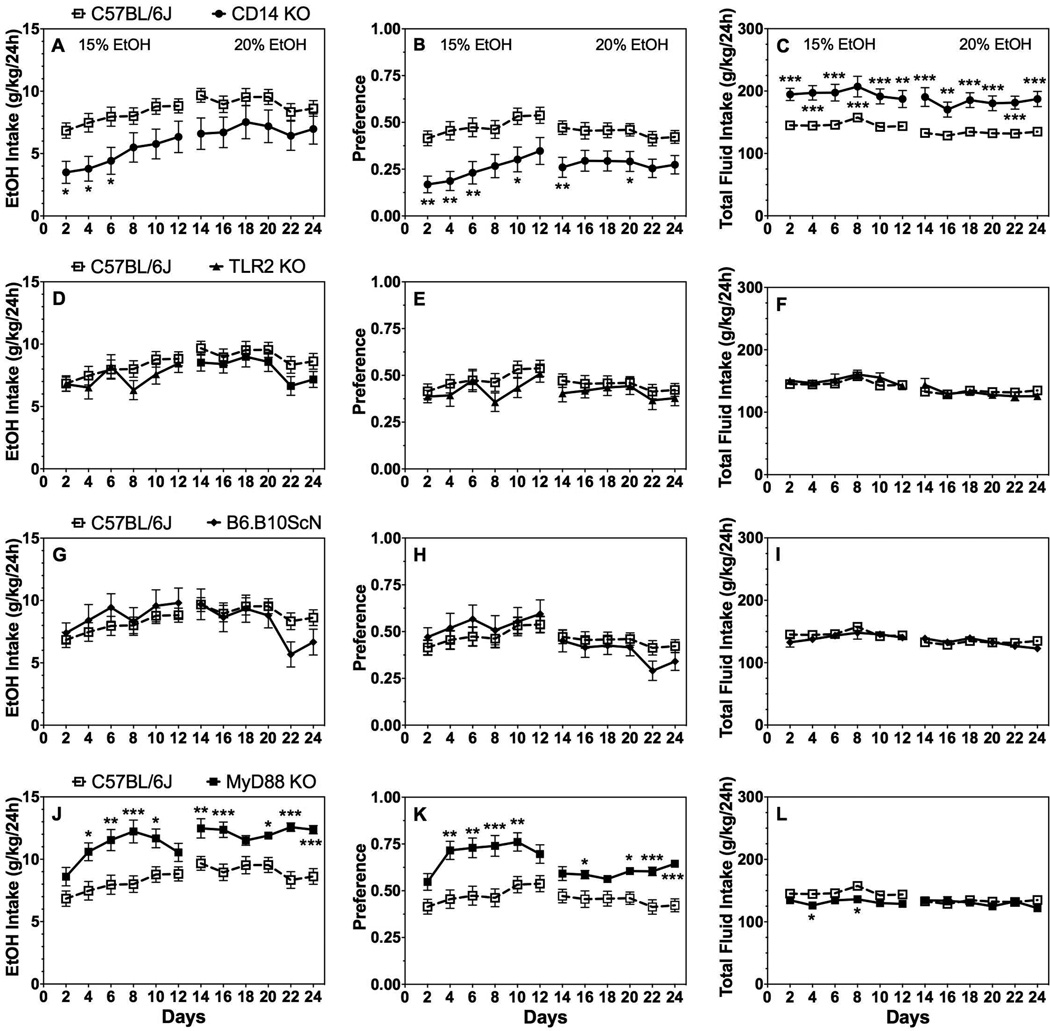
Figure 1. 2BC continuous access drinking in mice lacking TLR2, TLR4, or MyD88
Ethanol intake (g/kg/24h) (A), preference for ethanol (B), and total fluid intake (g/kg/24h) (C) in male control (C57BL/6J, n= 26) vs. mutant mice (n= 7, 12, and 16 for MyD88 KO, TLR2 KO, and TLR4 mutant, respectively). Ethanol intake (g/kg/24h) (D), preference for ethanol (E), and total fluid intake (g/kg/24h) (F) in female control (n= 26) vs. mutant mice (n= 7 for MyD88 KO; n= 10 for TLR2 KO and TLR4 mutant). Data were analyzed by repeated measures two-way ANOVA followed by Bonferroni post hoc tests.
Figure 2
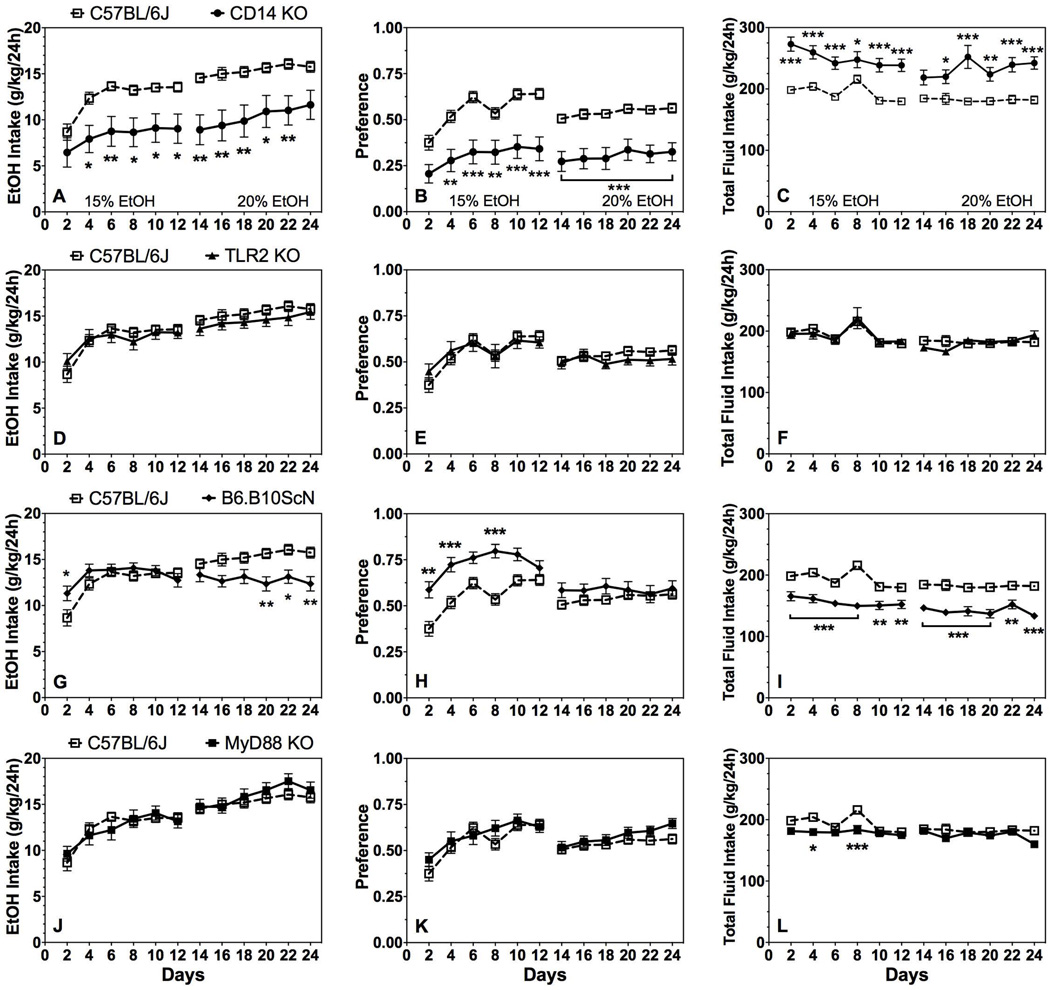
Figure 2. 2BC-EOD drinking in male mice lacking CD14, TLR2, TLR4, or MyD88
Ethanol intake (g/kg/24h) (A, D, G, J), preference for ethanol (B, E, H, K), and total fluid intake (C, F, I, L) in control (C57BL/6J, n=26) vs. mutant male mice (n= 18 for MyD88 KO, TLR2 KO, and CD14 KO; n= 12 for TLR4 mutant). Data were analyzed by repeated measures two-way ANOVA followed by Bonferroni post hoc tests (*P < 0.05, **P < 0.01, ***P < 0.001 compared to control).
Figure 3
Figure 3. 2BC-EOD drinking in female mice lacking CD14, TLR2, TLR4, or MyD88
Ethanol intake (g/kg/24h) (A, D, G, J), preference for ethanol (B, E, H, K), and total fluid intake (C, F, I, L) in control (C57BL/6J, n=22) vs. mutant female mice (n= 15 for TLR4 mutant; n= 16 for MyD88 KO, TLR2 KO, and CD14 KO). Data were analyzed by repeated measures two-way ANOVA followed by Bonferroni post hoc tests (*P < 0.05, **P < 0.01, ***P < 0.001 compared to control). Data above the horizontal lines indicate that each point was different from its corresponding control measure at the designated P-level.
Figure 4
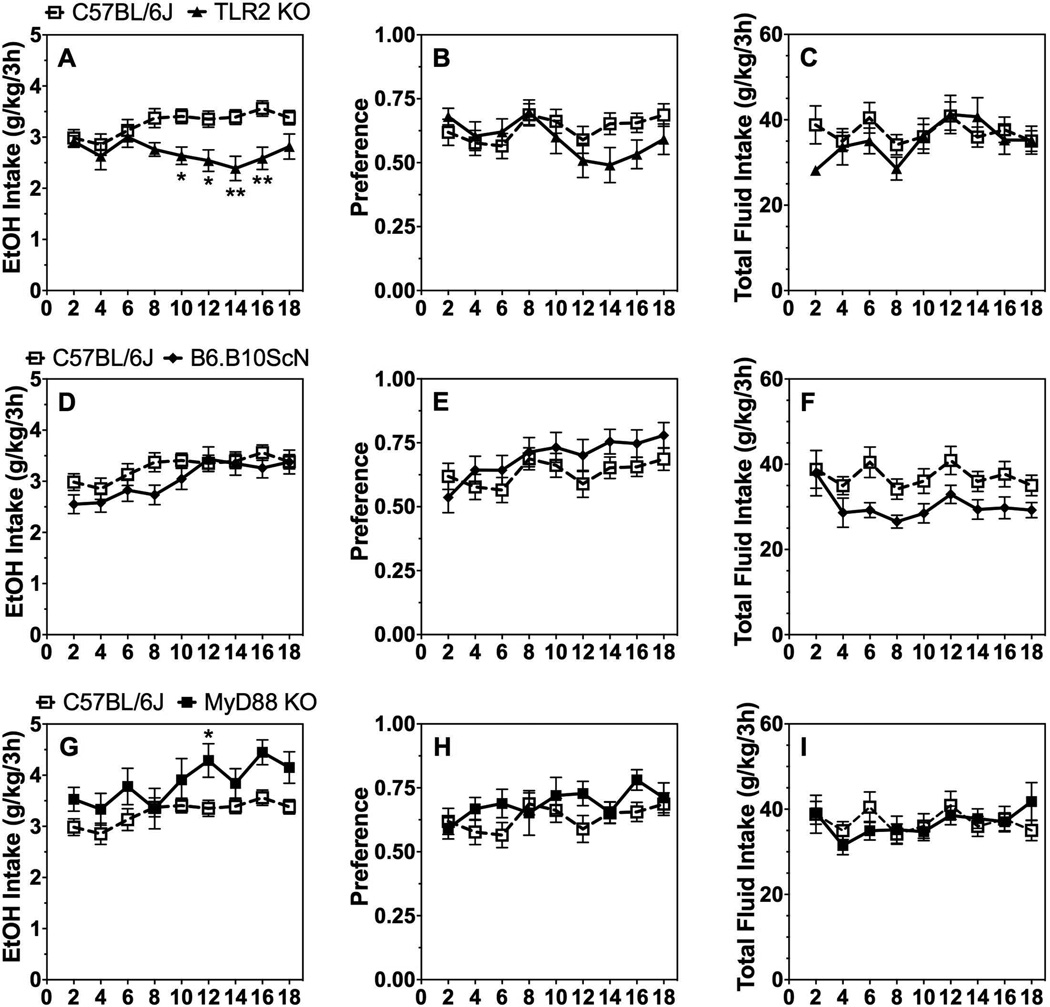
Figure 4. 2BC-DID in male mice lacking TLR2, TLR4, or MyD88
Ethanol intake (g/kg/24h) (A, D, G), preference for ethanol (B, E, H), and total fluid intake (C, F, I) in control (C57BL/6J, n=22) vs. mutant male mice (n= 10, 17, and 20 for MyD88 KO, TLR4 mutant, and TLR2 KO, respectively). Data were analyzed by repeated measures two-way ANOVA followed by Bonferroni post hoc tests (*P < 0.05, **P < 0.01 compared to control).
Figure 5
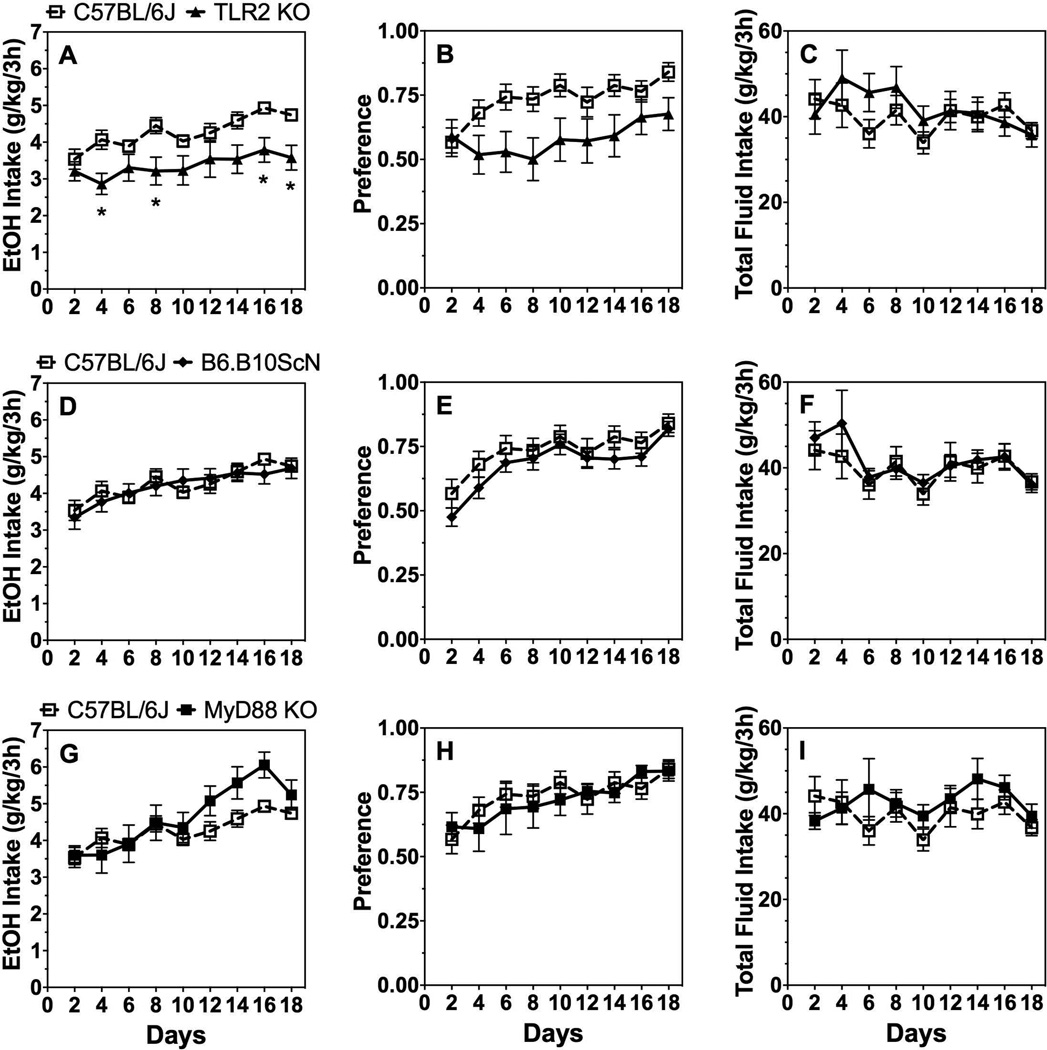
Figure 5. 2BC-DID in female mice lacking TLR2, TlR4, or MyD88
Ethanol intake (g/kg/24h) (A, D, G), preference for ethanol (B, E, H), and total fluid intake (C, F, I) in control (C57BL/6J, n=16) vs. mutant female mice (n= 10, 12, and 16 for MyD88 KO, TLR2 KO, and TLR4 mutant, respectively). Data were analyzed by repeated measures two-way ANOVA followed by Bonferroni post hoc tests (*P < 0.05 compared to control).
Figure 6
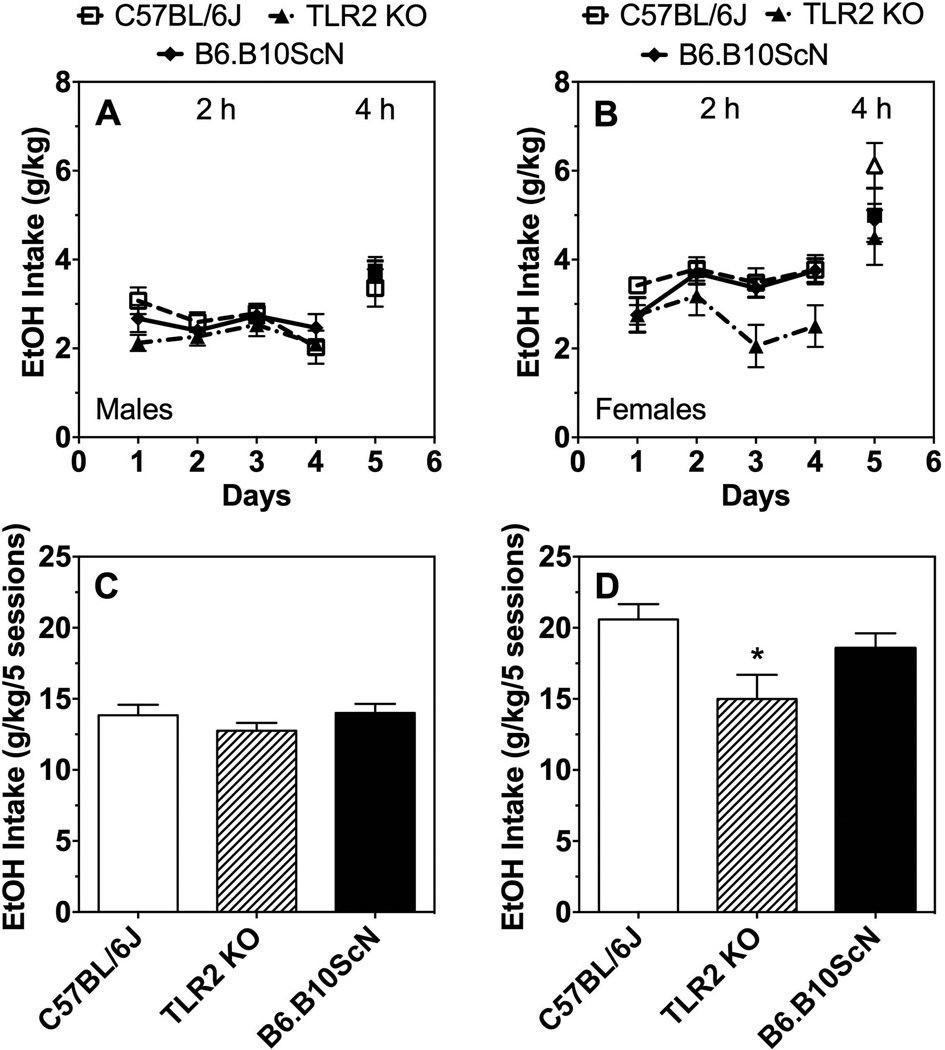
Figure 6. 1B-DID in male and female mice lacking TLR2 or TLR4
Ethanol intake (g/kg) after 2 and 4 h in male (A) and female (B) control (C57BL/6J) vs. mutant mice. Total ethanol intake (g/kg) over 5 drinking sessions in male (C) and female (D) control (C57BL/6J) vs. mutant mice. Data in panels A and B were analyzed by Student’s t-test or two-way ANOVA, and data in panels C and D were analyzed by one-way ANOVA (*P < 0.05); males: n= 9 for C57BL/6J; n= 10 for TLR2 KO and TLR4 mutant; females: n= 5 for TLR4 mutant, n= 6 for C57BL/6J and TLR2 KO.
Figure 7
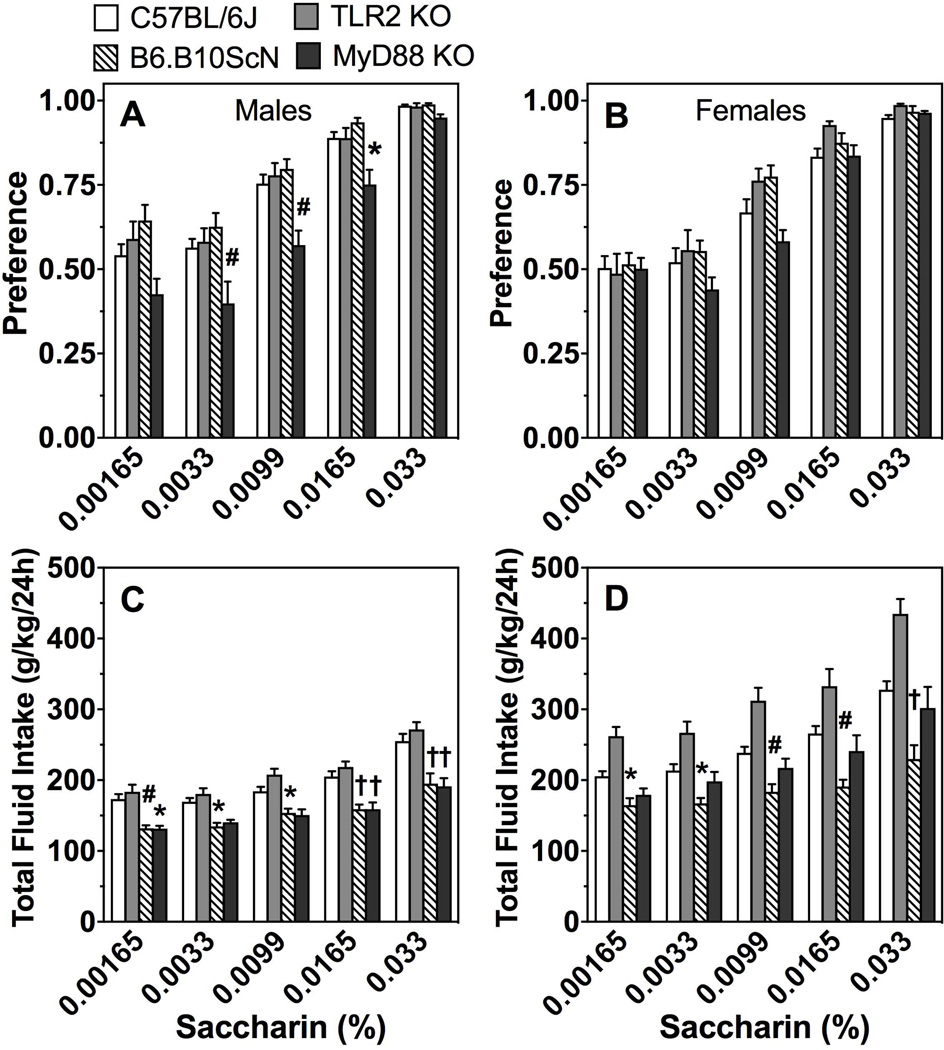
Figure 7. Saccharin consumption in mice lacking TLR2, TLR4, or MyD88
Preference for saccharin in male (A) and female (B) control (C57BL/6J) vs. mutant mice. Total fluid intake (g/kg/24h) in male (C) and female (D) mice. Data were analyzed by repeated measures two-way ANOVA followed by Bonferroni post hoc tests (*P < 0.05, #P < 0.01, P < 0.001); males: n= 7, 12, 16, and 24 for MyD88 KO, TLR2 KO, TLR4 mutant, and C57BL/6J, respectively; females: n= 7 for MyD88 KO; n= 10 for TLR2 KO and TLR4 mutant; n= 20 for C57BL/6J.
Figure 8
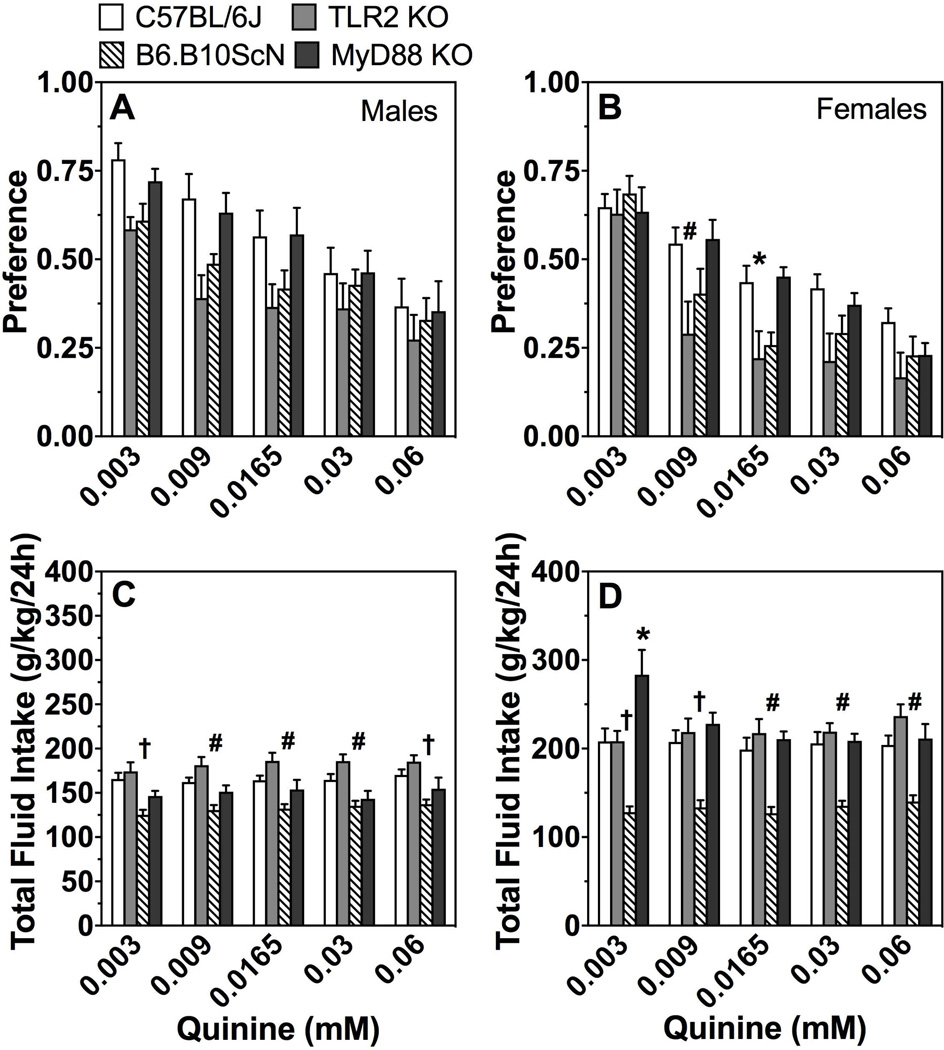
Figure 8. Quinine consumption in mice lacking TLR2, TLR4, or MyD88
Preference for quinine in male (A) and female (B) control (C57BL/6J) vs. mutant mice. Total fluid intake (g/kg/24h) in male (C) and female (D) mice. Data were analyzed by repeated measures two-way ANOVA followed by Bonferroni post hoc tests (*P < 0.05, #P < 0.01, P < 0.001 compared to control); males: n= 7 for MyD88 KO; n= 12 for TLR2 KO and TLR4 mutant; n= 16 for C57BL/6J; females: n= 7 for MyD88 KO; n= 10 for TLR2 KO and TLR4 mutant; n= 20 for C57BL/6J.
Figure 9
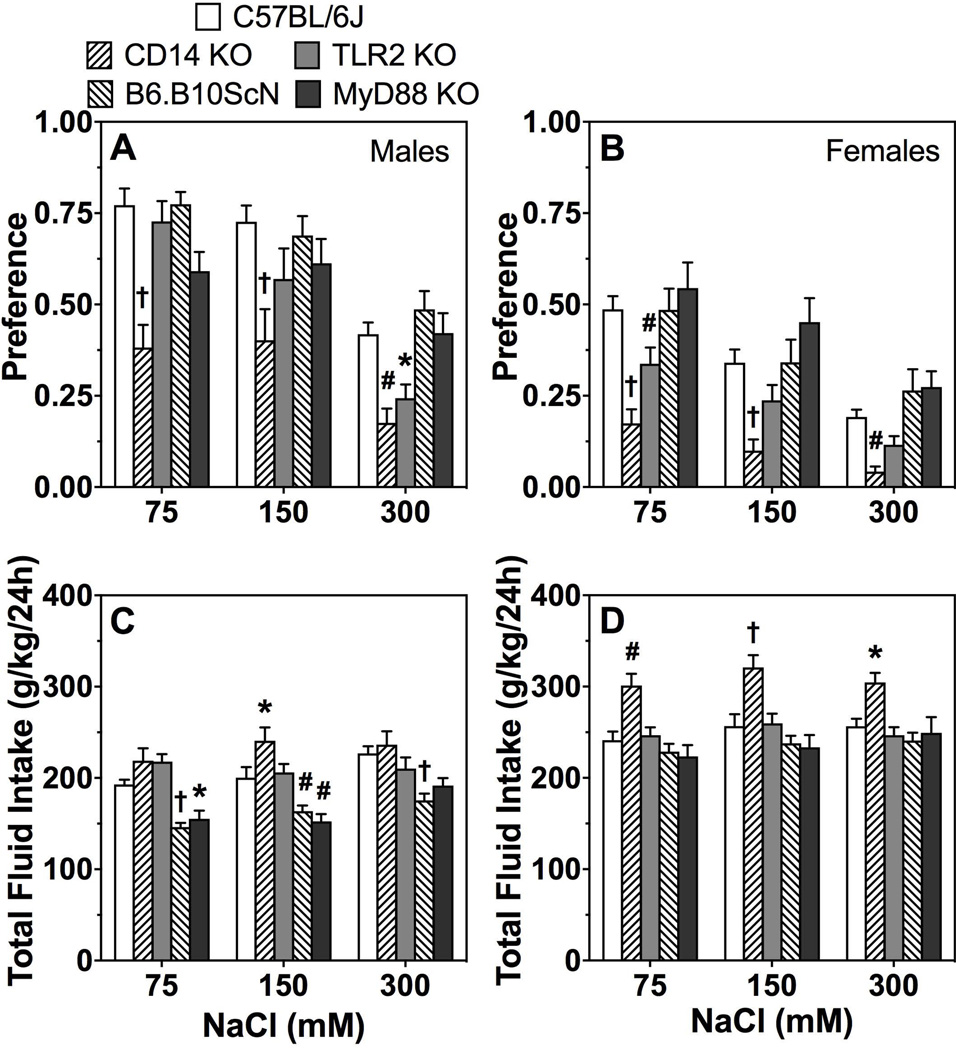
Figure 9. NaCl consumption in mice lacking CD14, TLR2, TLR4, or MyD88
Preference for sodium chloride in males (A) and females (B). Total fluid intake (g/kg/24h) in males (C) and females (D). Data were analyzed by repeated measures two-way ANOVA followed by Bonferroni post hoc tests (*P < 0.05, #P < 0.01, P < 0.001 compared to control); males: n= 7, 10, 11, 16, and 18 for MyD88 KO, CD14 KO, TLR2 KO, TLR4 mutant, and C57BL/6J; females: n= 11 for TLR2 and TLR4 mutants; n= 12, 13, and 16 for MyD88 KO, CD14 KO, and C57BL/6J.

References

    1. Akira S, Uematsu S, Takeuchi O. Pathogen recognition and innate immunity. Cell. 2006;124:783–801. - PubMed
    1. Alfonso-Loeches S, Pascual-Lucas M, Blanco AM, Sanchez-Vera I, Guerri C. Pivotal role of TLR4 receptors in alcohol-induced neuroinflammation and brain damage. J Neurosci. 2010;30:8285–8295. - PMC - PubMed
    1. Bachmanov AA, Reed DR, Tordoff MG, Price RA, Beauchamp GK. Intake of ethanol, sodium chloride, sucrose, citric acid, and quinine hydrochloride solutions by mice: a genetic analysis. Behav Genet. 1996;26:563–573. - PMC - PubMed
    1. Bajo M, Montgomery SE, Cates LN, Nadav T, Delucchi AM, Cheng K, Yin H, Crawford EF, Roberts AJ, Roberto M. Evaluation of TLR4 Inhibitor, T5342126, in Modulation of Ethanol-Drinking Behavior in Alcohol-Dependent Mice. Alcohol Alcohol. 2016a;51:541–548. - PMC - PubMed
    1. Belknap JK, Crabbe JC, Young ER. Voluntary consumption of ethanol in 15 inbred mouse strains. Psychopharmacology (Berl) 1993;112:503–510. - PubMed

Publication types