


The clinically used PARP inhibitor olaparib improves organ function, suppresses inflammatory responses and accelerates wound healing in a murine model of third-degree burn injury
- PMID: 28146604
- PMCID: PMC5758386
- DOI: 10.1111/bph.13735
The clinically used PARP inhibitor olaparib improves organ function, suppresses inflammatory responses and accelerates wound healing in a murine model of third-degree burn injury
Abstract
Background and purpose: The PARP inhibitor olaparib has recently been approved for human use for the therapy of cancer. Considering the role of PARP in critical illness, we tested the effect of olaparib in a murine model of burn injury, in order to begin exploring the feasibility of repurposing olaparib for the therapy of burn patients.
Experimental approach: Mice were subjected to scald burn injury and randomized into vehicle or olaparib (10 mg·kg-1 ·day-1 i.p.) groups. Outcome variables included indices of organ injury, clinical chemistry parameters, plasma levels of inflammatory mediators (at 24 h, 7 and 21 days) and burn wound size (at 21 days).
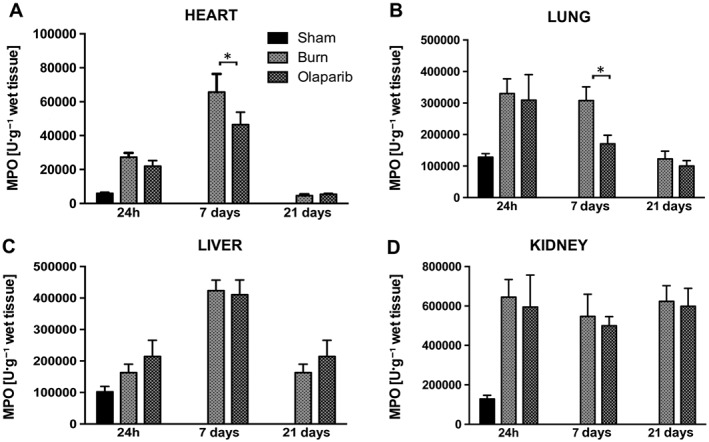
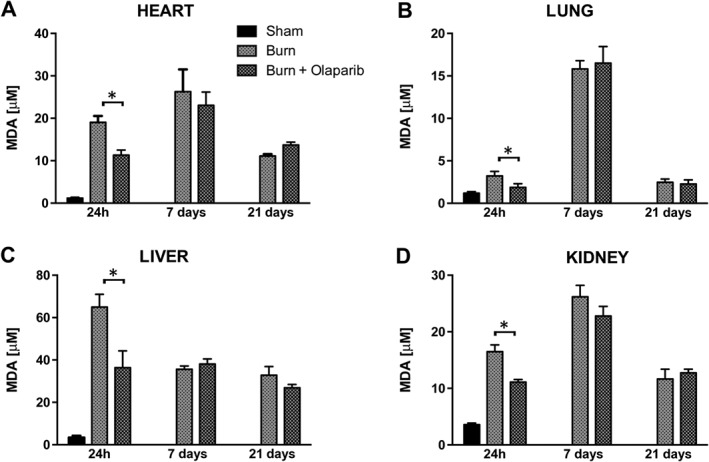
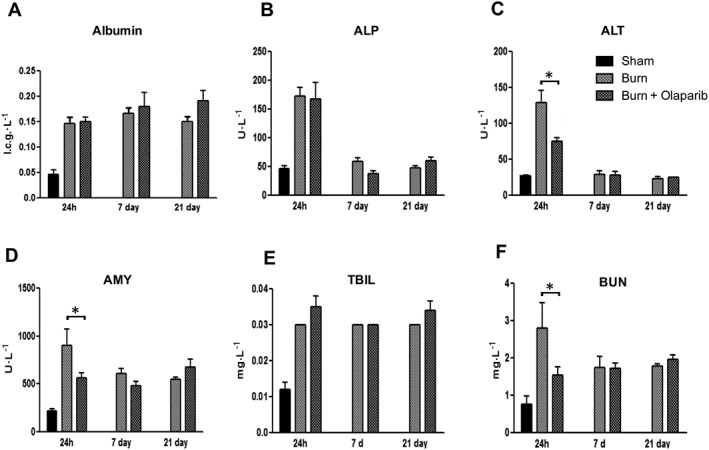
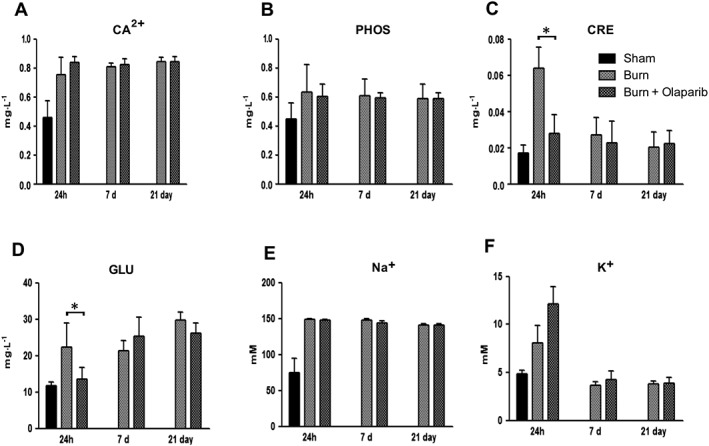
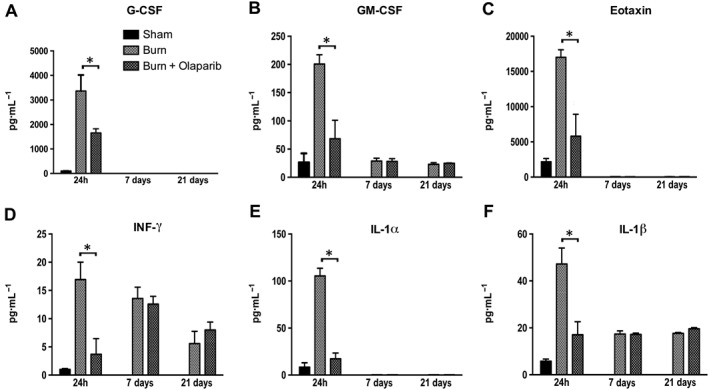
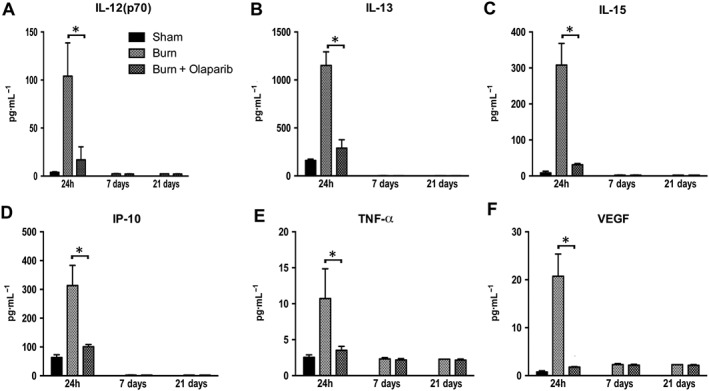
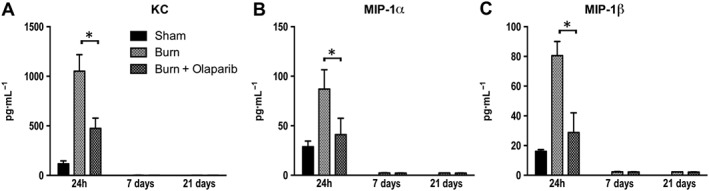
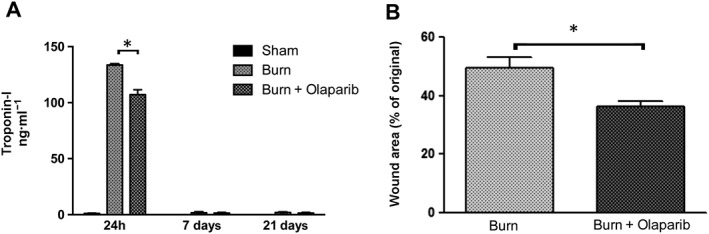
Key results: Olaparib reduced myeloperoxidase levels in heart and lung homogenates and reduced malondialdehyde levels in all tissues 24 h post-burn. Olaparib also reduced circulating alkaline aminotransferase, amylase and blood urea nitrogen and creatinine levels, indicative of protection against hepatic, pancreatic and renal dysfunction. Pro-inflammatory mediator (TNF-α, IL-1β, IFN-γ, GCSF, GM-CSF, eotaxin, KC, MIP-1-α and IL-3, 6 and 12) levels as well as the levels of several mediators that are generally considered anti-inflammatory (IL-4, 10 and 13) were reduced by olaparib. Plasma troponin-I levels (an indicator of skeletal muscle damage) was also attenuated by olaparib. Finally, olaparib stimulated wound healing.
Conclusions and implications: The clinically approved PARP inhibitor olaparib improves organ function, suppresses inflammatory responses and accelerates wound healing in murine burn injury. The data raise the potential utility of olaparib for severe burn injury.
Linked articles: This article is part of a themed section on Inventing New Therapies Without Reinventing the Wheel: The Power of Drug Repurposing. To view the other articles in this section visit http://onlinelibrary.wiley.com/doi/10.1111/bph.v175.2/issuetoc.
© 2017 The British Pharmacological Society.
Figures

References
-
- Ahmad SF, Zoheir KM, Ansari MA, Korashy HM, Bakheet SA, Ashour AE (2015). The role of poly(ADP‐ribose) polymerase‐1 inhibitor in carrageenan‐induced lung inflammation in mice. Mol Immunol 63: 394–405. - PubMed
-
- Ahmad A, Szabo C (2016). Both the H2S biosynthesis inhibitor aminooxyacetic acid and the mitochondrially targeted H2S donor AP39 exert protective effects in a mouse model of burn injury. Pharmacol Res 113: 348–355. - PubMed
Publication types
MeSH terms
Substances
Grants and funding
LinkOut - more resources
Full Text Sources
Other Literature Sources
Medical
Research Materials
