


Exercise effects on perivascular adipose tissue: endocrine and paracrine determinants of vascular function
- PMID: 28147449
- PMCID: PMC5610167
- DOI: 10.1111/bph.13732
Exercise effects on perivascular adipose tissue: endocrine and paracrine determinants of vascular function
Abstract
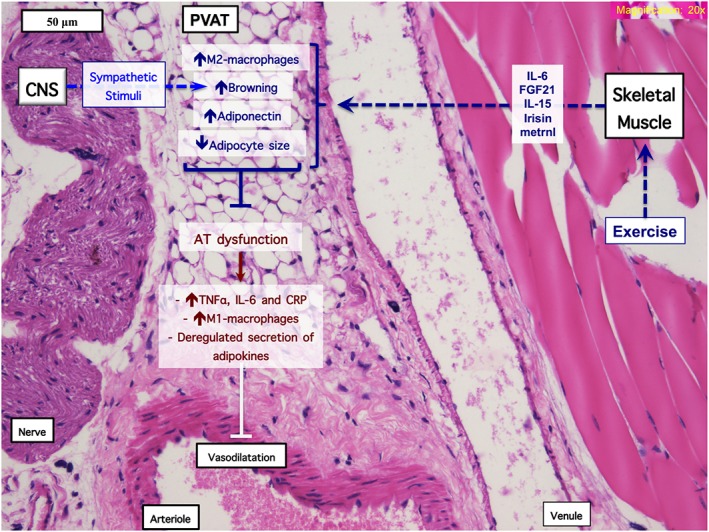
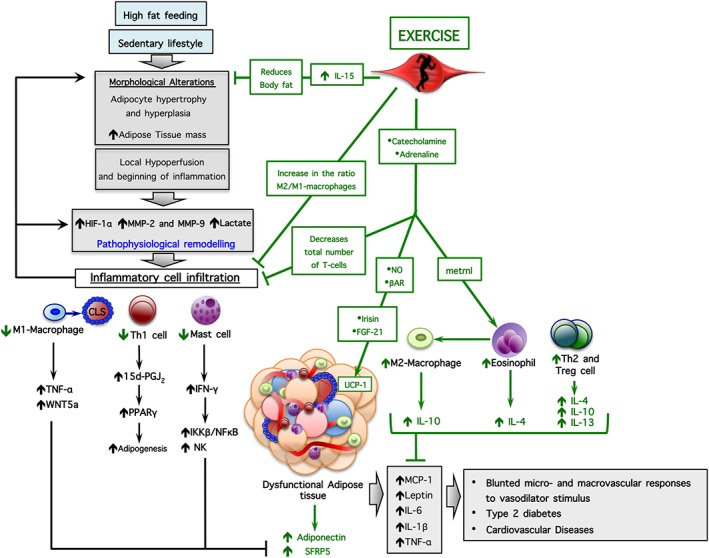
Obesity is a global epidemic, accompanied by increased risk of type 2 diabetes and cardiovascular disease. Adipose tissue hypertrophy is associated with adipose tissue inflammation, which alters the secretion of adipose tissue-derived bioactive products, known as adipokines. Adipokines determine vessel wall properties such as smooth muscle tone and vessel wall inflammation. Exercise is a mainstay of prevention of chronic, non-communicable diseases, type 2 diabetes and cardiovascular disease in particular. Aside from reducing adipose tissue mass, exercise has been shown to reduce inflammatory activity in this tissue. Mechanistically, contracting muscles release bioactive molecules known as myokines, which alter the metabolic phenotype of adipose tissue. In adipose tissue, myokines induce browning, enhance fatty acid oxidation and improve insulin sensitivity. In the past years, the perivascular adipose tissue (PVAT) which surrounds the vasculature, has been shown to control vascular tone and inflammation through local release of adipokines. In obesity, an increase in mass and inflammation of PVAT culminate in dysregulation of adipokine secretion, which contributes to vascular dysfunction. This review describes our current understanding of the mechanisms by which active muscles interact with adipose tissue and improve vascular function. Aside from the exercise-dependent regulation of canonical adipose tissue function, we will focus on the interactions between skeletal muscle and PVAT and the role of novel myokines, such as IL-15, FGF21 and irisin, in these interactions.
Linked articles: This article is part of a themed section on Molecular Mechanisms Regulating Perivascular Adipose Tissue - Potential Pharmacological Targets? To view the other articles in this section visit http://onlinelibrary.wiley.com/doi/10.1111/bph.v174.20/issuetoc.
© 2017 The British Pharmacological Society.
Figures
References
-
- Abate N, Garg A (1995). Heterogeneity in adipose tissue metabolism: causes, implications and management of regional adiposity. Prog Lipid Res 34: 53–70. - PubMed
Publication types
MeSH terms
Substances
LinkOut - more resources
Full Text Sources
Other Literature Sources
Medical
Miscellaneous
