Use of a glimpsing model to understand the performance of listeners with and without hearing loss in spatialized speech mixtures
- PMID: 28147587
- PMCID: PMC5392092
- DOI: 10.1121/1.4973620
Use of a glimpsing model to understand the performance of listeners with and without hearing loss in spatialized speech mixtures
Abstract
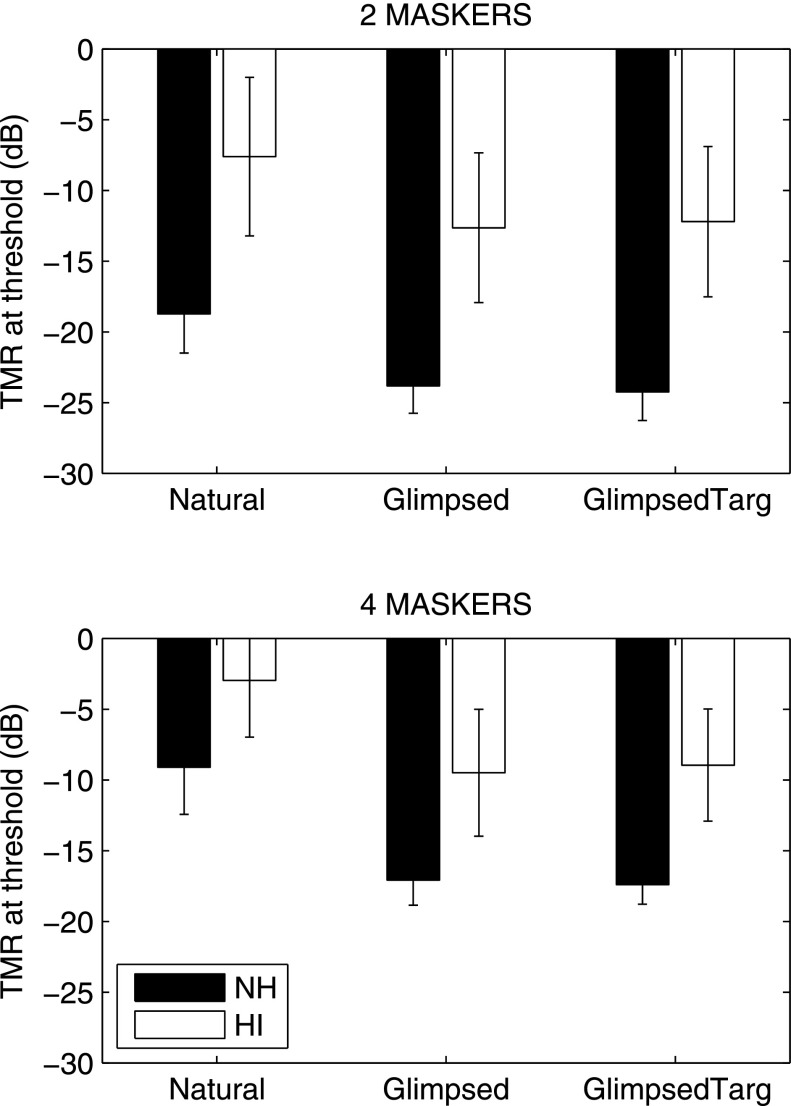
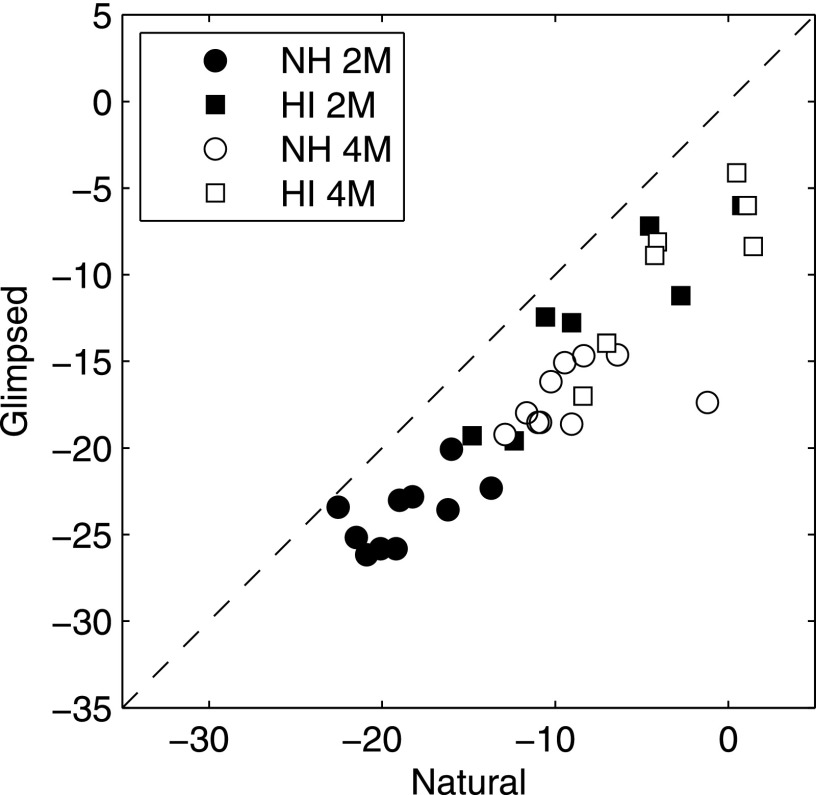
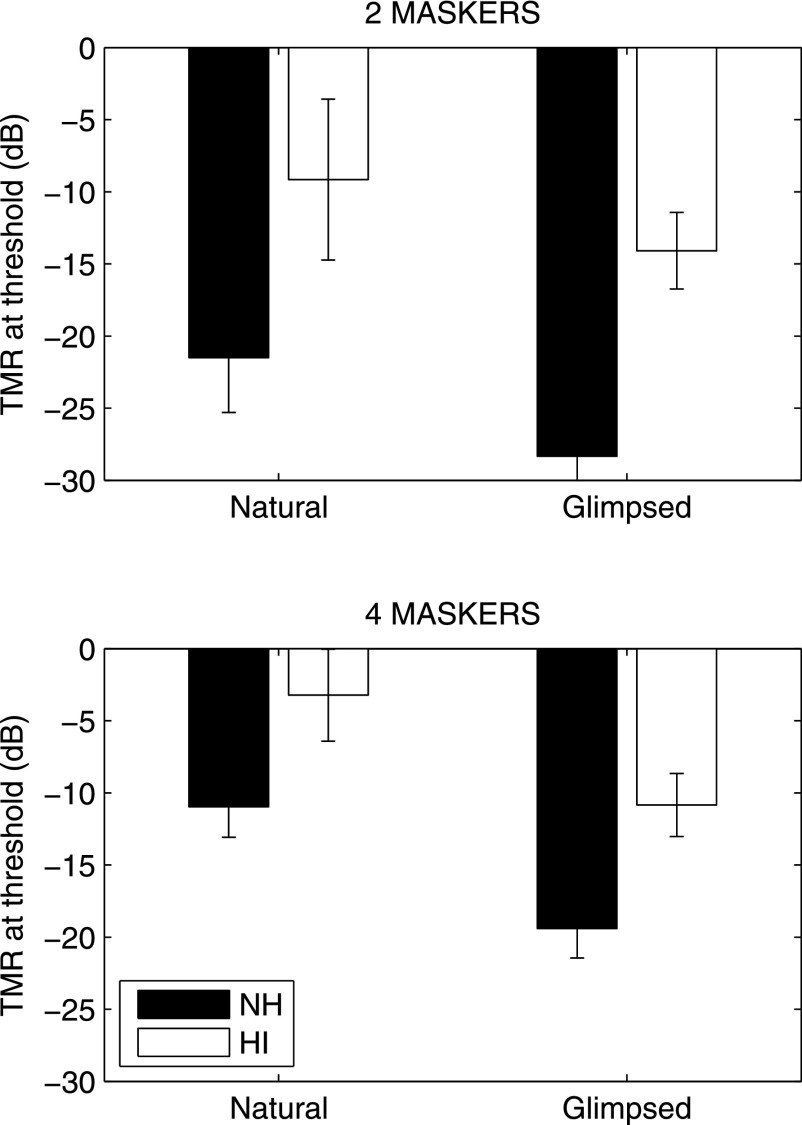
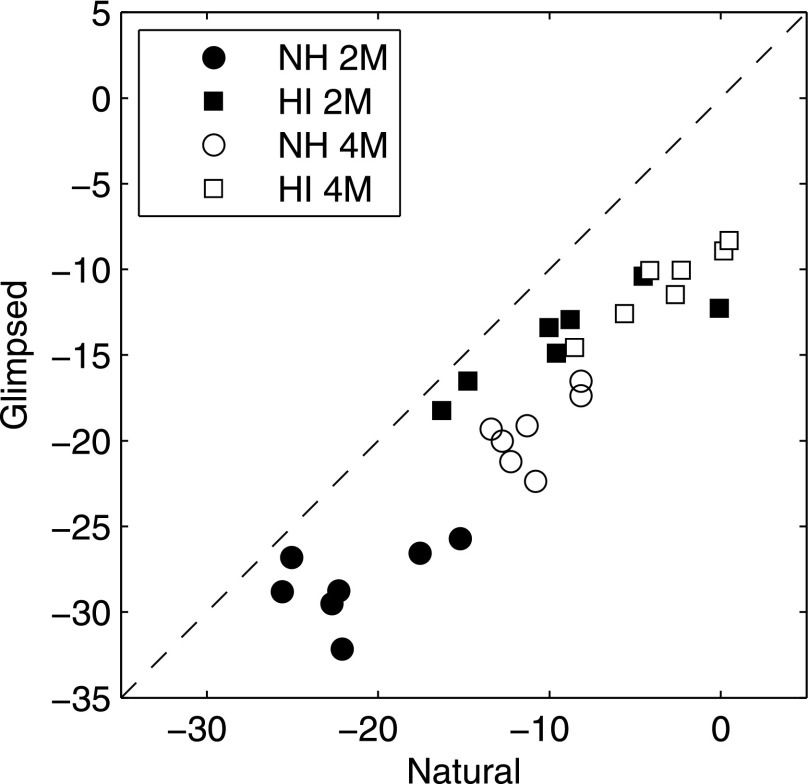
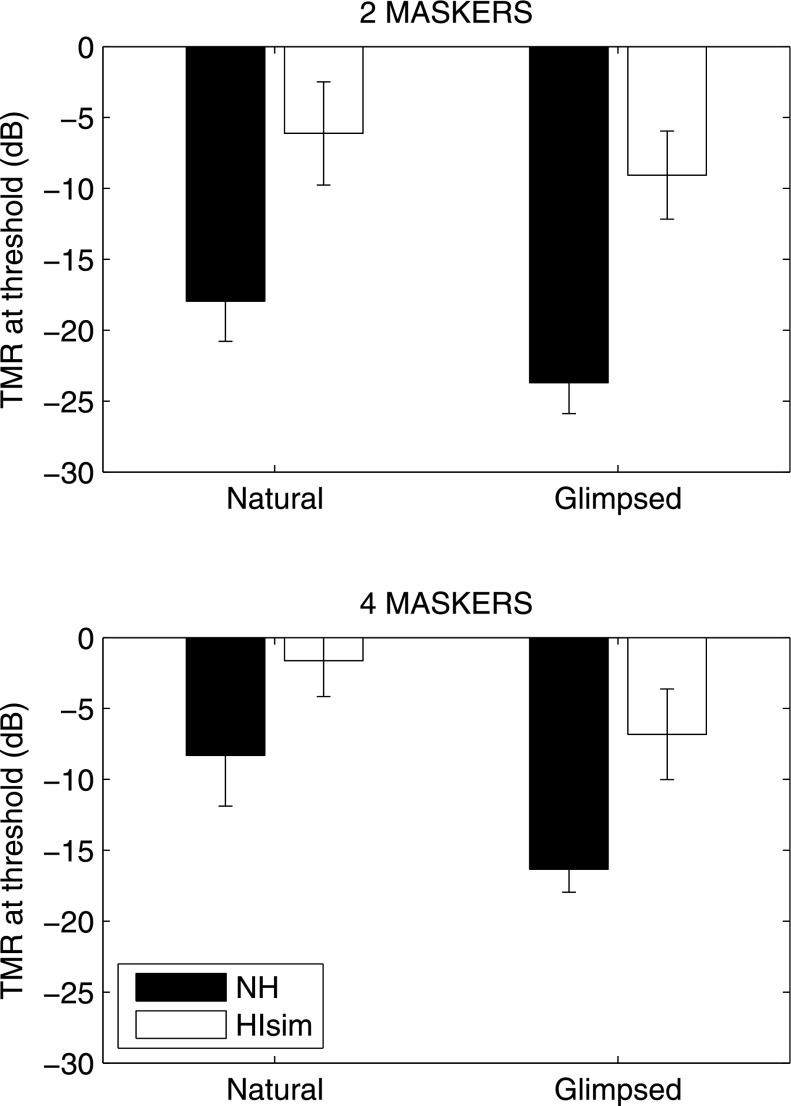
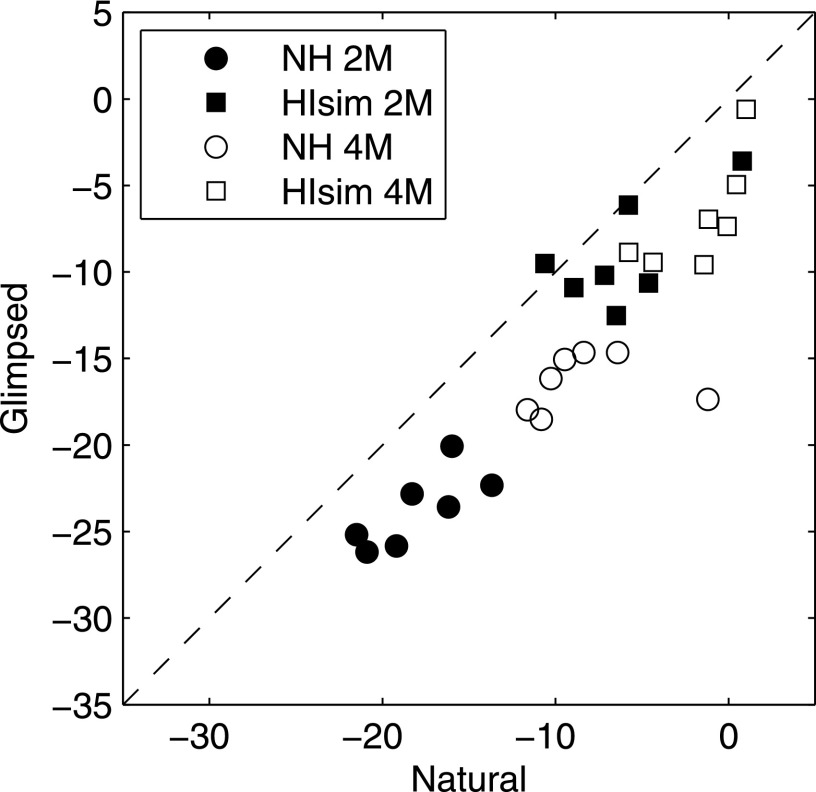
In many situations, listeners with sensorineural hearing loss demonstrate reduced spatial release from masking compared to listeners with normal hearing. This deficit is particularly evident in the "symmetric masker" paradigm in which competing talkers are located to either side of a central target talker. However, there is some evidence that reduced target audibility (rather than a spatial deficit per se) under conditions of spatial separation may contribute to the observed deficit. In this study a simple "glimpsing" model (applied separately to each ear) was used to isolate the target information that is potentially available in binaural speech mixtures. Intelligibility of these glimpsed stimuli was then measured directly. Differences between normally hearing and hearing-impaired listeners observed in the natural binaural condition persisted for the glimpsed condition, despite the fact that the task no longer required segregation or spatial processing. This result is consistent with the idea that the performance of listeners with hearing loss in the spatialized mixture was limited by their ability to identify the target speech based on sparse glimpses, possibly as a result of some of those glimpses being inaudible.
Figures
References
-
- ANSI (1997). ANSI S3.5-1997, Methods for Calculation of the Speech Intelligibility Index ( American National Standards Institute, New York: ).
-
- Besser, J. , Festen, J. M. , Goverts, S. T. , Kramer, S. E. , and Pichora-Fuller, M. K. (2015). “ Speech-in-speech listening on the LiSN-S test by older adults with good audiograms depends on cognition and hearing acuity at high frequencies,” Ear Hear. 36, 24–41. 10.1097/AUD.0000000000000096 - DOI - PubMed
Publication types
MeSH terms
Grants and funding
LinkOut - more resources
Full Text Sources
Other Literature Sources