


Higher mortality risk among injured individuals in a population-based matched cohort study
- PMID: 28148259
- PMCID: PMC5288995
- DOI: 10.1186/s12889-017-4087-0
Higher mortality risk among injured individuals in a population-based matched cohort study
Abstract
Background: Improved understanding of long-term mortality attributable to injury is needed to accurately inform injury burden studies. This study aims to quantify and describe mortality attributable to injury 12 months after an injury-related hospitalisation in Australia.
Method: A population-based matched cohort study using linked hospital and mortality data from three Australian states during 2008-2010 was conducted. The injured cohort included individuals ≥18 years who had an injury-related hospital admission in 2009. A comparison cohort of non-injured people was obtain by randomly selecting from the electoral roll. This comparison group was matched 1:1 on age, gender and postcode of residence. Pre-index injury health service use and 12-month mortality were examined. Adjusted mortality rate ratios (MRR) and attributable risk were calculated. Cox proportional hazard regression was used to examine the effect of risk factors on survival.
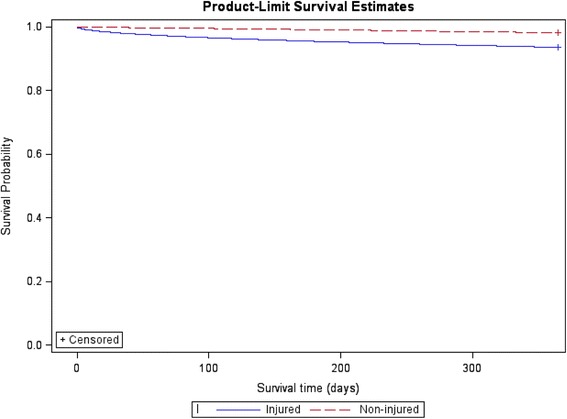
Results: Injured individuals were almost 3 times more likely to die within 12 months following an injury (MRR 2.90; 95% CI: 2.76-3.04). Individuals with a traumatic brain injury (MRR 7.58; 95% CI: 5.92-9.70) or injury to internal organs (MRR 7.38; 95% CI: 5.90-9.22) were 7 times more likely to die than the non-injured group. Injury was likely to be a contributory factor in 92% of mortality within 30 days and 66% of mortality at 12 months following the index injury hospital admission. Adjusted mortality rate ratios varied by type of cause-specific death, with MRR highest for injury-related deaths.
Conclusions: There are likely chronic consequences of sustaining a traumatic injury. Longer follow-up post-discharge is needed to consider deaths likely to be attributable to the injury. Better enumeration of long-term injury-related mortality will have the potential to improve estimates of injury burden.
Keywords: Comorbidity; Hospitalisation; Injury; Mortality; Survival.
Figures
References
-
- Lyons R, Kendrick D, Towner E, Christie N, Macey S, Coupland C, Gabbe B. Measuring the population burden of injuries - Implications for global and national estimates: A multi-centre prospective UK longitudional study. PLoS Med. 2011;8(12):e1001140. doi: 10.1371/journal.pmed.1001140. - DOI - PMC - PubMed
-
- Polinder S, Haagsma J, Toet H, Van Beeck E. Epidemiological burden of minor, major and fatal trauma in a national injury pyramid. Br J Surg. 2011;99(Suppl 1):114–121. - PubMed
MeSH terms
LinkOut - more resources
Full Text Sources
Other Literature Sources
Medical
