


The effect of policies regulating tobacco consumption on smoking initiation and cessation in Spain: is it equal across socioeconomic groups?
- PMID: 28149259
- PMCID: PMC5273787
- DOI: 10.1186/s12971-016-0109-4
The effect of policies regulating tobacco consumption on smoking initiation and cessation in Spain: is it equal across socioeconomic groups?
Abstract
Background: In Spain, the Law 28/2005, which came into effect on January 2006, was a turning point in smoking regulation and prevention, serving as a guarantee for the progress of future strategies in the direction marked by international organizations. It is expected that this regulatory policy should benefit relatively more to lower socioeconomic groups, thus contributing to a reduction in socioeconomic health inequalities. This research analyzes the effect of tobacco regulation in Spain, under Law 28/2005, on the initiation and cessation of tobacco consumption, and whether this effect has been unequal across distinct socioeconomic levels.
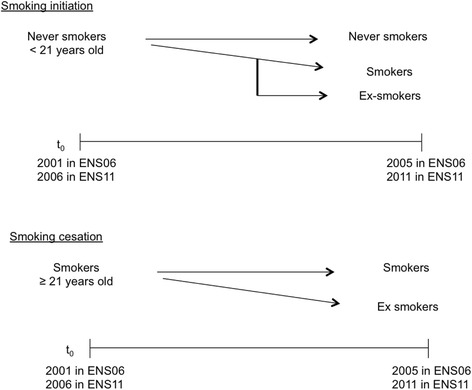
Methods: Micro-data from the National Health Survey in its 2006 and 2011 editions are used (study numbers: 4382 and 5389 respectively; inventory of statistical operations (ISO) code: 54009), with a sample size of approximately 24,000 households divided into 2,000 census areas. This allows individuals' tobacco consumption records to be reconstructed over five years before the initiation of each survey, as well as identifying those individuals that started or stopped smoking. The methodology is based on "time to event analysis". Cox's proportional hazard models are adapted to show the effects of a set of explanatory variables on the conditional probability of change in tobacco consumption: initiation as a daily smoker by young people or the cessation of daily smoking by adults.
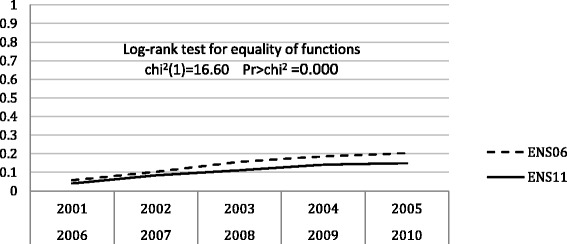
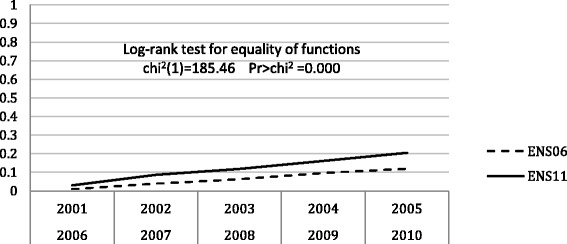
Results: Initiation rates among young people went from 25% (95% confidence interval (CI), 23-27) to 19% (95% CI, 17-21) following the implementation of the Law, and the change in cessation rates among smokers was even greater, with rates increasing from 12% (95% CI, 11-13) to 20% (95% CI, 19-21). However, this effect has not been equal by socioeconomic groups as shown by relative risks. Before the regulation policy, social class was not a statistically significant factor in the initiation of daily smoking (p > 0.05); however, following the implementation of the Law, young people belonging to social classes IV-V and VI had a relative risk of starting smoking 63% (p = 0.03) and 82% (p = 0.02) higher than young people of higher social classes I-II. On the other hand, lower social class also means a lower probability of smoking cessation; however, the relative risk of cessation for a smoker belonging to a household of social class VI (compared to classes I-II) went from 24% (p < 0.001) lower before the Law to 33% (p < 0.001) lower following the law's implementation.
Conclusion: Law 28/2005 has been effective, as after its promulgation there has been a decrease in the rate of smoking initiation among young people and an increase in the rate of cessation among adult smokers. However, this effect has not been equal by socioeconomic groups, favoring relatively more to those individuals belonging to higher social classes.
Keywords: National health survey; Smoking bans; Smoking initiation and cessation; Socioeconomic groups; Spain; Tobacco regulation.
Figures
References
-
- World Health Organization. Global Health Risks. Mortality and burden of disease attributable to selected major risks. 2009. http://www.who.int/healthinfo/global_burden_disease/GlobalHealthRisks_re....
-
- Cuesta-Arzamendi JL, Muñagorri I, Arana X. Políticas y legislación en materia de tabaco. Informe (Observatorio Vasco de Drogodependencias) n°20; Vitoria-Gasteiz: Eusko Jaurlaritzaren Argitalpen Zerbitzu Nagusia. Servicio Central de Publicaciones del Gobierno Vasco. 2009.
LinkOut - more resources
Full Text Sources
Other Literature Sources
