


Pranlukast reduces asthma exacerbations during autumn especially in 1- to 5-year-old boys
- PMID: 28154801
- PMCID: PMC5287065
- DOI: 10.5415/apallergy.2017.7.1.10
Pranlukast reduces asthma exacerbations during autumn especially in 1- to 5-year-old boys
Abstract
Background: Leukotriene receptor antagonists have been used to prevent virus-induced asthma exacerbations in autumn. Its efficacy, however, might differ with age and sex.
Objective: This study aimed to investigate whether pranlukast added to usual asthma therapy in Japanese children during autumn, season associated with the peak of asthma, reduces asthma exacerbations. It was also evaluated the effect of age and sex on pranlukast's efficacy.
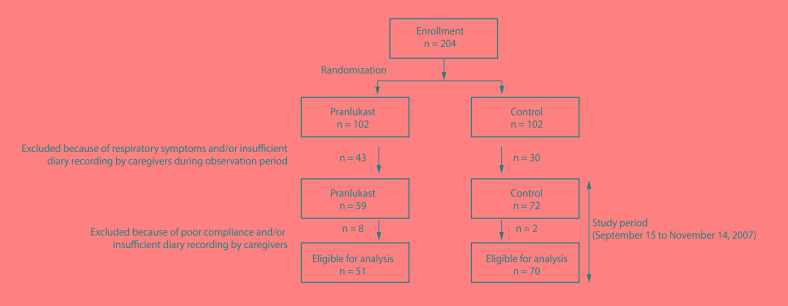
Methods: A total of 121 asthmatic children aged 1 to 14 years were randomly assigned to receive regular pranlukast or not according to sex, and were divided in 2 age groups, 1-5 years and 6-14 years. The primary outcome was total asthma score calculated during 8 weeks by using a sticker calendar related to the days in which a child experienced a worsening of asthma symptoms. This open study lasted 60 days from September 15 to November 14, 2007.
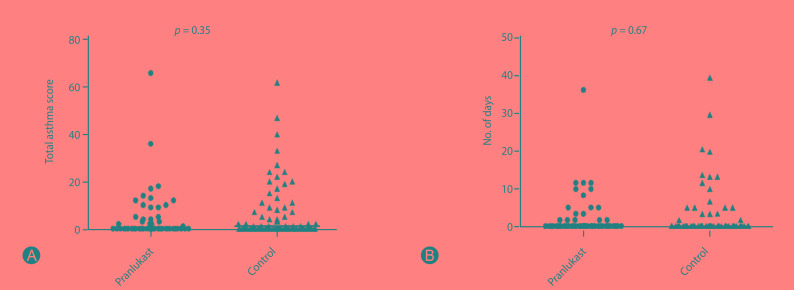
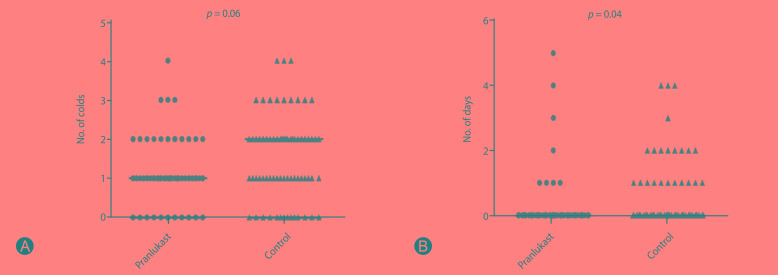
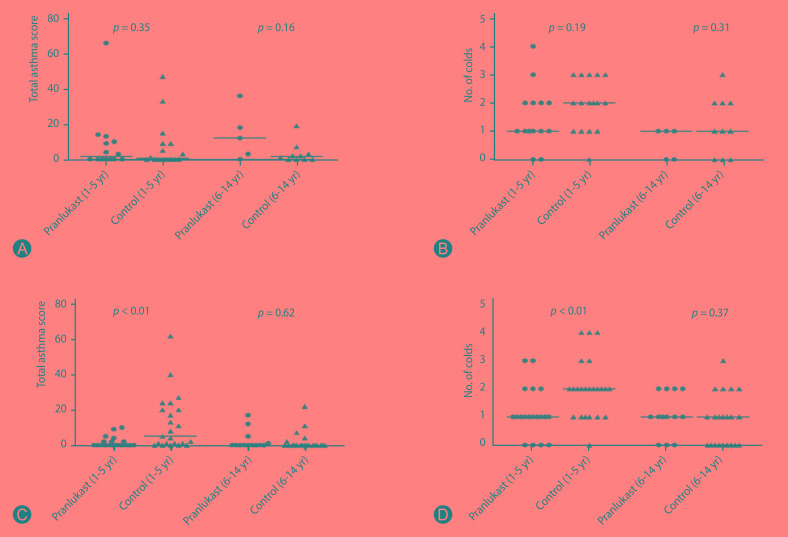
Results: Significant differences in pranlukast efficacy were observed between sex and age groups. Boys aged 1 to 5 years had the lower total asthma score at 8 weeks (p = 0.002), and experienced fewer cold episodes (p = 0.007). There were no significant differences between pranlukast and control group in total asthma score at 8 weeks (p = 0.35), and in the days in which a child experienced a worsening of asthma symptoms (p = 0.67).
Conclusion: There was a substantial benefit of adding pranlukast to usual therapy in asthmatic children, especially in boys aged 1 to 5 years, during autumn season.
Keywords: Age; Asthma; Child; Exacerbations; Pranlukast; Sex.
Figures
References
-
- Korhonen K, Reijonen TM, Remes K, Malmström K, Klaukka T, Korppi M. Reasons for and costs of hospitalization for pediatric asthma: a prospective 1-year follow-up in a population-based setting. Pediatr Allergy Immunol. 2001;12:331–338. - PubMed
-
- Weinberger M. Treatment strategies for viral respiratory infection-induced asthma. J Pediatr. 2003;142(2 Suppl):S34–S38. - PubMed
-
- Caramori G, Ito K, Contoli M, Di Stefano A, Johnston SL, Adcock IM, Papi A. Molecular mechanisms of respiratory virus-induced asthma and COPD exacerbations and pneumonia. Curr Med Chem. 2006;13:2267–2290. - PubMed
LinkOut - more resources
Full Text Sources
Other Literature Sources