. 2017 Feb 3:8:14268.
doi: 10.1038/ncomms14268.

Host-inherent variability influences the transcriptional response of Staphylococcus aureus during in vivo infection

Affiliations

Host-inherent variability influences the transcriptional response of Staphylococcus aureus during in vivo infection

Robert Thänert et al. Nat Commun. .

Abstract

The rise of antibiotic resistance calls for alternative strategies to treat bacterial infections. One attractive strategy is to directly target bacterial virulence factors with anti-virulence drugs. The expression of virulence traits by pathogens is, however, not constitutive but rather induced by the level of stress encountered within the host. Here we use dual RNA sequencing (RNA-seq) to show that intrinsic variability in the level of host resistance greatly affects the pathogen's transcriptome in vivo. Through analysis of the transcriptional profiles of host and pathogen during Staphylococcus aureus infection of two mouse strains, shown to be susceptible (A/J) or resistant (C57BL/6) to the pathogen, we demonstrate that the expression of virulence factors is dependent on the encountered host resistance. We furthermore provide evidence that this dependence strongly influences the efficacy of anti-virulence strategies, highlighting a potential limitation for the implementation of these strategies.


Conflict of interest statement

The authors declare no competing financial interests.

Figures
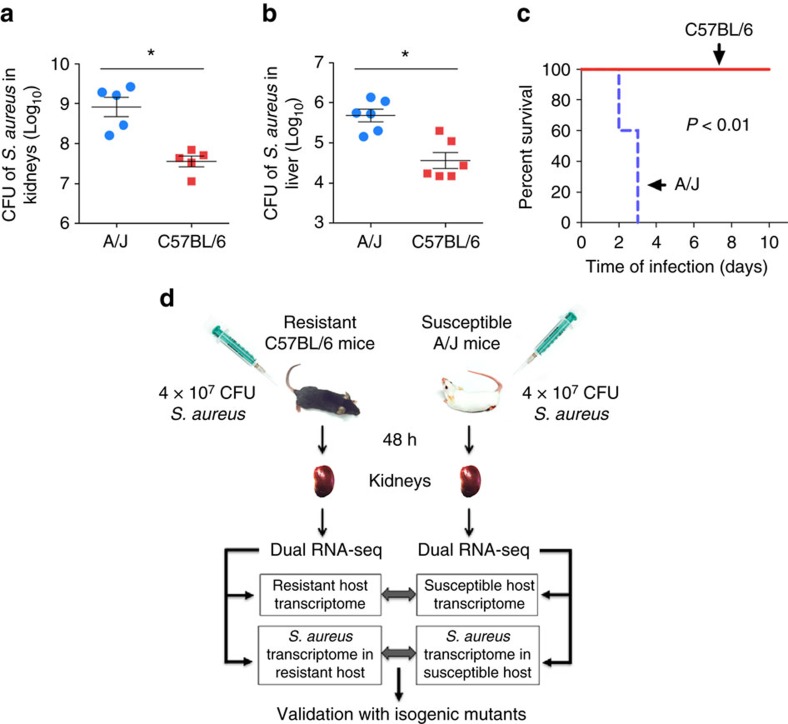
Figure 1
Figure 1. A/J and C57BL/6 mice exhibit opposed levels of resistance to S. aureus.
Bacterial loads in the kidneys (a) and liver (b) of A/J and C57BL/6 mice at 48 h after intravenous inoculation with 4 × 10⁷ CFU of S. aureus SH1000. Each symbol represents the bacterial counts determined in an individual mouse and the horizontal lines represent the average±s.d. for each mouse strain. One representative experiment out of three independent experiments is shown (n=6, t-test, *P<0.05). (c) Survival curves of A/J and C57BL/6 mice intravenously infected with 4 × 10⁷ CFU of S. aureus SH1000 (n=5, log-rank test, P<0.01). (d) Schematic summary of the experimental design for dual RNA-seq analysis. Susceptible A/J mice and resistant C57BL/6 mice were infected intravenously with 4 × 10⁷ CFU of S. aureus SH1000, their kidneys removed at 48 h after bacterial inoculation and subjected to dual RNA-seq analysis to simultaneously determine the gene expression profile of the host and pathogen in the same sample. The genes differentially expressed by S. aureus in A/J and C57BL/6 mice were identified and related to the infection-associated transcriptional response of the corresponding mouse strain. The effect of targeting a virulence factor differentially expressed by S. aureus SH1000 between infection of A/J and C57BL/6 mice was also determined.
Figure 2
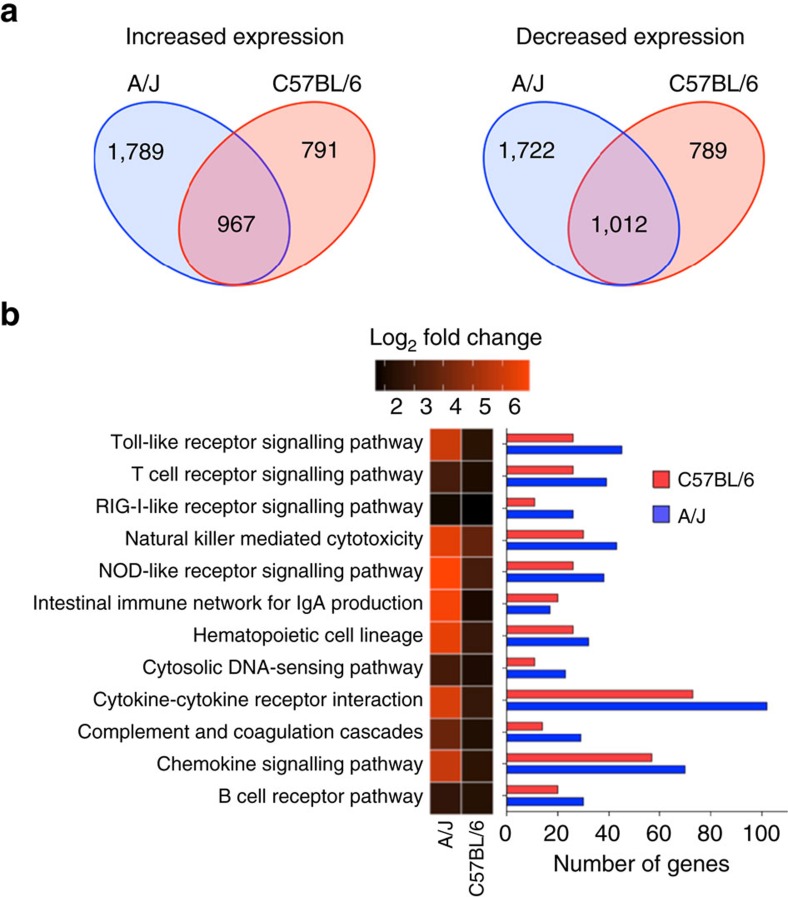
Figure 2. Gene expression analysis of S. aureus-infected kidneys from A/J and C57BL/6 mice.
(a) Venn diagram showing the number of DEGs with increased (left) or decreased (right) expression in response to S. aureus infection that are unique or common between A/J and C57BL/6 mice. (b) Heat map of the mean log2-fold change of gene expression of the significantly up-regulated genes determined between S. aureus-infected versus uninfected A/J and C57BL/6 mice within the KEGG ‘immune system' category (left part). The corresponding numbers of significantly up-regulated genes in response to S. aureus infection in A/J (blue bars) and C57BL/6 (red bars) are shown in the right part of the figure.
Figure 3
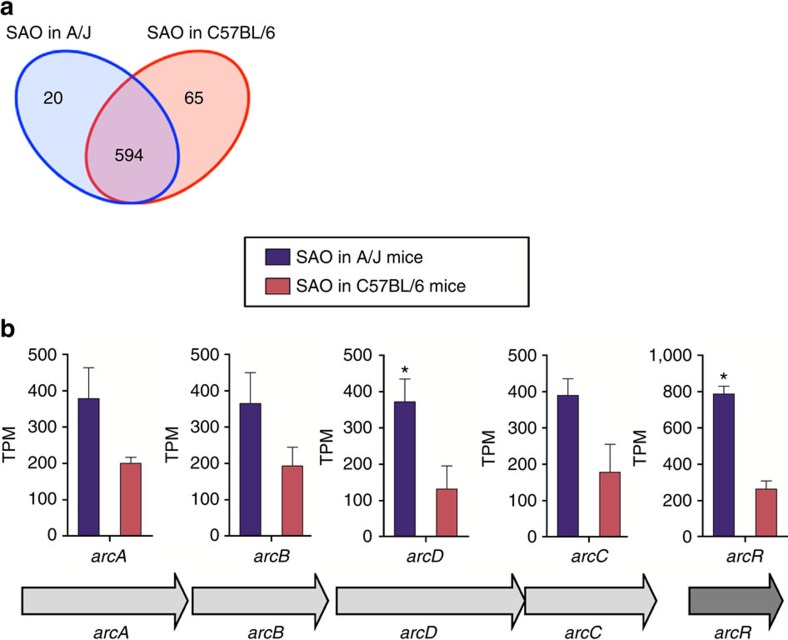
Figure 3. Gene expression analysis of S. aureus during infection of A/J and C57BL/6 mice.
(a) Venn diagram showing the number of unique and common expressed genes between S. aureus infecting A/J and C57BL/6 mice based on differential gene expression analysis determined with NOISeq. (b) Gene composition and organization of the genes of the ADI operon and their level of expression in S. aureus during infection of A/J (blue bars) or C57BL/6 (red bars) mice. Each bar represents the mean of TPM±s.d. of triplicates.
Figure 4
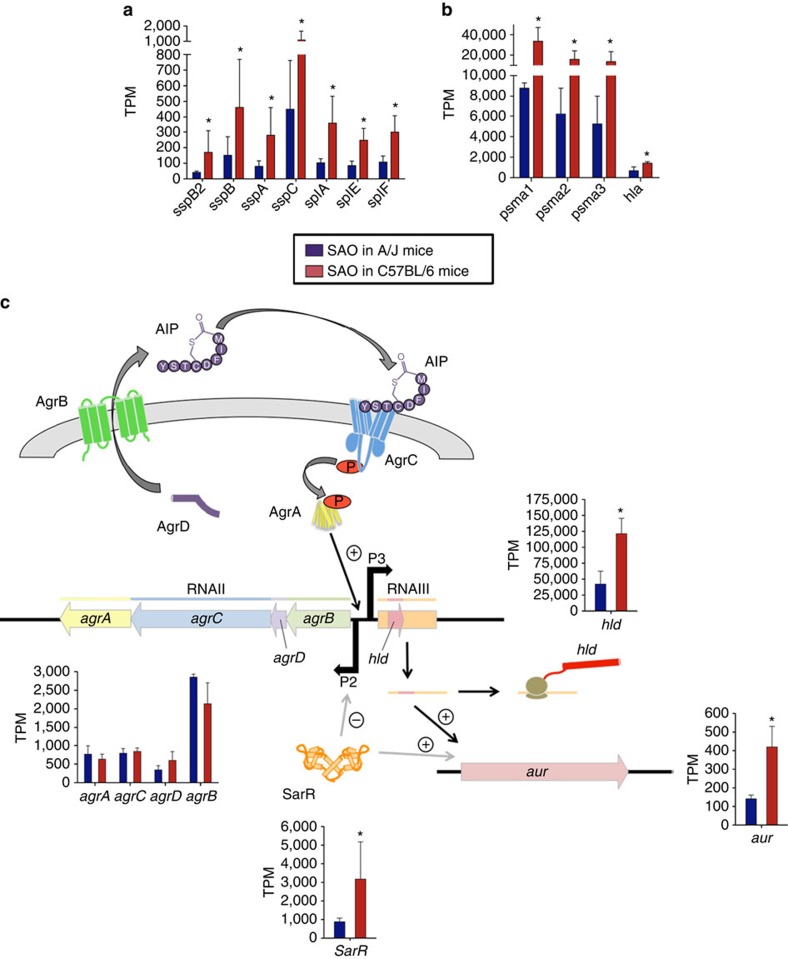
Figure 4. Expression of selected genes by S. aureus during infection of C57BL/6 or A/J mice.
(a) Expression levels of genes encoding proteases. (b) Expression levels of genes encoding toxins. (c) Schematic representation and level of expression of genes encoding the global regulator Agr and SarR. Red bars show expression values of the genes expressed by S. aureus in C57BL/6 mice and blue bars show expression values of the genes expressed by S. aureus in A/J mice. Each bar represents the mean TPM±s.d. of triplicates.
Figure 5
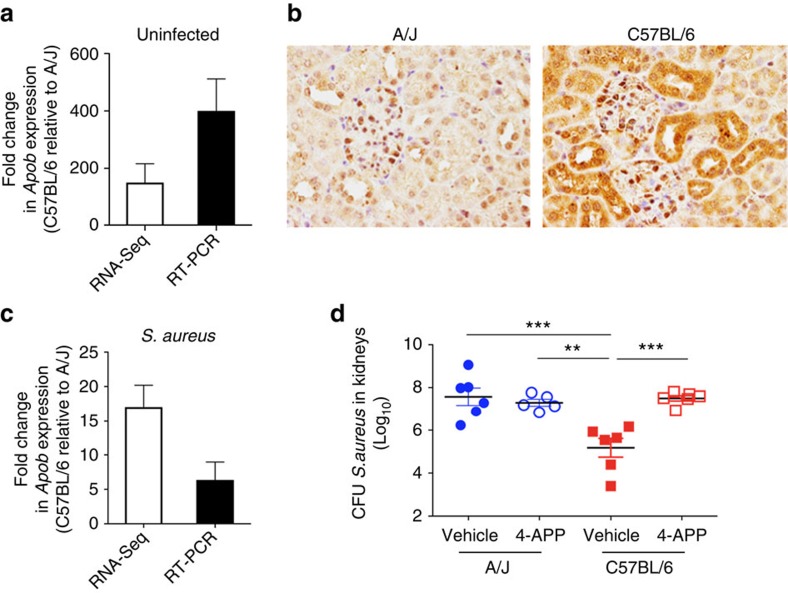
Figure 5. Apolipoprotein B (ApoB) contributes to resistance against S. aureus bloodstream infection in C57BL/6 mice.
(a) Relative fold change of Apob expression values in the kidneys of uninfected C57BL/6 respect to those in the kidneys of uninfected A/J mice determined by either RNA-Seq (white bars) or qRT–PCR (black bars). Each bar represents the mean relative fold change±s.d. of triplicates. (b) Expression of ApoB in kidneys of A/J (left) and C57BL/6 (right) mice determined by immunostaining of kidney tissue using specific antibodies against ApoB. Magnification X40. (c) Relative fold change of Apob expression values in the kidneys of S. aureus-infected C57BL/6 in comparison to those in the kidneys of S. aureus-infected A/J mice at 48 h of infection determined by either RNA-Seq (white bars) or qRT-PCR (black bars). Each bar represents the mean relative fold change±s.d. of triplicates. (d) Bacterial loads in the kidneys of A/J (blue symbols) and C57BL/6 (red symbols) mice treated with 4-Aminopyrazolo[3,4-d]pyrimidine (4-APP) (open symbols) or with vehicle alone (solid symbols) at 48 after intravenous inoculation with 2 × 10⁷ CFU of S. aureus strain SH1000. Each symbol represents the bacterial counts determined in an individual mouse and the horizontal lines represent the average±s.d. for each mouse strain (n=6, t-test, **P<0.01, ***P<0.001).
Figure 6
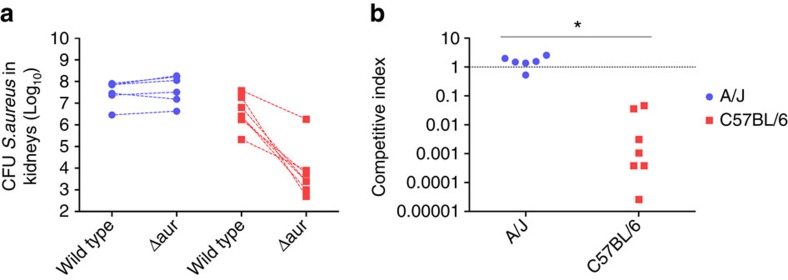
Figure 6. In vivo competitive fitness of aureolysin-deficient (Δaur) and wild type S. aureus during infection of C57BL/6 or A/J mice.
(a) C57BL/6 and A/J mice were injected intravenously with a 1:1 mixtures of Δaur and wild type S. aureus 8325-4 containing a total of approximately 4 × 10⁷ bacteria. The number of bacterial cells in kidneys homogenates was determined at 48 h of infection. Symbols representing Δaur and wild type S. aureus 8325-4 bacteria from the same animal are connected by a broken line. (b) Competitive index (CI), representing the ratio of the recovered Δaur divided by the recovered wild type bacteria, within resistant C57BL/6 and susceptible A/J mice (n=7, t-test,*P<0.001).

References

    1. Spellberg B. et al. The epidemic of antibiotic-resistant infections: a call to action for the medical community from the Infectious Diseases Society of America. Clin. Infect. Dis. 46, 155–164 (2008). - PubMed
    1. Rasko D. A. & Sperandio V. Anti-virulence strategies to combat bacteria-mediated disease. Nat. Rev. Drug Discov. 9, 117–128 (2010). - PubMed
    1. Wang J. et al. Novel inhibitor discovery and the conformational analysis of inhibitors of listeriolysin O via protein-ligand modeling. Sci. Rep. 5, 8864 (2015). - PMC - PubMed
    1. Krachler A. M. & Orth K. Targeting the bacteria-host interface: strategies in anti-adhesion therapy. Virulence 4, 284–294 (2013). - PMC - PubMed
    1. Baron C. Antivirulence drugs to target bacterial secretion systems. Curr. Opin. Microbiol. 13, 100–105 (2010). - PubMed

Publication types

MeSH terms