


Silencing of endogenous retroviruses by heterochromatin
- PMID: 28160052
- PMCID: PMC11107624
- DOI: 10.1007/s00018-017-2454-8
Silencing of endogenous retroviruses by heterochromatin
Abstract
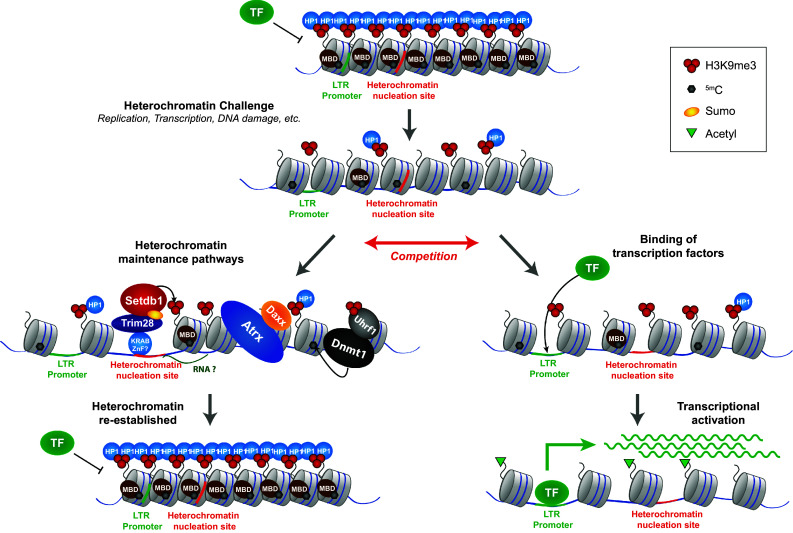
Endogenous retroviruses (ERV) are an abundant class of repetitive elements in mammalian genomes. To ensure genomic stability, ERVs are largely transcriptionally silent. However, these elements also feature physiological roles in distinct developmental contexts, under which silencing needs to be partially relieved. ERV silencing is mediated through a heterochromatic structure, which is established by histone modification and DNA methylation machineries. This heterochromatic structure is largely refractory to transcriptional stimulation, however, challenges to the heterochromatic state, such as DNA replication, require re-establishment of the heterochromatic state in competition with transcriptional activators. In this review, we discuss the major pathways leading to efficient establishment of robust and inaccessible heterochromatin across ERVs.
Keywords: Atrx; Daxx; ERV restriction; H3K9me3; Retrotransposons; Setdb1; TEs; Transposable elements; Trim28.
Figures
References
Publication types
MeSH terms
Substances
LinkOut - more resources
Full Text Sources
Other Literature Sources
Miscellaneous
