


Assumptions behind scoring source versus item memory: Effects of age, hippocampal lesions and mild memory problems
- PMID: 28162777
- PMCID: PMC5460522
- DOI: 10.1016/j.cortex.2017.01.001
Assumptions behind scoring source versus item memory: Effects of age, hippocampal lesions and mild memory problems
Abstract
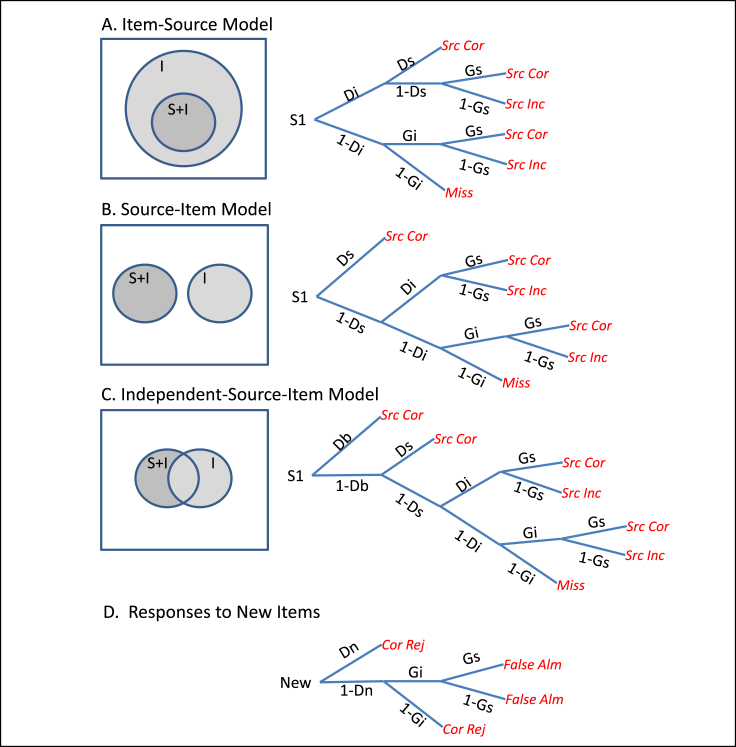
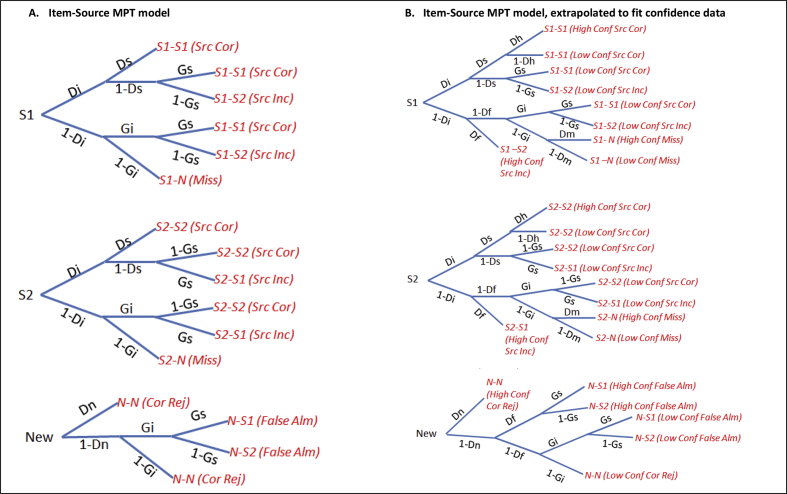
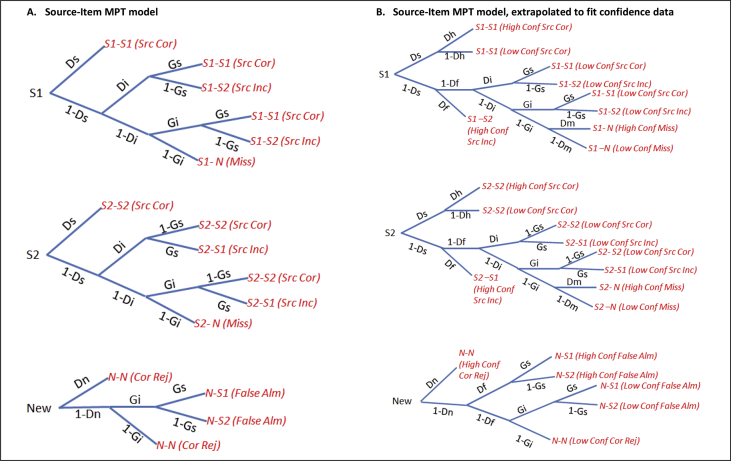
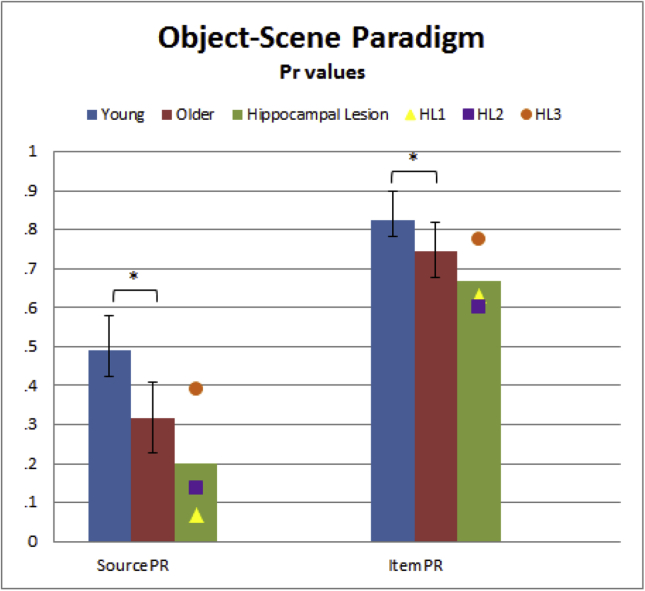
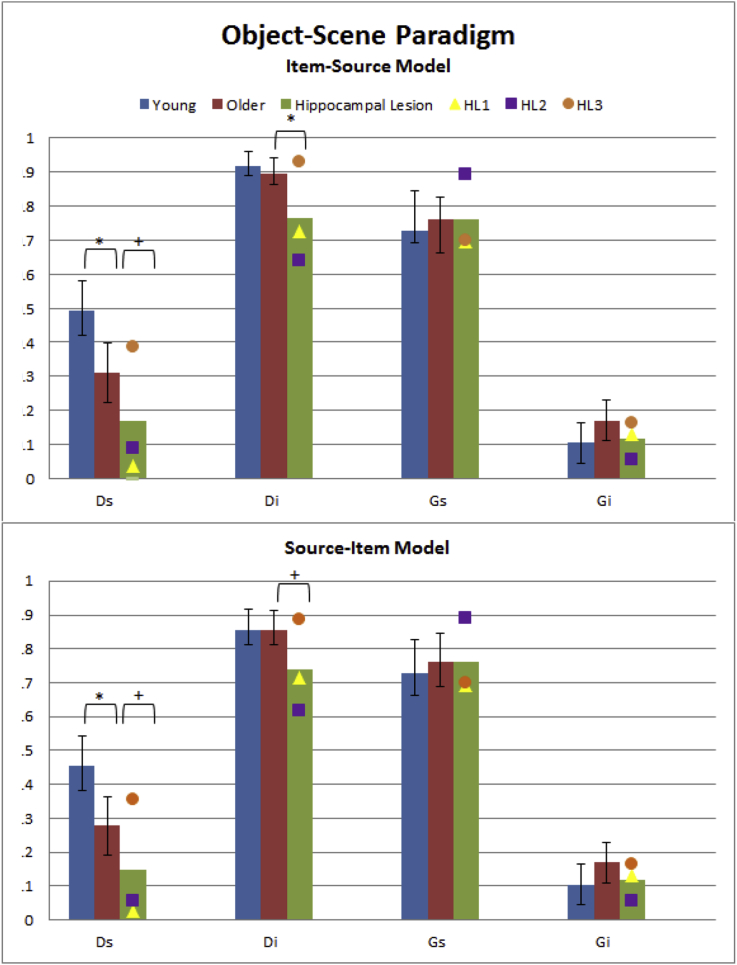
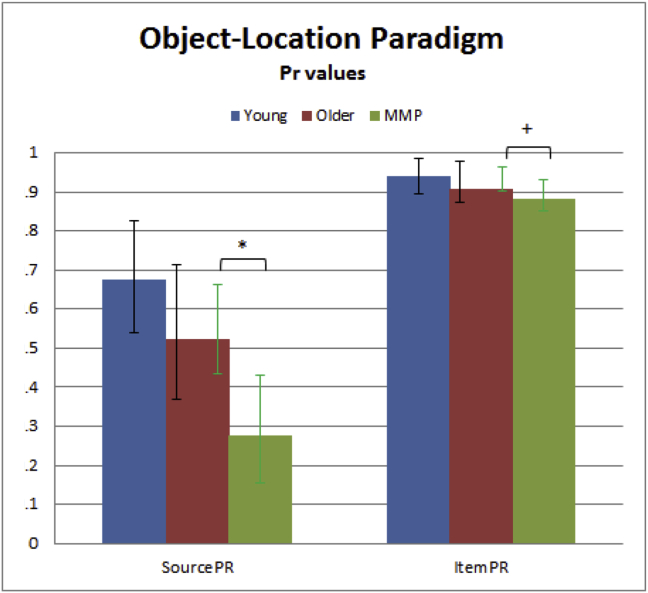
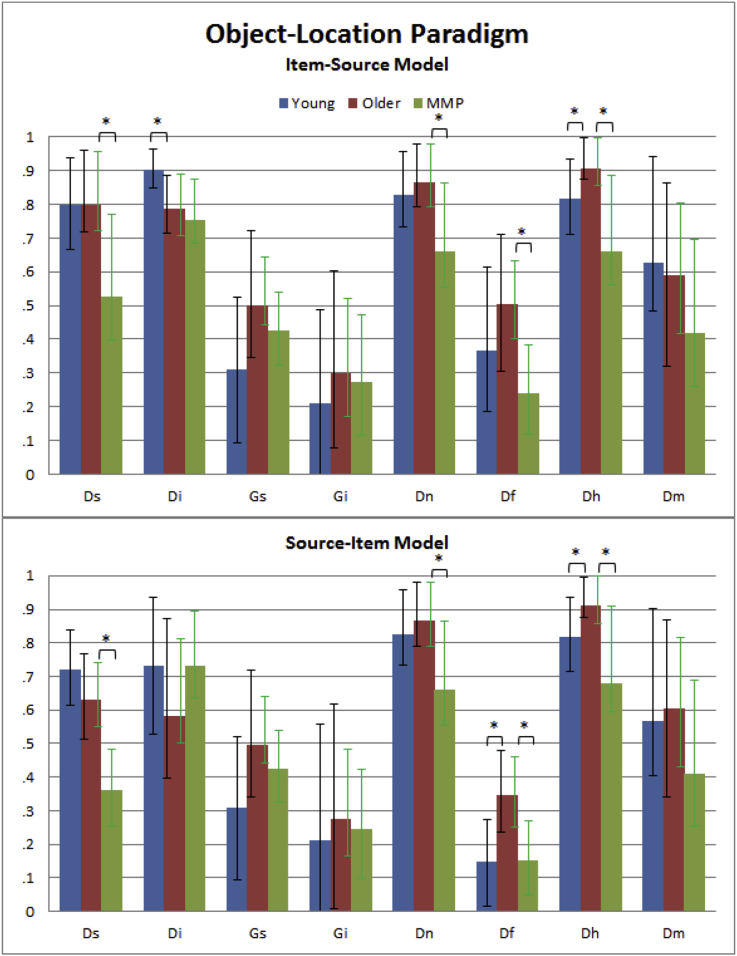
Source monitoring paradigms have been used to separate: 1) the probability of recognising an item (Item memory) and 2) the probability of remembering the context in which that item was previously encountered (Source memory), conditional on it being recognised. Multinomial Processing Tree (MPT) models are an effective way to estimate these conditional probabilities. Moreover, MPTs make explicit the assumptions behind different ways to parameterise Item and Source memory. Using data from six independent groups across two different paradigms, we show that one would draw different conclusions about the effects of age, age-related memory problems and hippocampal lesions on Item and Source memory, depending on the use of: 1) standard accuracy calculation vs MPT analysis, and 2) two different MPT models. The MPT results were more consistent than standard accuracy calculations, and furnished additional parameters that can be interpreted in terms of, for example, false recollection or missed encoding. Moreover, a new MPT structure that allowed for separate memory representations (one for item information and one for item-plus-source information; the Source-Item model) fit the data better, and provided a different pattern of significant differences in parameters, than the more conventional MPT structure in which source information is a subset of item information (the Item-Source model). Nonetheless, there is no theory-neutral way of scoring data, and thus proper examination of the assumptions underlying the scoring of source monitoring paradigms is necessary before theoretical conclusions can be drawn.
Keywords: Ageing; Item memory; Multinomial processing tree models; Source memory; Source monitoring.
Copyright © 2017 The Authors. Published by Elsevier Ltd.. All rights reserved.
Figures
Comment in
-
Memory representations, tree structures, and parameter polysemy: Comment on Cooper, Greve, and Henson (2017).Cortex. 2017 Nov;96:148-155. doi: 10.1016/j.cortex.2017.05.015. Epub 2017 Jun 2. Cortex. 2017. PMID: 28673387 No abstract available.
-
Assumptions behind scoring source and item memory impact on conclusions about memory: A reply to Kellen and Singmann's comment (2017).Cortex. 2017 Nov;96:156-157. doi: 10.1016/j.cortex.2017.08.011. Epub 2017 Aug 26. Cortex. 2017. PMID: 28919223 Free PMC article. No abstract available.
References
-
- Arnold N.R., Bayen U.J., Kuhlmann B.G., Vaterrodt B. Hierarchical modeling of contingency-based source monitoring: A test of the probability-matching account. Psychonomic Bulletin & Review. 2013;20:326–333. - PubMed
-
- Batchelder W.H., Riefer D.M. Multinomial processing models of source monitoring. Psychological Review. 1990;97(4):548–564.
-
- Bayen U.J., Murmane K., Erdfelder E. Source discrimination, item detection, and multinomial models of source monitoring. Journal of Experimental Psychology: Learning, Memory, and Cognition. 1996;22(1):197–215.
MeSH terms
Grants and funding
LinkOut - more resources
Full Text Sources
Other Literature Sources
Medical
