


Structure of the homodimeric androgen receptor ligand-binding domain
- PMID: 28165461
- PMCID: PMC5303882
- DOI: 10.1038/ncomms14388
Structure of the homodimeric androgen receptor ligand-binding domain
Abstract
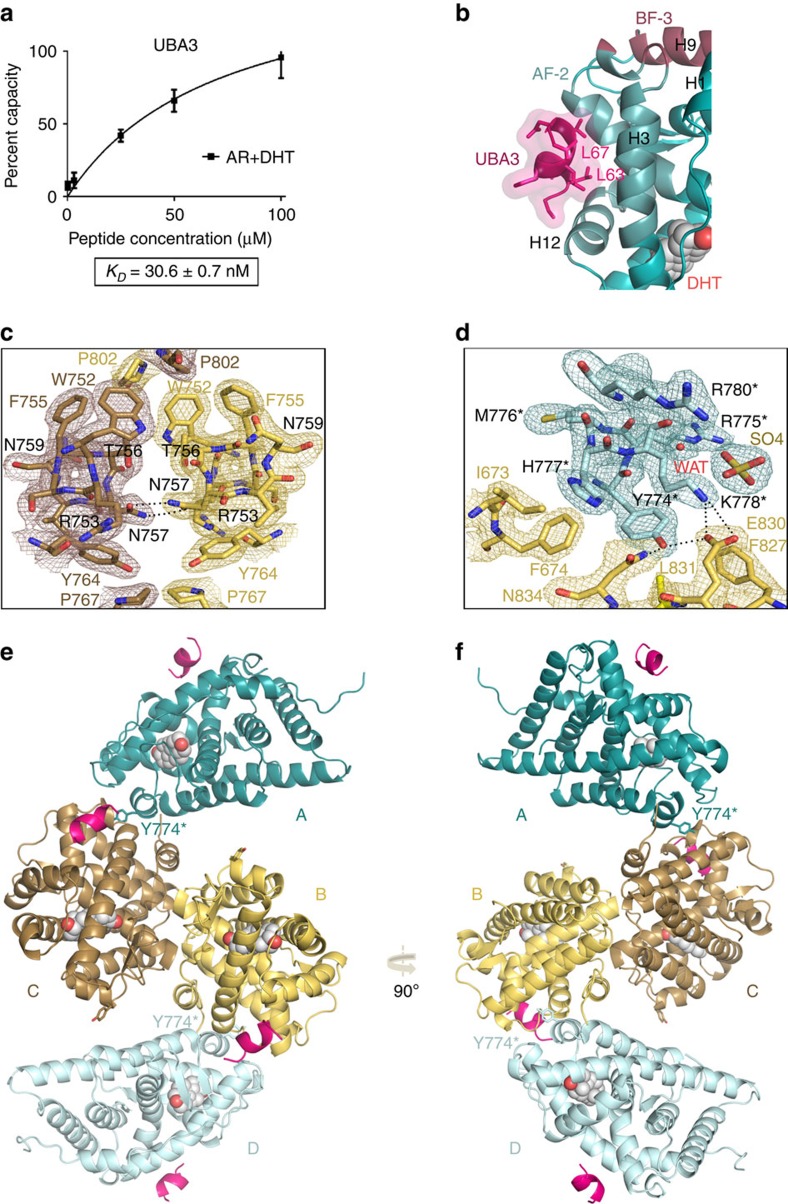
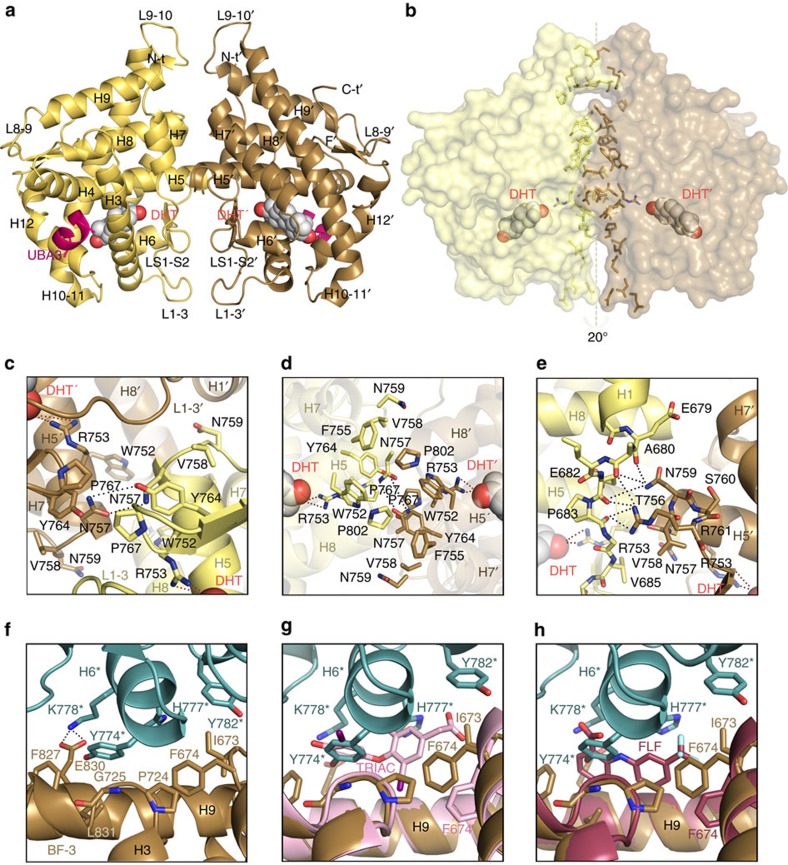
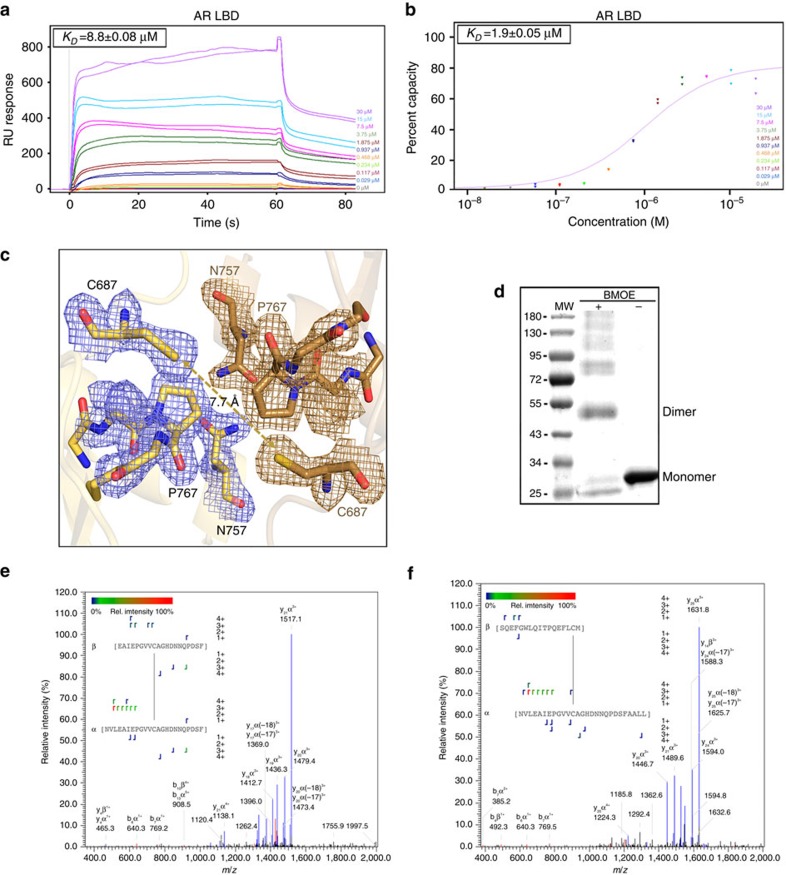
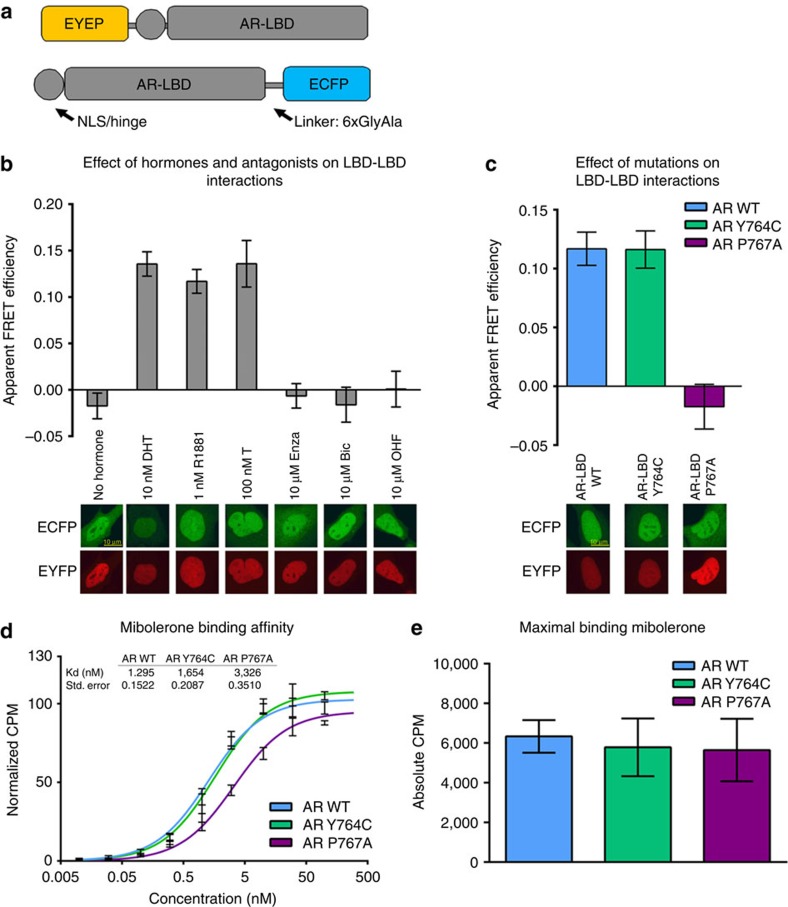
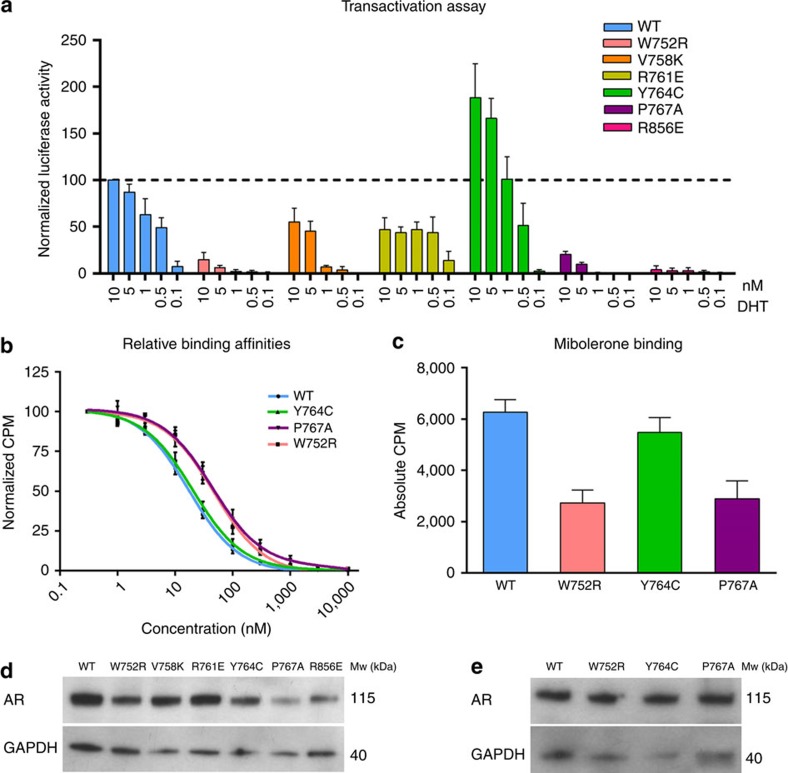
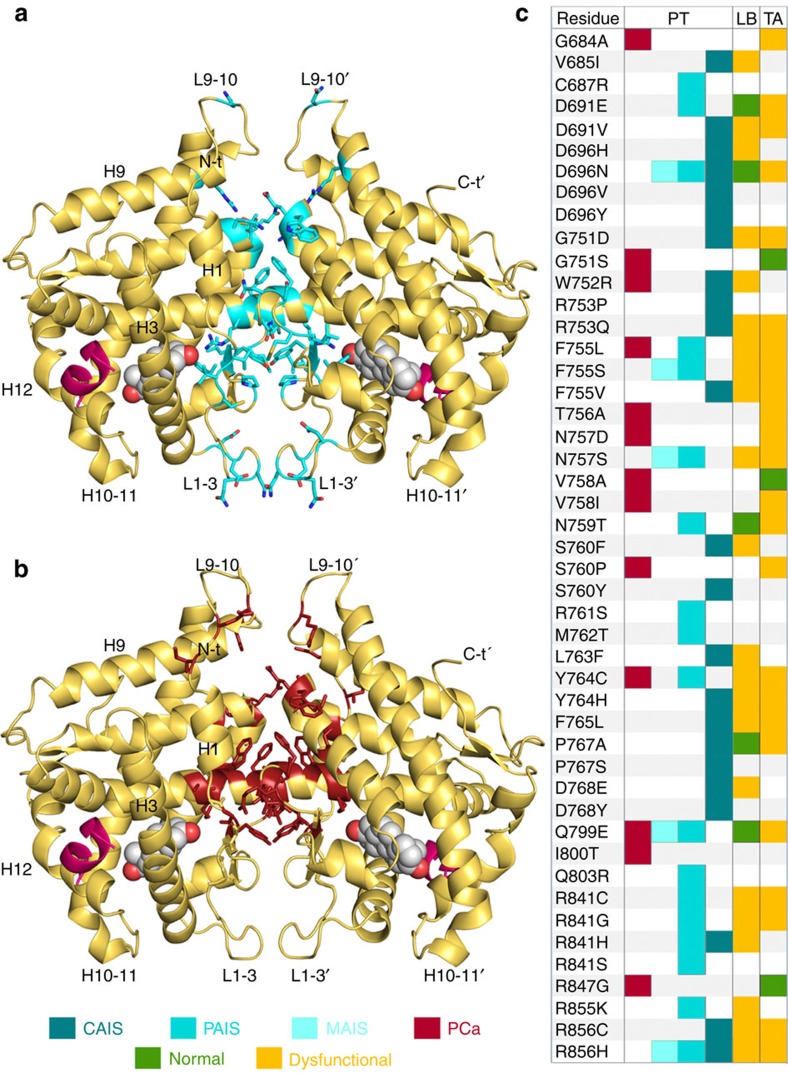
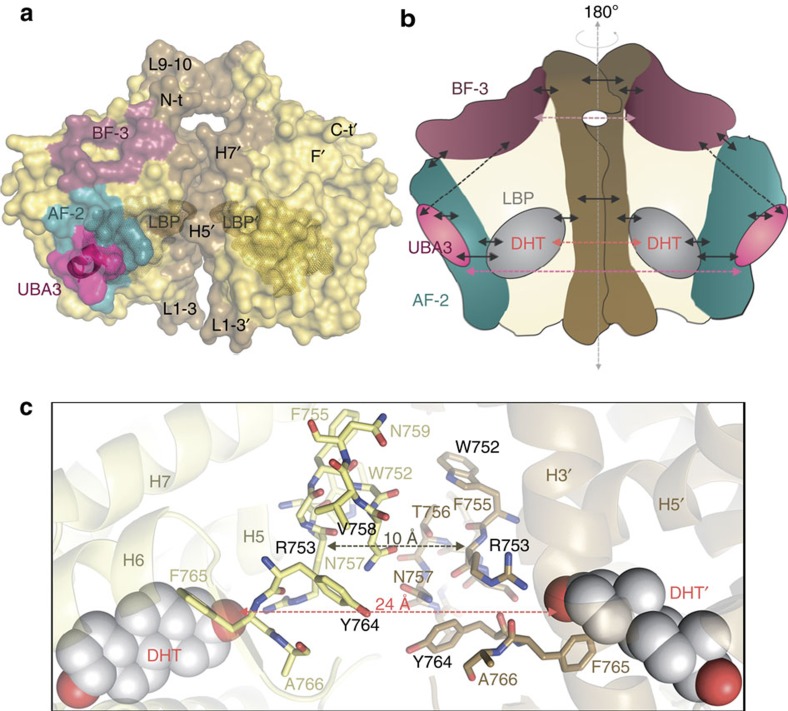
The androgen receptor (AR) plays a crucial role in normal physiology, development and metabolism as well as in the aetiology and treatment of diverse pathologies such as androgen insensitivity syndromes (AIS), male infertility and prostate cancer (PCa). Here we show that dimerization of AR ligand-binding domain (LBD) is induced by receptor agonists but not by antagonists. The 2.15-Å crystal structure of homodimeric, agonist- and coactivator peptide-bound AR-LBD unveils a 1,000-Å2 large dimerization surface, which harbours over 40 previously unexplained AIS- and PCa-associated point mutations. An AIS mutation in the self-association interface (P767A) disrupts dimer formation in vivo, and has a detrimental effect on the transactivating properties of full-length AR, despite retained hormone-binding capacity. The conservation of essential residues suggests that the unveiled dimerization mechanism might be shared by other nuclear receptors. Our work defines AR-LBD homodimerization as an essential step in the proper functioning of this important transcription factor.
Conflict of interest statement
The authors declare no competing financial interests.
Figures
Comment in
-
Andrology: AR homodimerization is essential to function.Nat Rev Urol. 2017 May;14(5):258-259. doi: 10.1038/nrurol.2017.24. Epub 2017 Feb 21. Nat Rev Urol. 2017. PMID: 28248948 No abstract available.
References
Publication types
MeSH terms
Substances
LinkOut - more resources
Full Text Sources
Other Literature Sources
Medical
Research Materials
