


Overuse Physeal Injuries in Youth Athletes
- PMID: 28165873
- PMCID: PMC5349397
- DOI: 10.1177/1941738117690847
Overuse Physeal Injuries in Youth Athletes
Abstract
Context: Despite rising awareness of the risks associated with sports participation, overuse injuries continue to increase in youth athlete populations. Physeal injuries are one type of overuse injury exclusive to pediatric populations that are often sustained during athletic practice or competition. Overuse physeal injuries are, in theory, preventable; however, little consensus has been reached surrounding the risk factors, prevention, and treatment strategies.
Objective: This systematic review summarizes the best available evidence concerning overuse physeal injuries in youth and adolescent athletes. It can be used to develop prevention and treatment programs specific to this population.
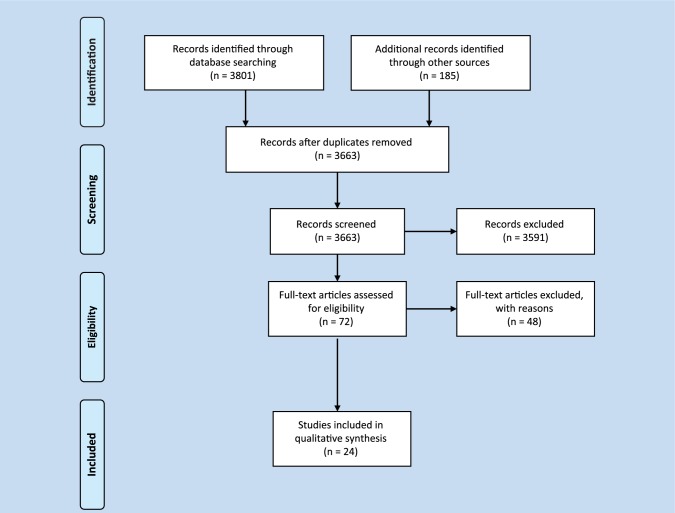
Data sources: PubMed and Academic Search Complete (EBSCOhost) were explored using the keyword physeal injuries from January 1950 through May 2015 to identify 24 studies.
Study selection: Original research studies of athletic populations with mechanisms of injury related to sport were chosen.
Study design: Systematic review.
Level of evidence: Level 3.
Data extraction: Data were extracted as available from 24 eligible studies. Study quality was rated using the Oxford Centre for Evidence-based Medicine (OCEBM) guidelines.
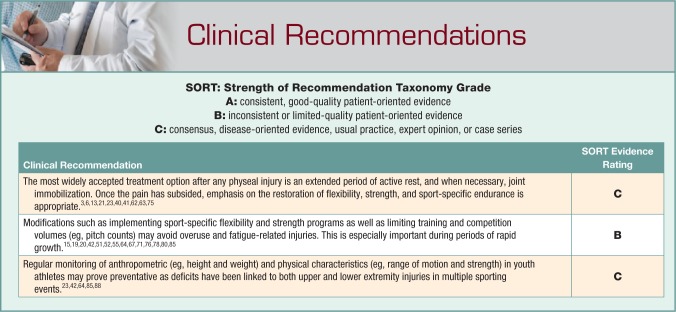
Results: Risk factors for injury include periods of accelerated growth, chronological age, body size, training volume, and previous injury. Injury prevention strategies currently emphasize participation limitations and sport-specific training programs in skeletally immature athletes. The most effective treatment after an overuse physeal injury was an extended period of active rest and joint immobilization when necessary.
Conclusion: Overuse physeal injuries are multifactorial in nature. Muscular imbalances after accelerated growth periods predispose young athletes to overuse injuries. Modifiable risk factors such as flexibility, strength, and training volume should be regularly monitored to prevent these injuries.
Keywords: overuse; pediatric injuries; physeal injury; physis; sports injuries.
Conflict of interest statement
The authors report no potential conflicts of interest in the development and publication of this article.
Figures
References
-
- Adirim TA, Cheng TL. Overview of injuries in the young athlete. Sports Med. 2003;33:75-81. - PubMed
-
- Akgul S, Dilicikik U, Kanbur NO, Kaya D, Donmez G, Doral MN. Proximal humeral physeal widening: little leaguer’s shoulder or a variation of normal development? Turk J Pediatr. 2011;53:711-714. - PubMed
-
- Albanese SA, Palmer AK, Kerr DR, Carpenter CW, Lisi D, Levinsohn EM. Wrist pain and distal growth plate closure of the radius in gymnasts. J Pediatr Orthop. 1989;9:23-28. - PubMed
-
- Anton C, Podberesky DJ. Little League shoulder: a growth plate injury. Pediatr Radiol. 2010;40(suppl 1):S54. - PubMed
-
- Beovich RF. Osgood-Schlatter’s disease: a review of the literature and an Australian series. Aust J Sci Med Sport. 1988;20:11-13.
Publication types
MeSH terms
LinkOut - more resources
Full Text Sources
Other Literature Sources
Medical
Research Materials
