


Can Ceftazidime-Avibactam and Aztreonam Overcome β-Lactam Resistance Conferred by Metallo-β-Lactamases in Enterobacteriaceae?
- PMID: 28167541
- PMCID: PMC5365724
- DOI: 10.1128/AAC.02243-16
Can Ceftazidime-Avibactam and Aztreonam Overcome β-Lactam Resistance Conferred by Metallo-β-Lactamases in Enterobacteriaceae?
Abstract
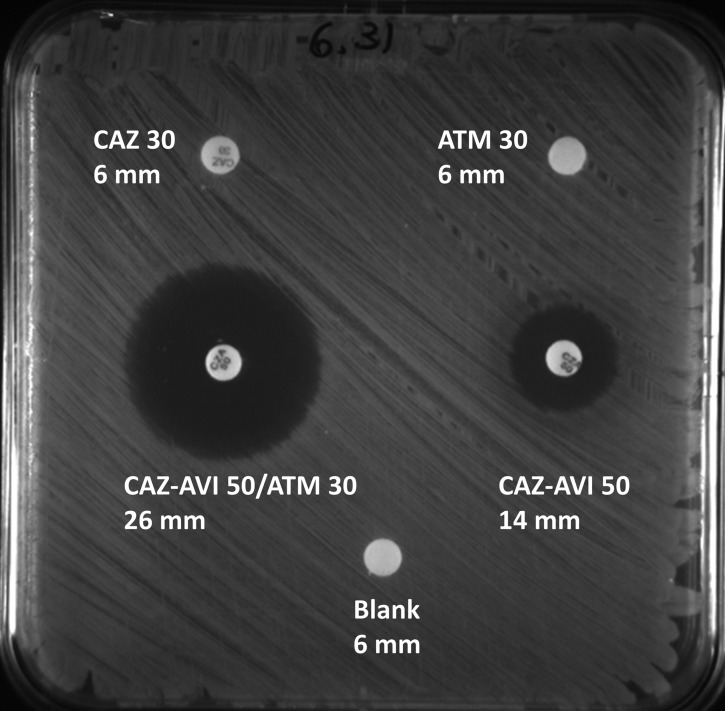
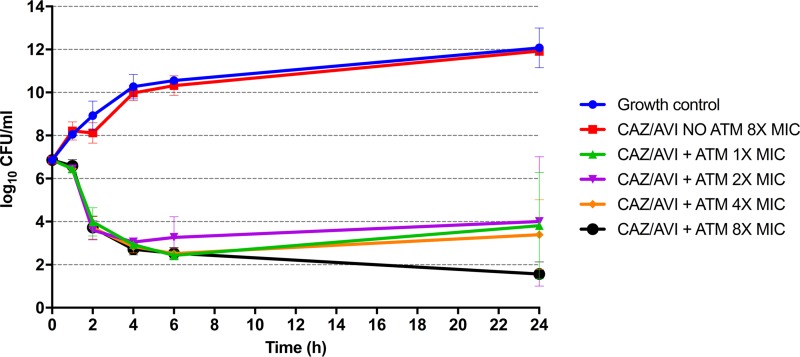
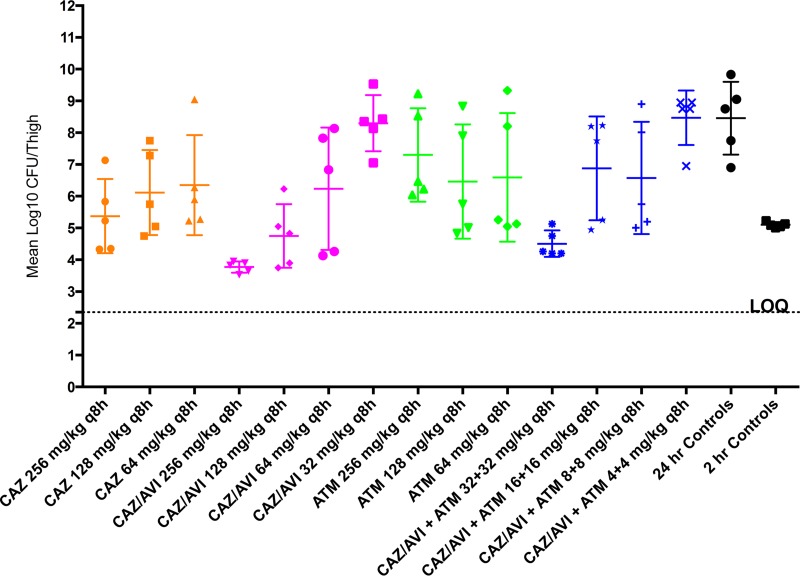
Based upon knowledge of the hydrolytic profile of major β-lactamases found in Gram-negative bacteria, we tested the efficacy of the combination of ceftazidime-avibactam (CAZ-AVI) with aztreonam (ATM) against carbapenem-resistant enteric bacteria possessing metallo-β-lactamases (MBLs). Disk diffusion and agar-based antimicrobial susceptibility testing were initially performed to determine the in vitro efficacy of a unique combination of CAZ-AVI and ATM against 21 representative Enterobacteriaceae isolates with a complex molecular background that included blaIMP, blaNDM, blaOXA-48, blaCTX-M, blaAmpC, and combinations thereof. Time-kill assays were conducted, and the in vivo efficacy of this combination was assessed in a murine neutropenic thigh infection model. By disk diffusion assay, all 21 isolates were resistant to CAZ-AVI alone, and 19/21 were resistant to ATM. The in vitro activity of CAZ-AVI in combination with ATM against diverse Enterobacteriaceae possessing MBLs was demonstrated in 17/21 isolates, where the zone of inhibition was ≥21 mm. All isolates demonstrated a reduction in CAZ-AVI agar dilution MICs with the addition of ATM. At 2 h, time-kill assays demonstrated a ≥4-log10-CFU decrease for all groups that had CAZ-AVI with ATM (8 μg/ml) added, compared to the group treated with CAZ-AVI alone. In the murine neutropenic thigh infection model, an almost 4-log10-CFU reduction was noted at 24 h for CAZ-AVI (32 mg/kg every 8 h [q8h]) plus ATM (32 mg/kg q8h) versus CAZ-AVI (32 mg/kg q8h) alone. The data presented herein require us to carefully consider this new therapeutic combination to treat infections caused by MBL-producing Enterobacteriaceae.
Keywords: avibactam; aztreonam; ceftazidime; disk diffusion; metallo-β-lactamases.
Copyright © 2017 American Society for Microbiology.
Figures
References
MeSH terms
Substances
Grants and funding
LinkOut - more resources
Full Text Sources
Other Literature Sources
Medical
Research Materials
Miscellaneous
