


Behavioral Changes and Hippocampus Glucose Metabolism in APP/PS1 Transgenic Mice via Electro-acupuncture at Governor Vessel Acupoints
- PMID: 28174534
- PMCID: PMC5259686
- DOI: 10.3389/fnagi.2017.00005
Behavioral Changes and Hippocampus Glucose Metabolism in APP/PS1 Transgenic Mice via Electro-acupuncture at Governor Vessel Acupoints
Abstract
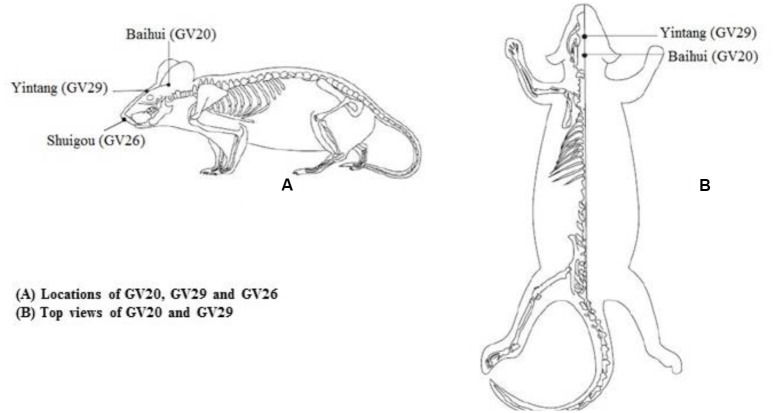
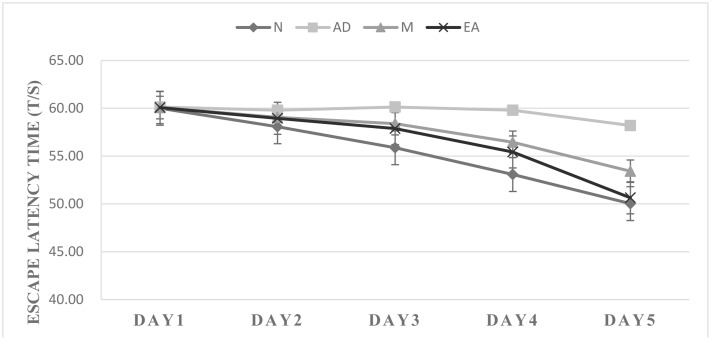
Objective: Investigating the effects of electro-acupuncture (EA) treatment on mice with Alzheimer's disease (AD), using Morris water maze (MWM) for spatial learning and memory behavior tests combined with micro-positron emission tomography (micro-PET) imaging for glucose metabolism in hippocampus. Methods: Thirty seven-month-old APP/PS1 mice were randomly divided into AD Model group (AD group), medicine group (M group) and EA group, C57BL/6 mice were used for Normal control group (N group), n = 10 in each group. Mice in M group received donepezil intervention by gavage with dose at 0.92 mg/kg. EA was applied at Baihui (GV20) and Yintang (GV29) acupoints for 20 min then pricked at Shuigou (GV26) acupoint, while mice in N, M and AD groups were received restriction for 20 min, with all treatment administrated once a day for 15 consecutive days. After the treatment, MWM was performed to observe behavioral changes in mice, then hippocampus glucose metabolism level was tested by micro-PET imaging. Results: Compared with that of AD group, the escape latency of M and EA groups declined significantly (P < 0.01), while the proportion of the platform quadrant swimming distance in total swimming distance showed an obvious increase (P < 0.01), and EA group occupied a higher percentage than that in M group. The micro-PET imaging showed that mice in AD group performed a lower glucose metabolic rate in hippocampus compared with N group (P < 0.01). Both M and EA groups presented a significant higher injected dose compared with AD group (P < 0.01), and the uptake rate of EA group was higher than M group. Conclusion: Both donepezil and EA have therapeutic effects on AD mice. To a certain extent, EA shows a better efficacy in treatment of AD by improving the spatial learning and memory ability, while also enhancing glucose metabolism in hippocampus.
Keywords: Alzheimer’s disease; electro-acupuncture; glucose metabolism; hippocampus; micro-PET.
Figures
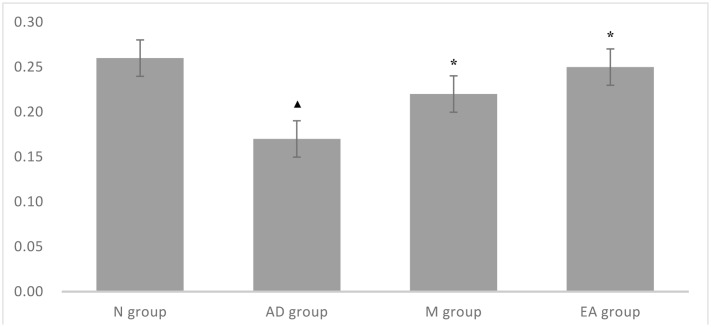
 Compared with the normal control group, P < 0.01; ∗ Compared with the model group, P < 0.01.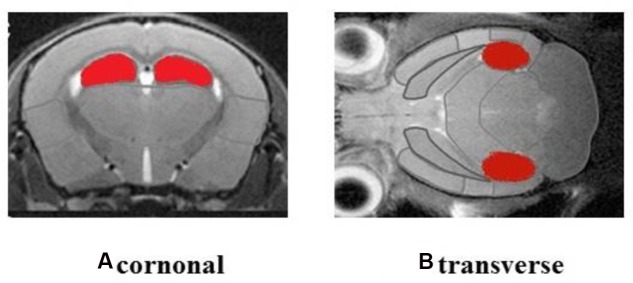

References
LinkOut - more resources
Full Text Sources
Other Literature Sources
