


Spine fracture prevalence in a nationally representative sample of US women and men aged ≥40 years: results from the National Health and Nutrition Examination Survey (NHANES) 2013-2014
- PMID: 28175980
- PMCID: PMC7422504
- DOI: 10.1007/s00198-017-3948-9
Spine fracture prevalence in a nationally representative sample of US women and men aged ≥40 years: results from the National Health and Nutrition Examination Survey (NHANES) 2013-2014
Abstract
Spine fracture prevalence is similar in men and women, increasing from <5 % in those <60 to 11 % in those 70-79 and 18 % in those ≥80 years. Prevalence was higher with age, lower bone mineral density (BMD), and in those meeting criteria for spine imaging. Most subjects with spine fractures were unaware of them.
Introduction: Spine fractures have substantial medical significance but are seldom recognized. This study collected contemporary nationally representative spine fracture prevalence data.
Methods: Cross-sectional analysis of 3330 US adults aged ≥40 years participating in NHANES 2013-2014 with evaluable Vertebral Fracture Assessment (VFA). VFA was graded by semiquantitative measurement. BMD and an osteoporosis questionnaire were collected.
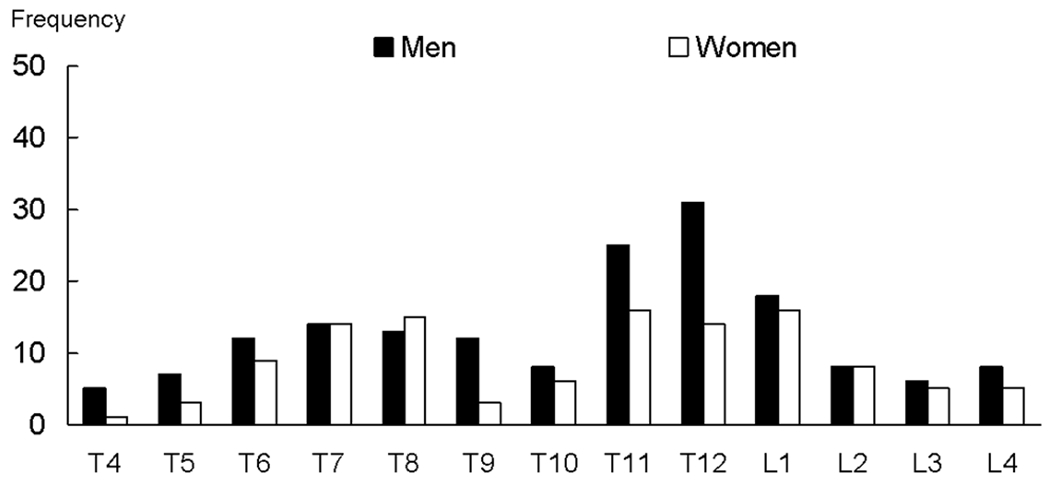
Results: Overall spine fracture prevalence was 5.4 % and similar in men and women. Prevalence increased with age from <5 % in those <60 to 11 % in those 70-79 and 18 % in those ≥80 years. Fractures were more common in non-Hispanic whites and in people with lower body mass index and BMD. Among subjects with spine fracture, 26 % met BMD criteria for osteoporosis. Prevalence was higher in subjects who met National Osteoporosis Foundation (NOF) criteria for spine imaging (14 vs 4.7 %, P < 0.001). Only 8 % of people with a spine fracture diagnosed by VFA had a self-reported fracture, and among those who self-reported a spine fracture, only 21 % were diagnosed with fracture by VFA.
Conclusion: Spine fracture prevalence is similar in women and men and increases with age and lower BMD, although most subjects with spine fracture do not meet BMD criteria for osteoporosis. Since most (>90 %) individuals were unaware of their spine fractures, lateral spine imaging is needed to identify these women and men. Spine fracture prevalence was threefold higher in individuals meeting NOF criteria for spine imaging (∼1 in 7 undergoing VFA). Identifying spine fractures as part of comprehensive risk assessment may improve clinical decision making.
Keywords: Osteoporosis; Prevalence; Screening; Spine fracture; Vertebral Fracture Assessment (VFA).
Figures
Comment in
-
Identification of vertebral fractures: a moderately severe solution?Osteoporos Int. 2017 Jun;28(6):1853-1855. doi: 10.1007/s00198-017-4042-z. Epub 2017 Apr 27. Osteoporos Int. 2017. PMID: 28451731 No abstract available.
References
-
- Burge R, Dawson-Hughes B, Solomon DH, Wong JB, King A, Tosteson A. Economic burden of osteoporosis-related fractures in the United States, 2005-2025. J Bone Miner Res 2007; 22:465–75. - PubMed
-
- Andrade SE, Majumdar SR, Chan KA, Buist DS, Go AS, Goodman M, Smith DH, Platt R, Gurwitz JH. Low frequency of treatment of osteoporosis among postmenopausal women following a fracture. Arch Intern Med. 2003. September 22;163(17):2052–7. - PubMed
-
- Feldstein AC, Nichols GA, Elmer PJ, Smith DH, Aickin M, Herson M. Older women with fractures: Patients falling through the cracks of guideline-recommended osteoporosis screening and treatment. J Bone Joint Surg Am 2003. December;85-A(12):2294–302. - PubMed
-
- Formiga F, Rivera A, Nolla JM, Coscujuela A, Sole A, Pufol R. (2005) Failure to treat osteoporosis and the risk of subsequent fractures I elderly patients with previous hip fracture: a five-year retrospective study. Aging Clin Exp Res 1&: 96–9. - PubMed
-
- Gehlbach SH, Bigelow C, Heimisdottir M, May S, Walker M, Kirkwood JR. Recognition of vertebral fracture in a clinical setting. Osteoporos Int 11:577–82, 2000. - PubMed
Publication types
MeSH terms
Grants and funding
LinkOut - more resources
Full Text Sources
Other Literature Sources
Medical
Miscellaneous
