


Prophylactic furosemide infusion decreasing early major postoperative renal dysfunction in on-pump adult cardiac surgery: a randomized clinical trial
- PMID: 28176949
- PMCID: PMC5261850
- DOI: 10.2147/RRU.S126134
Prophylactic furosemide infusion decreasing early major postoperative renal dysfunction in on-pump adult cardiac surgery: a randomized clinical trial
Abstract
Introduction: Acute renal dysfunction is a common complication of cardiac surgery. Furosemide is used in prevention, or treatment, of acute renal dysfunction. This study was conducted to evaluate the protective effects of intra- and early postoperative furosemide infusion on preventing acute renal dysfunction in elective adult cardiac surgery.
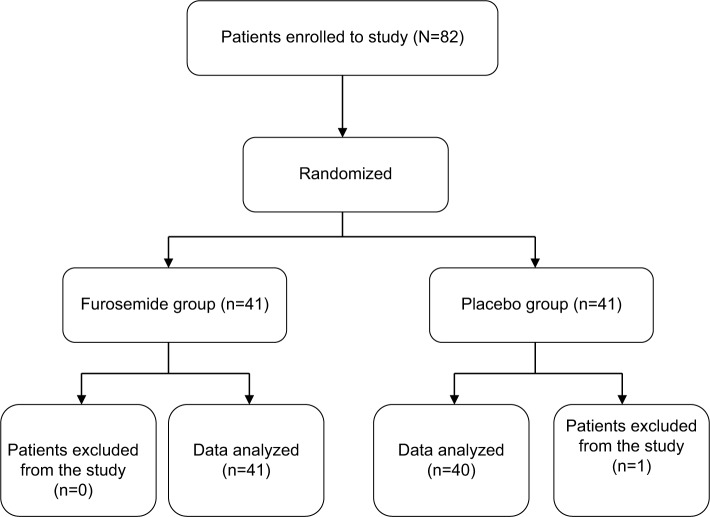
Methods: Eighty-one patients, candidates of elective cardiac surgery, were enrolled in this study in either the furosemide (n=41) or placebo (n=40) group. Furosemide (2 mg/h) or 0.9% saline was administered and continued up to 12 hours postoperatively. We measured serum creatinine (Scr) at preoperative and on the second and fifth postoperative days. Then calculated estimated glomerular filtration rate (eGFR) at these times. An increase in Scr of >0.5 mg/dL and/or >25%-50%, compared to preoperative values, was considered as acute kidney injury (AKI). In contrast, an increase in Scr by >50% and/or the need for hemodialysis was regarded as acute renal failure (ARF). At the end we compared the AKI or ARF incidence between the two groups.
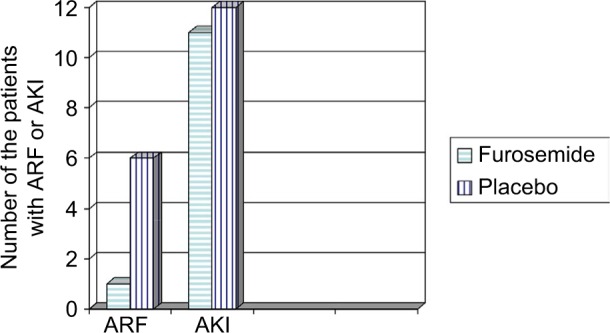
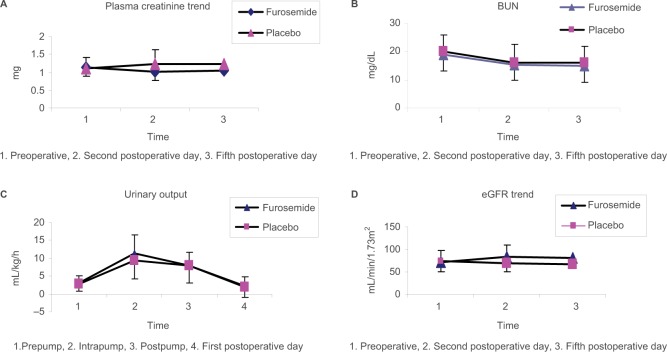
Results: On the second and fifth postoperative days, Scr was lower, and the eGFR was higher in the furosemide group. AKI incidence was similar in the two groups (11 vs 12 cases; P-value 0.622); however, ARF rate was lower in furosemide group (1 vs 6 cases; P-value 0.044). During the study period, Scr was more stable in the furosemide group, however in the placebo group, Scr initially increased and then decreased to its preoperative value after a few days.
Conclusion: This study showed that intra- and early postoperative furosemide infusion has a renal protective effect in adult cardiac surgery with cardiopulmonary bypass. Although this protective effect cannot be discovered in mild renal dysfunctions, it apparently reduces the rate of the more severe renal dysfunctions. A more multidisciplinary strategy may be needed in reducing the milder renal damage.
Keywords: cardiac surgery; cardiopulmonary bypass; furosemide; postoperative acute kidney injury; postoperative acute renal failure.
Conflict of interest statement
The authors report no conflicts of interest in this work.
Figures
References
-
- Lassnigg A, Schmidlin D, Mouhieddine M, et al. Minimal changes of serum creatinine predict prognosis in patients after cardiothoracic surgery: a prospective cohort study. J Am Soc Nephrol. 2004;15(6):1597–1605. - PubMed
-
- Lassnigg A, Donner E, Grubhofer G, Presterl E, Druml W, Hiesmayr M. Lack of renoprotective effects of dopamine and furosemide during cardiac surgery. J Am Soc Nephrol. 2000;11(1):97–104. - PubMed
-
- Chertow GM, Levy EM, Hammermeister KE, Grover F, Daley J. Independent association between acute renal failure and mortality following cardiac surgery. Am J Med. 1998;104(4):343–348. - PubMed
-
- Leacche M, Rawn JD, Mihaljevic T, et al. Outcomes in patients with normal serum creatinine and with artificial renal support for acute renal failure developing after coronary artery bypass grafting. Am J Cardiol. 2004;93(3):353–356. - PubMed
-
- Ostermann M, Taube D, Morgan C, Evans T. Acute renal failure following cardiopulmonary bypass: a changing picture. Intensive Care Med. 2000;26(5):565–571. - PubMed
LinkOut - more resources
Full Text Sources
Other Literature Sources
Research Materials
Miscellaneous
