Factors associated with relapse in adult patients discharged from the emergency department following acute asthma: a systematic review
- PMID: 28176972
- PMCID: PMC5278313
- DOI: 10.1136/bmjresp-2016-000169
Factors associated with relapse in adult patients discharged from the emergency department following acute asthma: a systematic review
Abstract
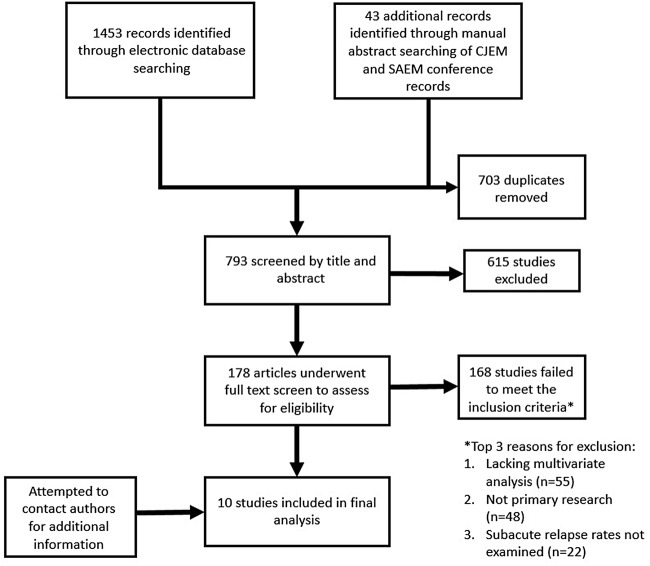
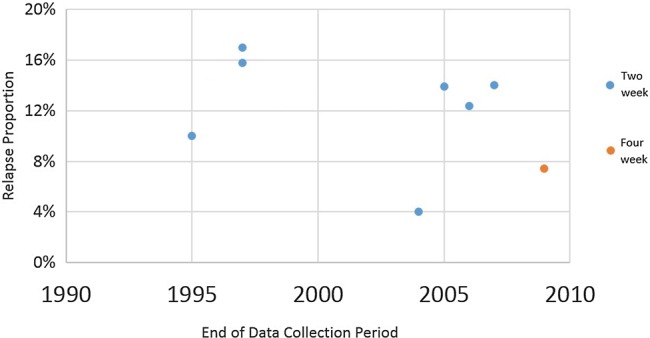
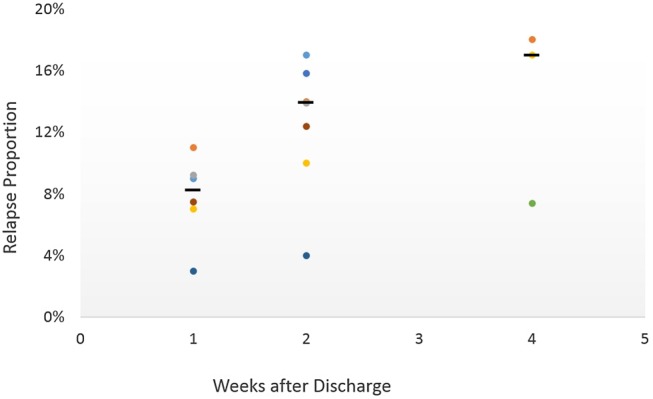
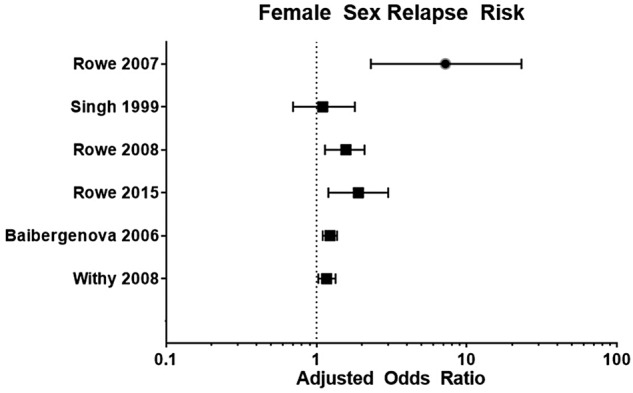
A significant proportion of patients discharged from the emergency department (ED) with asthma exacerbations will relapse within 4 weeks. This systematic review summarises the evidence regarding relapses and factors associated with relapse in adult patients discharged from EDs after being treated for acute asthma. Following a registered protocol, comprehensive literature searches were conducted. Studies tracking outcomes for adults after ED management and discharge were included if they involved adjusted analyses. Methodological quality was assessed using the Newcastle-Ottawa Scale (NOS) and the Risk of Bias (RoB) Tool. Results were summarised using medians and IQRs or mean and SD, as appropriate. 178 articles underwent full-text review and 10 studies, of various methodologies, involving 32 923 patients were included. The majority of the studies were of high quality according to NOS and RoB Tool. Relapse proportions were 8±3%, 12±4% and 14±6% at 1, 2 and 4 weeks, respectively. Female sex was the most commonly reported and statistically significant factor associated with an increased risk of relapse within 4 weeks of ED discharge for acute asthma. Other factors significantly associated with relapse were past healthcare usage and previous inhaled corticosteroids (ICS) usage. A median of 17% of patients who are discharged from the ED will relapse within the first 4 weeks. Factors such as female sex, past healthcare usage and ICS use at presentation were commonly and significantly associated with relapse occurrence. Identifying patients with these features could provide clinicians with guidance during their ED discharge decision-making.
Keywords: Asthma.
Conflict of interest statement
BHR was the principal investigator of three included studies, and C-VR was an investigator in two included studies; however, BHR was excluded from the selection of potentially eligible manuscripts and final inclusion/exclusion decisions and C-VR was not asked to adjudicate on either study. CV-R, JH, NA and LD have reported no potential conflicts of interest that exist with any companies/organisations whose products or services may be discussed in this article.
Figures
References
-
- Croisant S. Epidemiology of asthma: prevalence and burden of disease. Adv Exp Med Biol 2014;795:17–29. doi:10.1007/978-1-4614-8603-9_2 - DOI - PubMed
-
- Masoli M, Fabian D, Holt S et al. . for the Global Initiative for Asthma (GINA) Program. The global burden of asthma: executive summary of the GINA Dissemination Committee report. Allergy 2004;59:469–78. doi:10.1111/j.1398-9995.2004.00526.x - DOI - PubMed
-
- Ivanova JI, Bergman R, Birnbaum HG et al. . Effect of asthma exacerbations on health care costs among asthmatic patients with moderate and severe persistent asthma. J Allergy Clin Immunol 2012;129:1229–35. doi:10.1016/j.jaci.2012.01.039 - DOI - PubMed
LinkOut - more resources
Full Text Sources
Other Literature Sources
Miscellaneous