


Hetero-oligomerization between the TNF receptor superfamily members CD40, Fas and TRAILR2 modulate CD40 signalling
- PMID: 28182009
- PMCID: PMC5386471
- DOI: 10.1038/cddis.2017.22
Hetero-oligomerization between the TNF receptor superfamily members CD40, Fas and TRAILR2 modulate CD40 signalling
Abstract
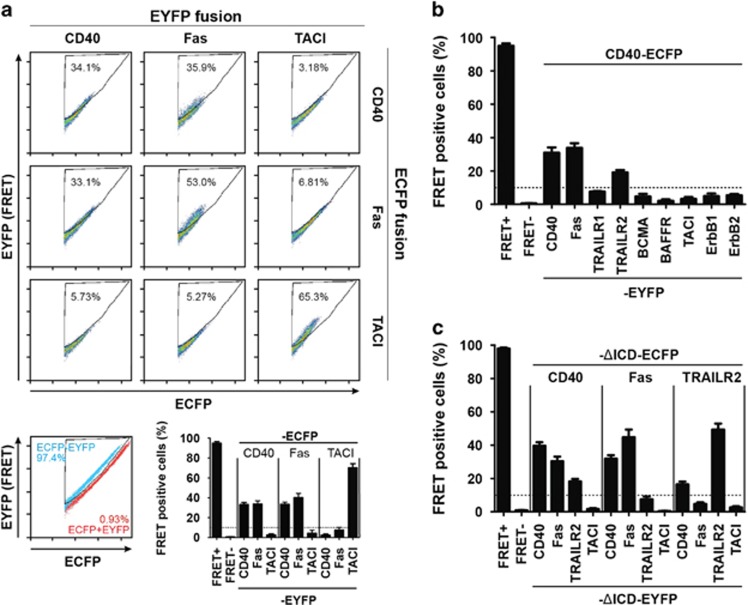
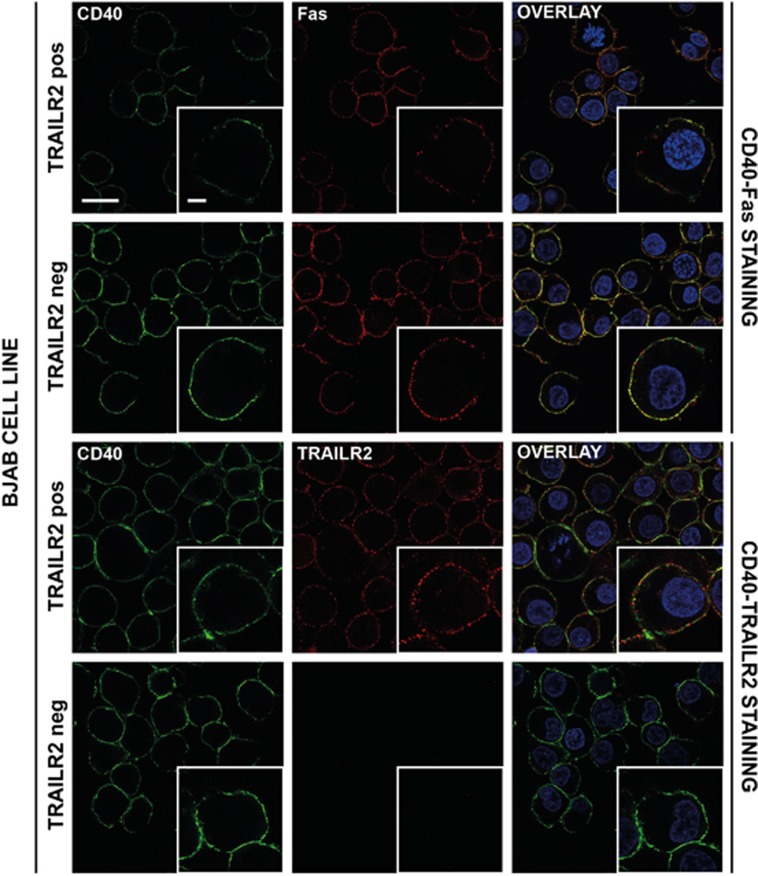
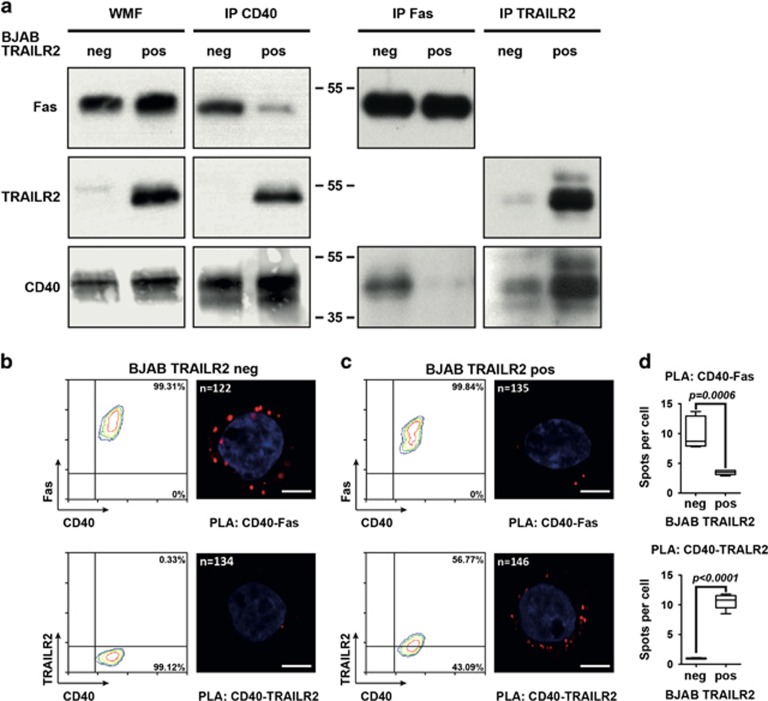
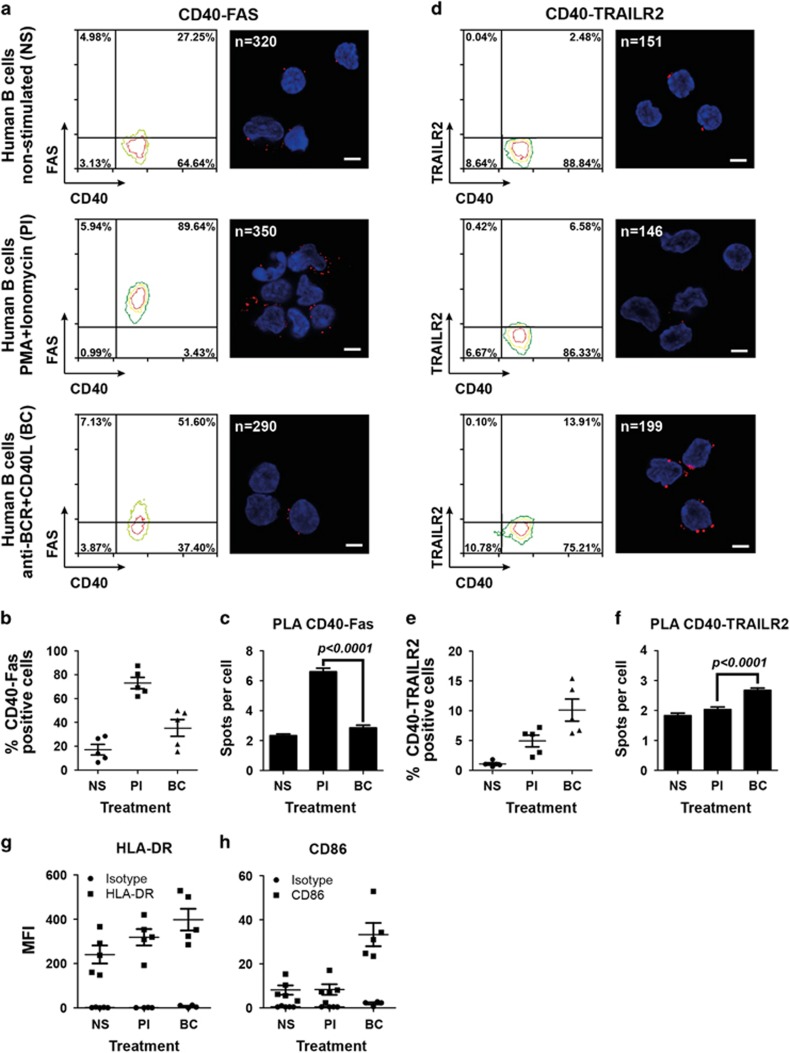
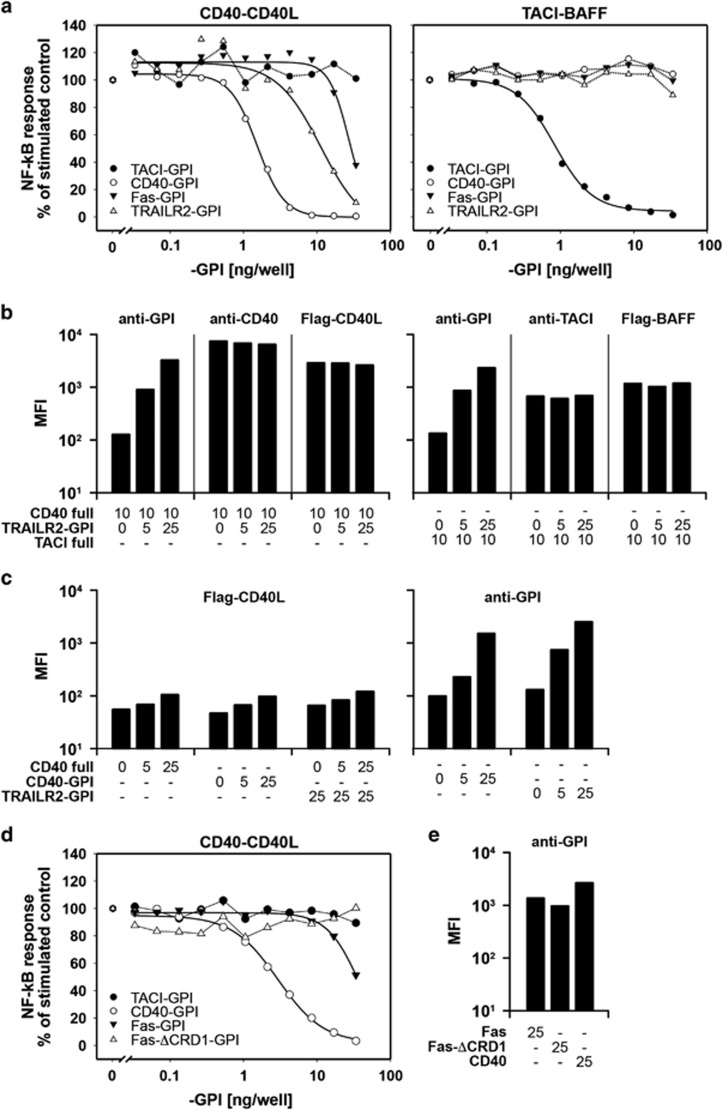
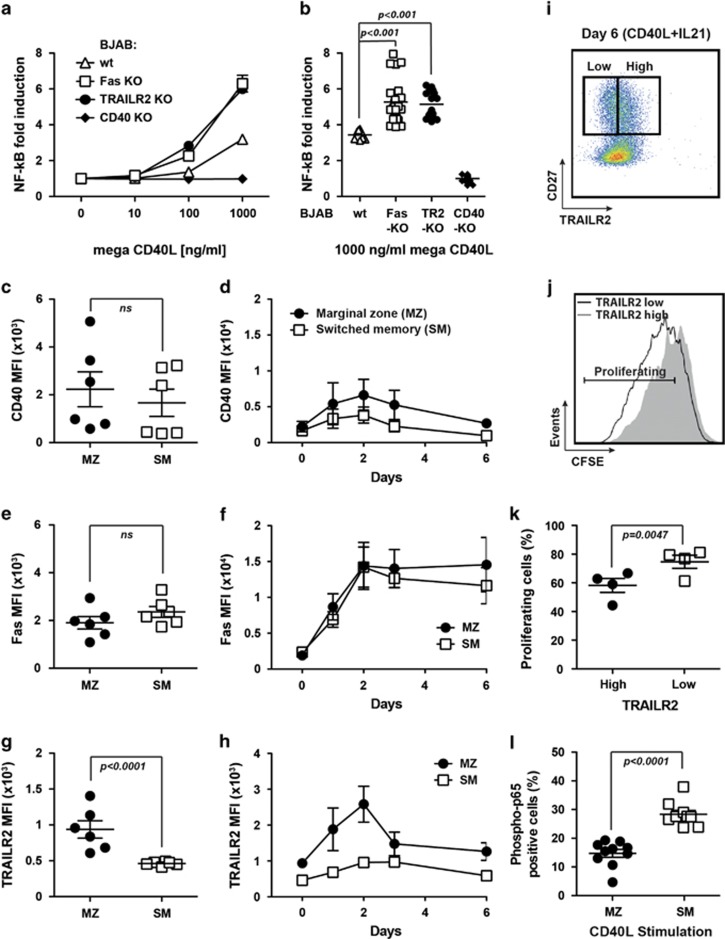
TNF receptor superfamily members (TNFRSF) such as CD40, Fas and TRAIL receptor 2 (TRAILR2) participate to the adaptive immune response by eliciting survival, proliferation, differentiation and/or cell death signals. The balance between these signals determines the fate of the immune response. It was previously reported that these receptors are able to self-assemble in the absence of ligand through their extracellular regions. However, the role of this oligomerization is not well understood, and none of the proposed hypotheses take into account potential hetero-association of receptors. Using CD40 as bait in a flow cytometry Förster resonance energy transfer assay, TNFRSF members with known functions in B cells were probed for interactions. Both Fas and TRAILR2 associated with CD40. Immunoprecipitation experiments confirmed the interaction of CD40 with Fas at the endogenous levels in a BJAB B-cell lymphoma cell line deficient for TRAILR2. TRAILR2-expressing BJAB cells displayed a robust CD40-TRAILR2 interaction at the expense of the CD40-Fas interaction. The same results were obtained by proximity ligation assay, using TRAILR2-positive and -negative BJAB cells and primary human B cells. Expression of the extracellular domains of Fas or TRAILR2 with a glycolipid membrane anchor specifically reduced the intrinsic signalling pathway of CD40 in 293T cells. Conversely, BJAB cells lacking endogenous Fas or TRAILR2 showed an increased NF-κB response to CD40L. Finally, upregulation of TRAILR2 in primary human B cells correlated with reduced NF-κB activation and reduced proliferation in response to CD40L. Altogether, these data reveal that selective interactions between different TNFRSF members may modulate ligand-induced responses upstream signalling events.
Conflict of interest statement
The authors declare no conflict of interest.
Figures
References
-
- Victora GD, Nussenzweig MC. Germinal centers. Annu Rev Immunol 2012; 30: 429–457. - PubMed
-
- Chan TD, Gardam S, Gatto D, Turner VM, Silke J, Brink R et al. In vivo control of B-cell survival and antigen-specific B-cell responses. Immunol Rev 2010; 237: 90–103. - PubMed
-
- Kondo E, Yoshino T. Expression of apoptosis regulators in germinal centers and germinal center-derived B-cell lymphomas: insight into B-cell lymphomagenesis. Pathol Int 2007; 57: 391–397. - PubMed
-
- Greil R, Anether G, Johrer K, Tinhofer I. Tracking death dealing by Fas and TRAIL in lymphatic neoplastic disorders: pathways, targets, and therapeutic tools. J Leukoc Biol 2003; 74: 311–330. - PubMed
Publication types
MeSH terms
Substances
LinkOut - more resources
Full Text Sources
Other Literature Sources
Research Materials
Miscellaneous
