


Prophylaxis usage, bleeding rates, and joint outcomes of hemophilia, 1999 to 2010: a surveillance project
- PMID: 28183693
- PMCID: PMC5409445
- DOI: 10.1182/blood-2016-02-683169
Prophylaxis usage, bleeding rates, and joint outcomes of hemophilia, 1999 to 2010: a surveillance project
Abstract
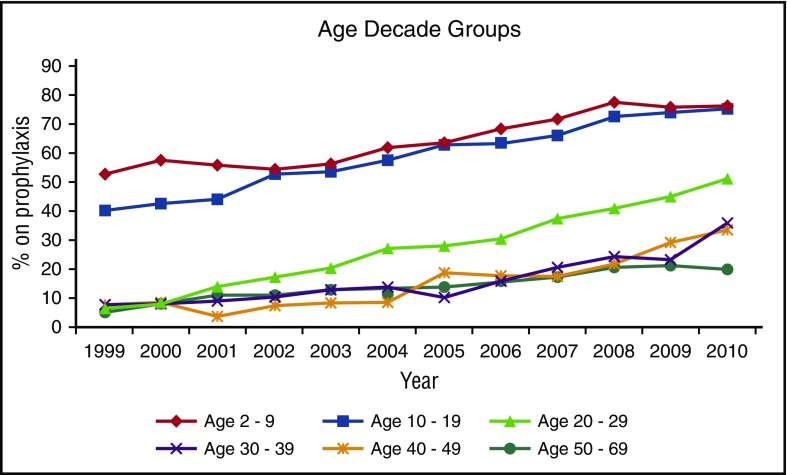
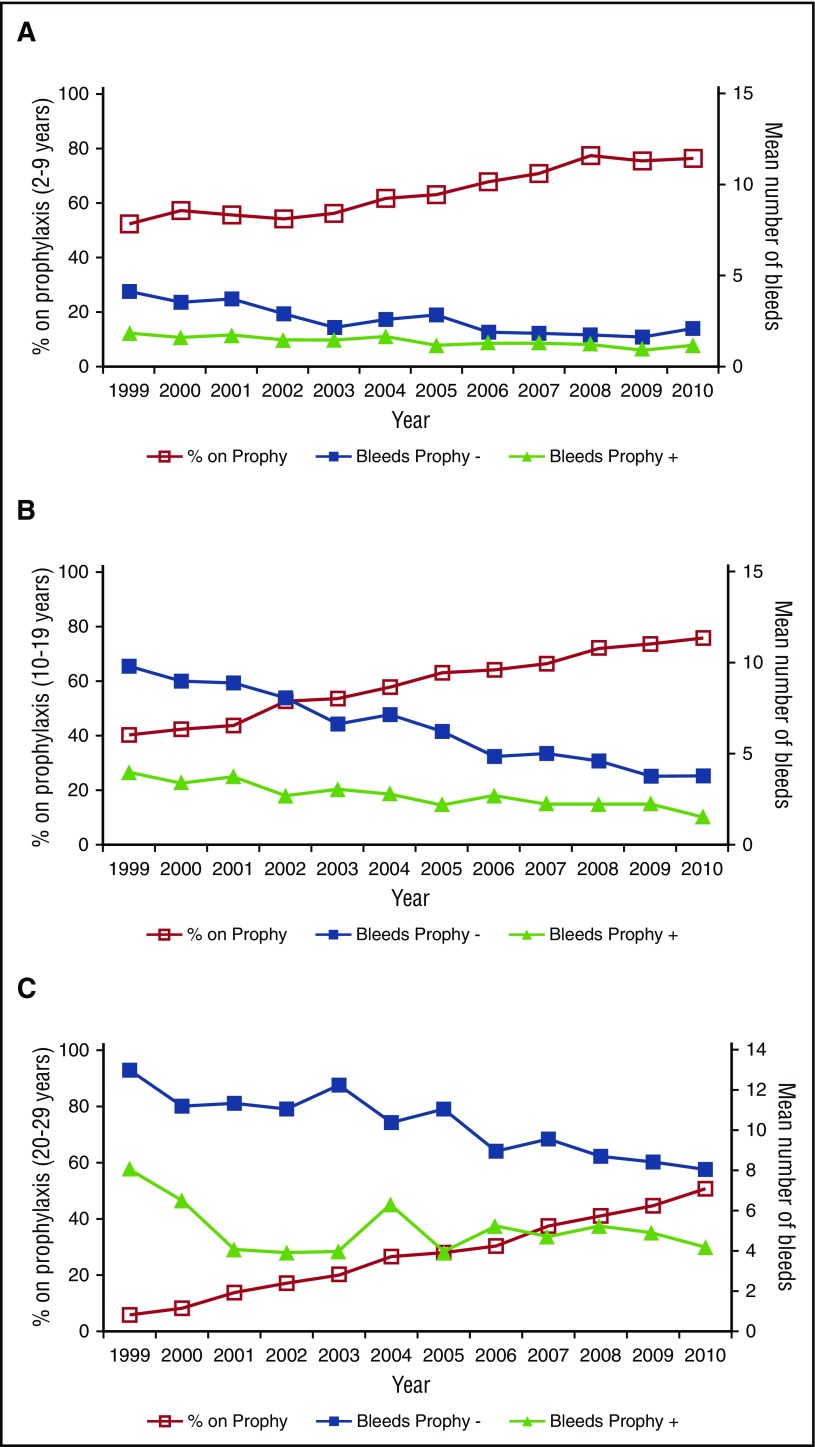
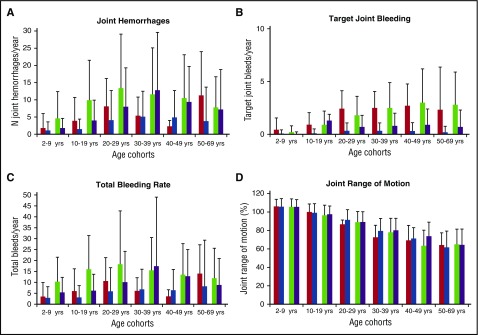
This analysis of the US Hemophilia Treatment Center Network and the Centers for Disease Control and Prevention surveillance registry assessed trends in prophylaxis use and its impact on key indicators of arthropathy across the life-span among participants with severe hemophilia A. Data on demographics, clinical characteristics, and outcomes were collected prospectively between 1999 and 2010 at annual clinical visits to 134 hemophilia treatment centers. Trends in treatment and outcomes were evaluated using cross-sectional and longitudinal analyses. Data analyzed included 26 614 visits for 6196 males; mean age at first registry visit was 17.7 years; and median was 14 (range, 2 to 69). During this time, prophylaxis use increased from 31% to 59% overall, and by 2010, 75% of children and youths <20 years were on prophylaxis. On cross-sectional analysis, bleeding rates decreased dramatically for the entire population (P < .001) in parallel with increased prophylaxis usage, possibly because frequent bleeders adopted prophylaxis. Joint bleeding decreased proportionately with prophylaxis (22%) and nonprophylaxis (23%), and target joints decreased more with prophylaxis (80% vs 61%). Joint, total, and target joint bleeding on prophylaxis were 33%, 41%, and 27%, respectively, compared with nonprophylaxis. On longitudinal analysis of individuals over time, prophylaxis predicted decreased bleeding at any age (P < .001), but only prophylaxis initiation prior to age 4 years and nonobesity predicted preservation of joint motion (P < .001 for each). Using a national registry, care providers in a specialized health care network for a rare disorder were able to detect and track trends in outcomes over time.
Figures
References
-
- Valentino LA. Blood-induced joint disease: the pathophysiology of hemophilic arthropathy. J Thromb Haemost. 2010;8(9):1895-1902. - PubMed
-
- Aledort LM, Haschmeyer RH, Pettersson H; The Orthopaedic Outcome Study Group. A longitudinal study of orthopaedic outcomes for severe factor-VIII-deficient haemophiliacs. J Intern Med. 1994;236(4):391-399. - PubMed
-
- Iannone M, Pennick L, Tom A, et al. Prevalence of depression in adults with haemophilia. Haemophilia. 2012;18(6):868-874. - PubMed
-
- Cassis FRMY, Querol F, Forsyth A, Iorio A; HERO International Advisory Board. Psychosocial aspects of haemophilia: a systematic review of methodologies and findings. Haemophilia. 2012;18(3):e101-e114. - PubMed
-
- Manco-Johnson MJ, Abshire TC, Shapiro AD, et al. Prophylaxis versus episodic treatment to prevent joint disease in boys with severe hemophilia. N Engl J Med. 2007;357(6):535-544. - PubMed
Publication types
MeSH terms
Substances
Grants and funding
LinkOut - more resources
Full Text Sources
Other Literature Sources
Medical
