


Predictive validity of parent- and self-rated ADHD symptoms in adolescence on adverse socioeconomic and health outcomes
- PMID: 28185096
- PMCID: PMC5489641
- DOI: 10.1007/s00787-017-0957-3
Predictive validity of parent- and self-rated ADHD symptoms in adolescence on adverse socioeconomic and health outcomes
Abstract
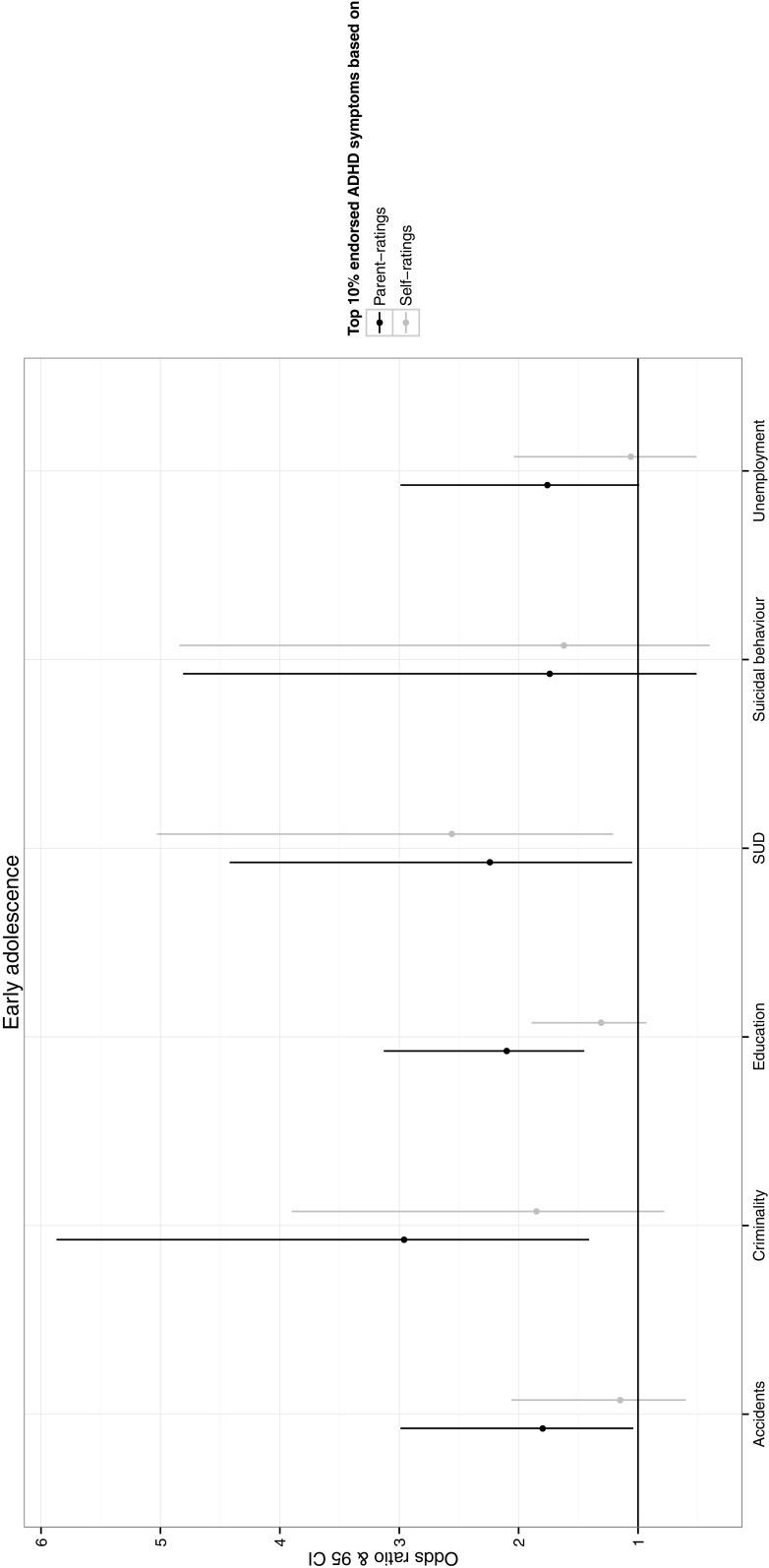
There is scarcity of research investigating the validity of self-report of attention deficit hyperactivity disorder (ADHD) symptoms compared to other informants, such as parents. This study aimed to compare the predictive associations of ADHD symptoms rated by parents and their children across adolescence on a range of adverse socioeconomic and health outcomes in early adulthood. Parent- and self-rated ADHD symptoms were assessed in 2960 individuals in early (13-14 years) and late adolescence (16-17 years). Logistic regression analyses were used to compare the associations between parent- and self-rated ADHD symptoms at both time points and adverse life outcomes in young adulthood obtained from Swedish national registries. Both parent- and self-ratings of ADHD symptoms were associated with increased risk for adverse outcomes, although associations of parent-ratings were more often statistically significant and were generally stronger (OR = 1.12-1.49, p < 0.05) than self-ratings (OR = 1.07-1.17, p < 0.05). After controlling for the other informant, parent-ratings of ADHD symptoms in both early and late adolescence significantly predicted academic and occupational failure, criminal convictions and traffic-related injuries, while self-ratings of ADHD symptoms only in late adolescence predicted substance use disorder and academic failure. Our findings suggest that both parent- and self-ratings of ADHD symptoms in adolescence provides valuable information on risk of future adverse socioeconomic and health outcomes, however, self-ratings are not valuable once parent-ratings have been taken into account in predicting most outcomes. Thus, clinicians and researchers should prioritize parent-ratings over self-ratings.
Keywords: ADHD; Developmental epidemiology; Rating scale; Validity.
Conflict of interest statement
Conflict of interest
H. Larsson has served as a speaker for Eli-Lilly and Shire and has received a research grant from Shire; all outside the submitted work. E. Du Rietz, R. Kuja-Halkola, I. Brikell, A. Jangmo, A. Sariaslan, P. Lichtenstein and J. Kuntsi report no conflicts of interest.
Ethical standards
Each wave of data collection was approved by the appropriate ethics committee, and has therefore been performed in accordance with the ethical standards laid down in the 1964 Declaration of Helsinki and its later amendments. All participants have their informed consent prior to their inclusion in the study.
Figures

References
-
- Barkley RA. Major life activity and health outcomes associated with attention-deficit/hyperactivity disorder. J Clin Psychiatry. 2002;63:10–15. - PubMed
MeSH terms
Grants and funding
LinkOut - more resources
Full Text Sources
Other Literature Sources
Medical
