. 2017 Feb 10:7:42166.
doi: 10.1038/srep42166.

Dimerisation induced formation of the active site and the identification of three metal sites in EAL-phosphodiesterases

Affiliations

Dimerisation induced formation of the active site and the identification of three metal sites in EAL-phosphodiesterases

Dom Bellini et al. Sci Rep. .

Abstract

The bacterial second messenger cyclic di-3',5'-guanosine monophosphate (c-di-GMP) is a key regulator of bacterial motility and virulence. As high levels of c-di-GMP are associated with the biofilm lifestyle, c-di-GMP hydrolysing phosphodiesterases (PDEs) have been identified as key targets to aid development of novel strategies to treat chronic infection by exploiting biofilm dispersal. We have studied the EAL signature motif-containing phosphodiesterase domains from the Pseudomonas aeruginosa proteins PA3825 (PA3825EAL) and PA1727 (MucREAL). Different dimerisation interfaces allow us to identify interface independent principles of enzyme regulation. Unlike previously characterised two-metal binding EAL-phosphodiesterases, PA3825EAL in complex with pGpG provides a model for a third metal site. The third metal is positioned to stabilise the negative charge of the 5'-phosphate, and thus three metals could be required for catalysis in analogy to other nucleases. This newly uncovered variation in metal coordination may provide a further level of bacterial PDE regulation.


Conflict of interest statement

The authors declare no competing financial interests.

Figures
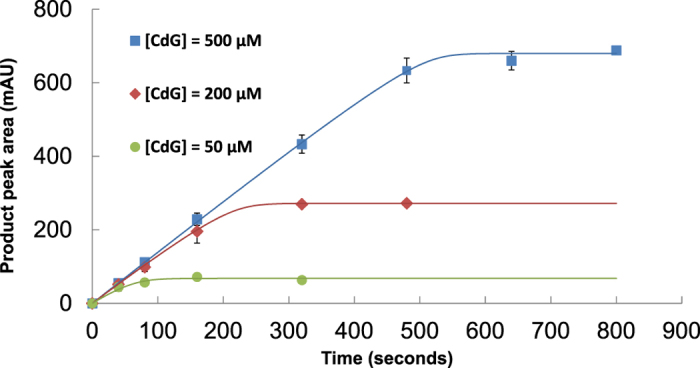
Figure 1
Figure 1. Kinetics analysis of PA3825EAL in the presence of Mn2+.
PA3825EAL (3 μM final concentration) was added to different concentrations of c-di-GMP (labelled as CdG) and the progress of each reaction measured at specified time points through separation of nucleotides using Resource-Q FPLC, followed by integration of peaks at 254 nm absorbance.
Figure 2
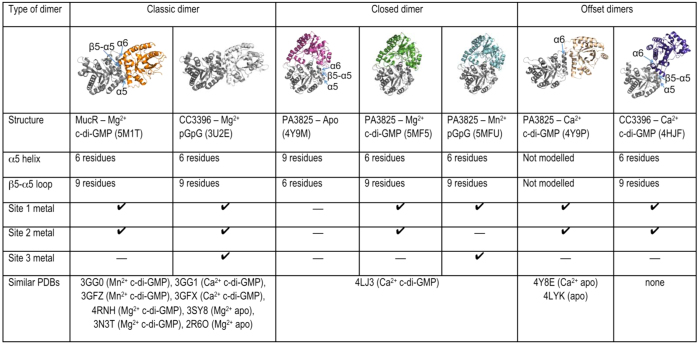
Figure 2. Analysis of dimerisation behaviour of EAL-PDE domains.
Shown are different dimer architectures of EAL-PDEs, and associated structures identified in the PDB (as of November 2016). Information on the structure of the α5-helix and the β5-α5 loop is given; a short α5-helix (6 residues) is compatible with active site formation and metal binding through the two aspartate side chains of the DDFGTG motif on the elongated β5-α5 loop. Listed are the metal binding states and the nucleotide loading states.
Figure 3
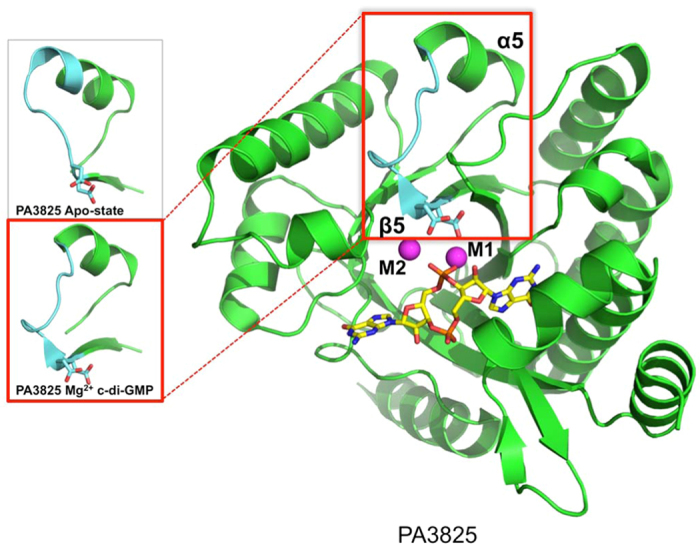
Figure 3. The structure of PA3825EAL in complex with c-di-GMP/Mg2+.
C-di-GMP is shown as yellow sticks and Mg2+ ions are represented by magenta spheres. Zoomed views of the β5-α5 loop, highlighted in light-blue, demonstrate the variation in the length of the α5 helix between the apo form and substrate forms of PA3825EAL. The structural shift in the β5-α5 loop allows Asp160 and Asp 161 to coordinate catalytic metals indicated as M1 and M2.
Figure 4
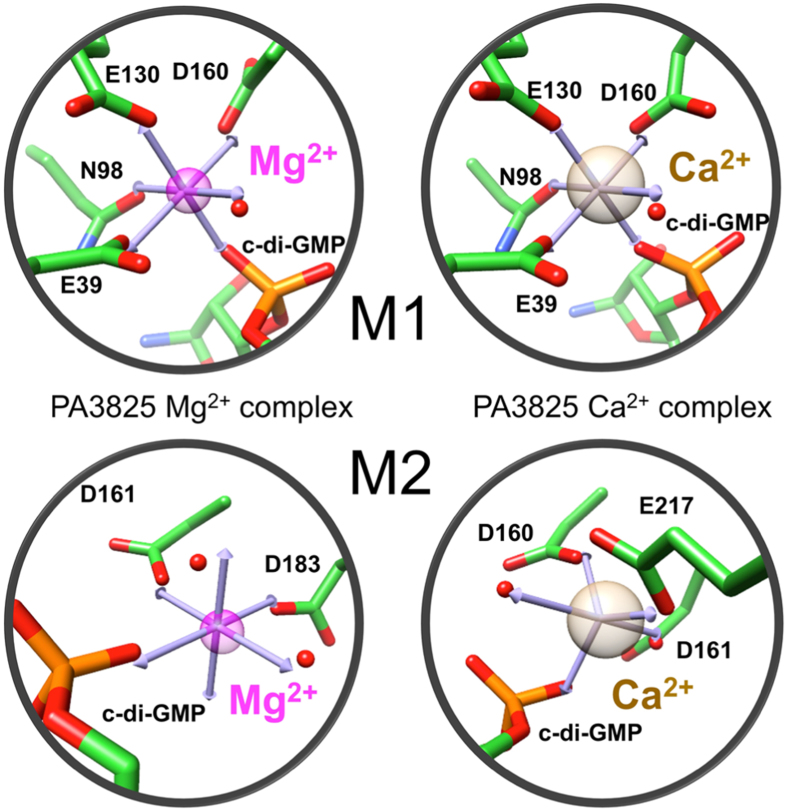
Figure 4. Perturbed metal geometry with altered activity in PA3825EAL.
Idealised coordination geometries of the Mg2+- and Ca2-c-di-GMP PA3825EAL complexes show the M1 metal ions coordinated in octahedral coordination. The M2 site metal in the Mg2+ -c-di-GMP PA3825EAL complex is coordinated in an octahedral geometry, in comparison to the M2 metal site within the Ca2+ -c-di-GMP PA3825EAL complex, which is coordinated in a trigonal bipyramidal geometry. Metal ions are shown as coloured transparent spheres (Mg2+ in magenta, Ca2+ in tan) with coordinating residues and nucleotide displayed in stick form with coordinating waters shown as red spheres.
Figure 5
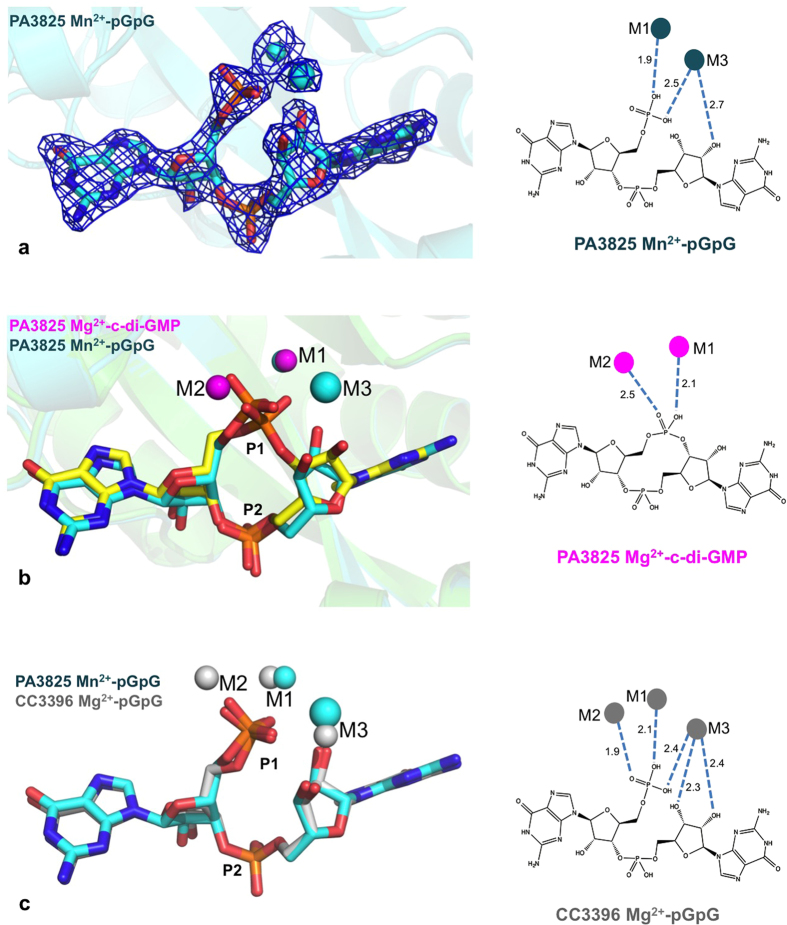
Figure 5. Identification of the M3 position in the pGpG complex.
(a) Electron density of pGpG and metal ions bound to PA3825EAL, contoured at 1.3 σ. (b) Structural overlay of the substrate and product complexes of PA3825EAL. The substrate c-di-GMP is shown as yellow sticks; Mg2+ ions (magenta spheres) occupy the M1 and M2 binding sites. The product pGpG is shown as blue sticks; Mn2+ ions (blue spheres) occupy the M1 and M3 binding sites. (c) Structural comparison of the product complexes of PA3825EAL and CC3396EAL (PDB code 3U2E). In PA3825EAL manganese and sodium ions are present in the M1 and M3 positions, respectively, while in CC3396EAL magnesium ions are present in the M1, M2 and M3 positions. Schematic representations on the right show the interactions between the coordinated metal ions and the bound substrate or product, with distances labelled in Å.
Figure 6
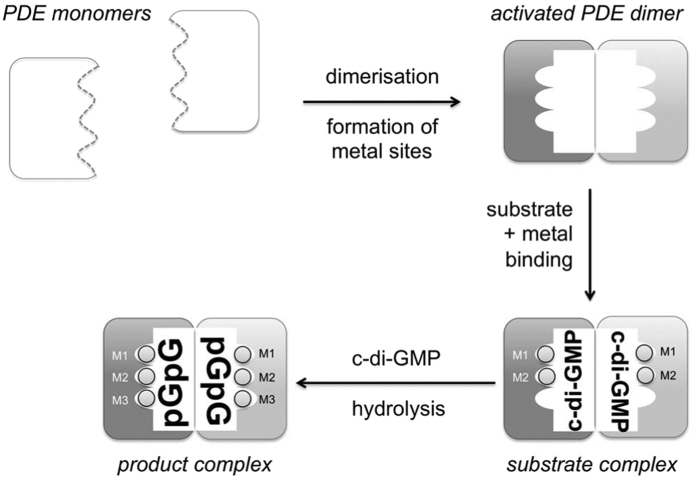
Figure 6. Proposed regulatory steps in EAL-PDE catalysed c-di-GMP hydrolysis.
Dimerisation induces a conformational change in the β5-α5 loop, allowing conserved aspartate residues to coordinate metal ions in the M1 and M2 position and c-di-GMP to bind. A third metal ion binds in the M3 position in the pGpG product complex.

References

    1. D’Argenio D. A., Calfee M. W., Rainey P. B. & Pesci E. C. Autolysis and autoaggregation in Pseudomonas aeruginosa colony morphology mutants. J. Bacteriol. 184, 6481–6489 (2002). - PMC - PubMed
    1. Kirillina O., Fetherston J. D., Bobrov A. G., Abney J. & Perry R. D. HmsP, a putative phosphodiesterase, and HmsT, a putative diguanylate cyclase, control Hms-dependent biofilm formation in Yersinia pestis. Mol. Microbiol. 54, 75–88 (2004). - PubMed
    1. Tischler A. D. & Camilli A. Cyclic diguanylate (c-di-GMP) regulates Vibrio cholerae biofilm formation. Mol. Microbiol. 53, 857–69 (2004). - PMC - PubMed
    1. Barraud N. et al.. Nitric oxide signaling in Pseudomonas aeruginosa biofilms mediates phosphodiesterase activity, decreased cyclic di-GMP levels, and enhanced dispersal. J. Bacteriol. 191, 7333–42 (2009). - PMC - PubMed
    1. Thormann K. M. et al.. Control of formation and cellular detachment from Shewanella oneidensis MR-1 biofilms by cyclic di-GMP. J. Bacteriol. 188, 2681–2691 (2006). - PMC - PubMed

Publication types

MeSH terms