


Ultrasensitive Label-free Electrochemical Immunosensor based on Multifunctionalized Graphene Nanocomposites for the Detection of Alpha Fetoprotein
- PMID: 28186128
- PMCID: PMC5301246
- DOI: 10.1038/srep42361
Ultrasensitive Label-free Electrochemical Immunosensor based on Multifunctionalized Graphene Nanocomposites for the Detection of Alpha Fetoprotein
Abstract
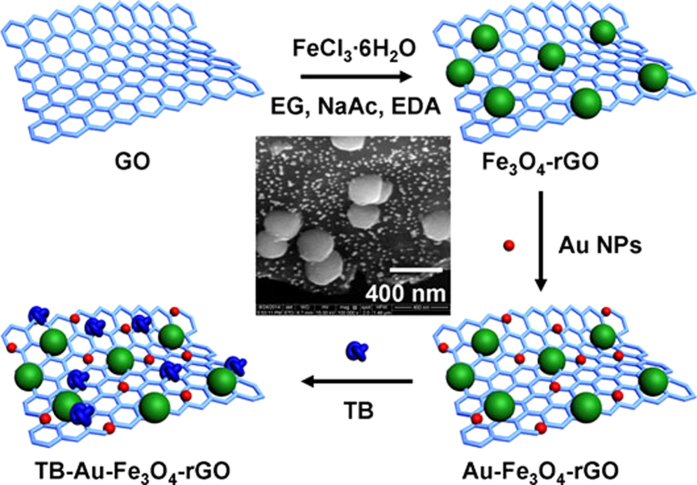
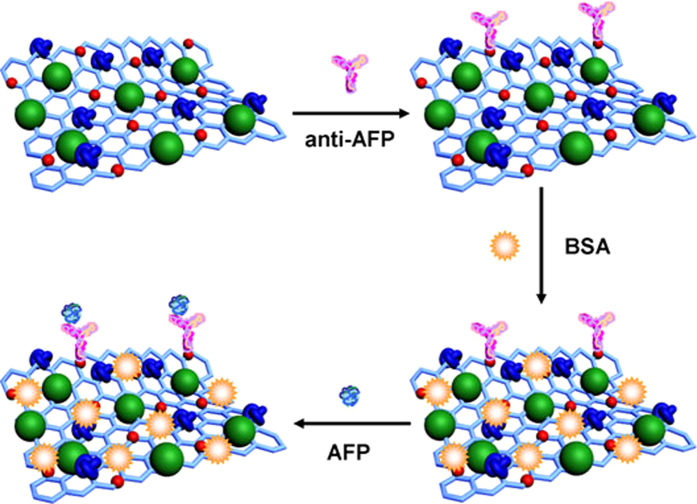
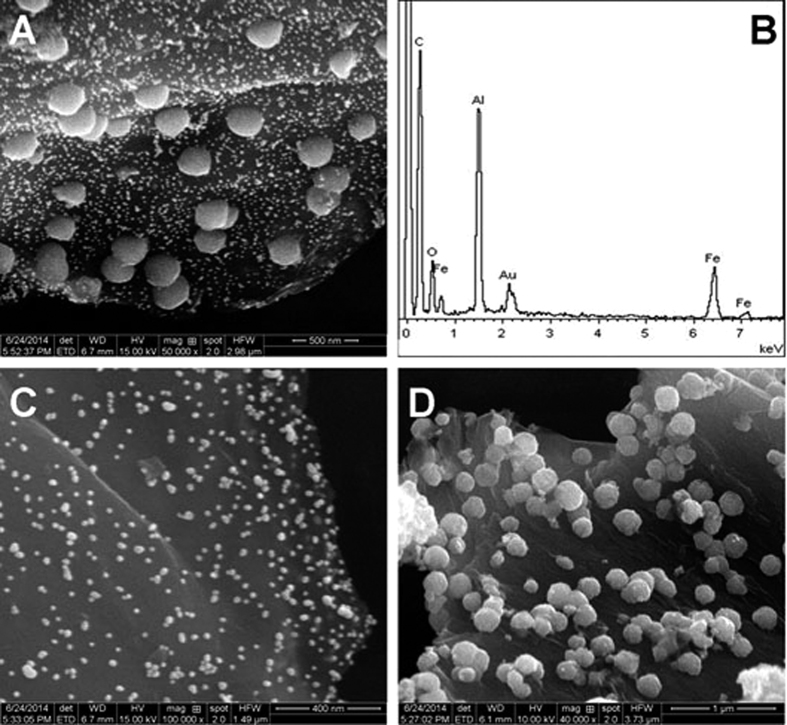
In this work, a novel label-free electrochemical immunosensor was developed for the quantitative detection of alpha fetoprotein (AFP). Multifunctionalized graphene nanocomposites (TB-Au-Fe3O4-rGO) were applied to modify the electrode to achieve the amplification of electrochemical signal. TB-Au-Fe3O4-rGO includes the advantages of graphene, ferroferric oxide nanoparticles (Fe3O4 NPs), gold nanoparticles (Au NPs) and toluidine blue (TB). As a kind of redox probe, TB can produce the electrochemical signal. Graphene owns large specific surface area, high electrical conductivity and good adsorption property to load a large number of TB. Fe3O4 NPs have good electrocatalytic performance towards the redox of TB. Au NPs have good biocompatibility to capture the antibodies. Due to the good electrochemical performance of TB-Au-Fe3O4-rGO, the effective and sensitive detection of AFP was achieved by the designed electrochemical immunosensor. Under optimal conditions, the designed immunosensor exhibited a wide linear range from 1.0 × 10⁻⁵ ng/mL to 10.0 ng/mL with a low detection limit of 2.7 fg/mL for AFP. It also displayed good electrochemical performance including good reproducibility, selectivity and stability, which would provide potential applications in the clinical diagnosis of other tumor markers.
Conflict of interest statement
The authors declare no competing financial interests.
Figures
References
-
- Won Y. S. & Lee S. W. Targeted retardation of hepatocarcinoma cells by specific replacement of alpha-fetoprotein RNA. J. Biotechnol. 129, 614–619 (2007). - PubMed
-
- Otsuru A., Nagataki S., Koji T. & Tamaoki T. Analysis of alpha-fetoprotein gene expression in hepatocellular carcinoma and liver cirrhosis by in situ hybridization. Cancer 62, 1105–1112 (1988). - PubMed
-
- Perz J. F., Armstrong G. L., Farrington L. A., Hutin Y. J. F. & Bell B. P. The contributions of hepatitis B virus and hepatitis C virus infections to cirrhosis and primary liver cancer worldwide. J. Hepatol. 45, 529–538 (2006). - PubMed
-
- Taketa K. α-fetoprotein: Reevaluation in hepatology. Hepatology 12, 1420–1432 (1990). - PubMed
-
- Kavosi B., Hallaj R., Teymourian H. & Salimi A. Au nanoparticles/PAMAM dendrimer functionalized wired ethyleneamine-viologen as highly efficient interface for ultra-sensitive α-fetoprotein electrochemical immunosensor. Biosens. Bioelectron. 59, 389–396 (2014). - PubMed
Publication types
MeSH terms
Substances
LinkOut - more resources
Full Text Sources
Other Literature Sources
Research Materials
