


Mangroves as a major source of soil carbon storage in adjacent seagrass meadows
- PMID: 28186151
- PMCID: PMC5301194
- DOI: 10.1038/srep42406
Mangroves as a major source of soil carbon storage in adjacent seagrass meadows
Abstract
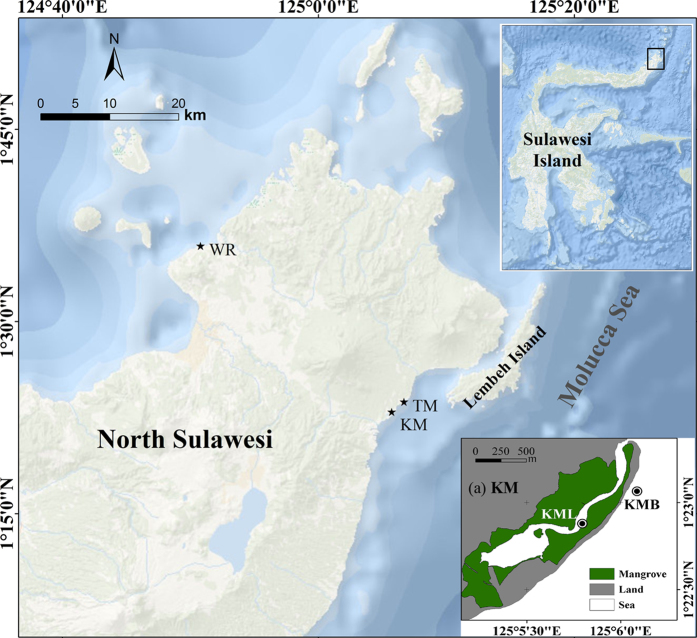
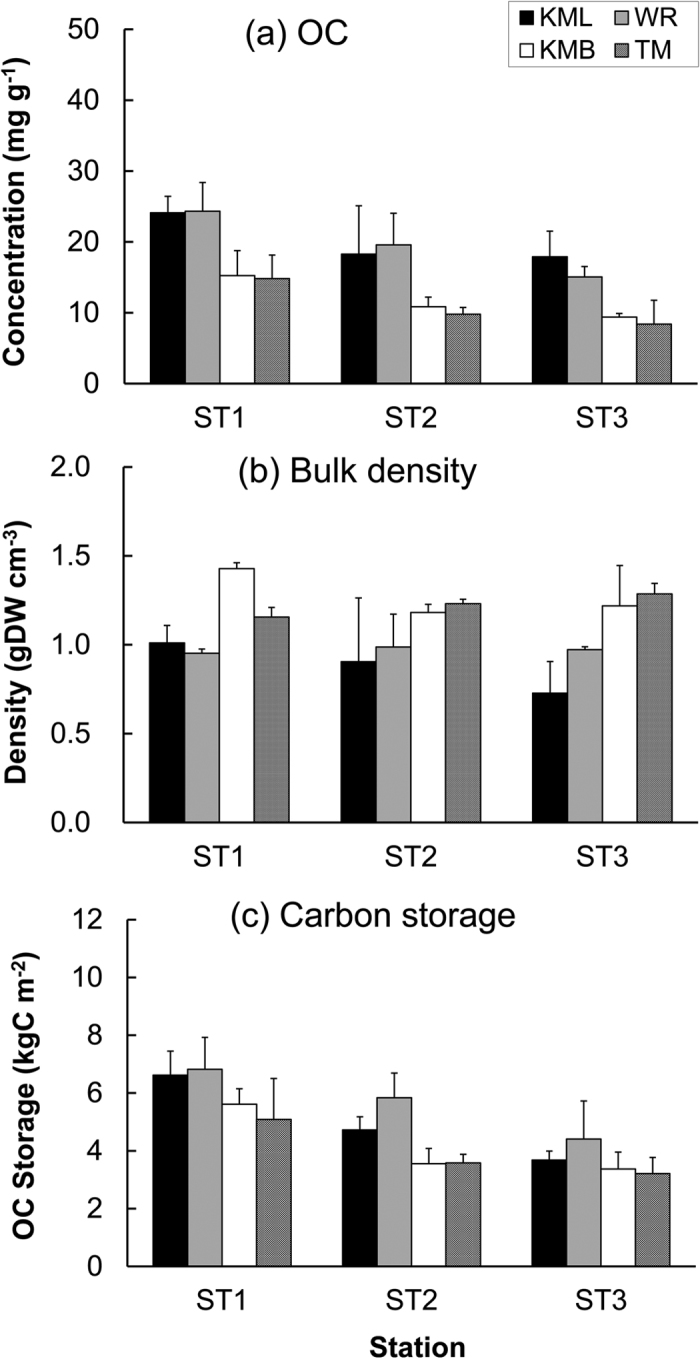
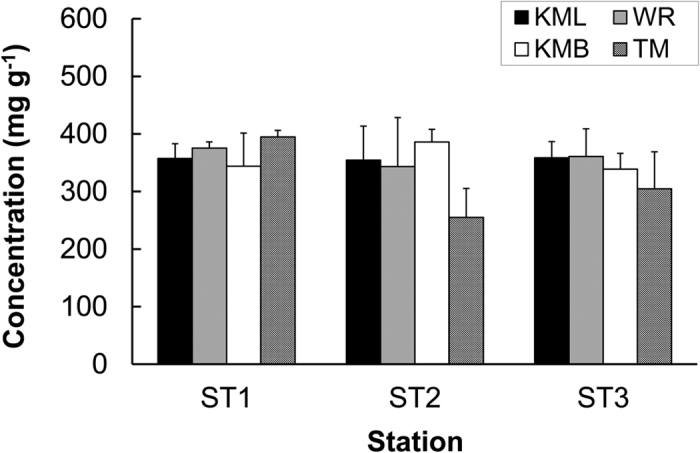
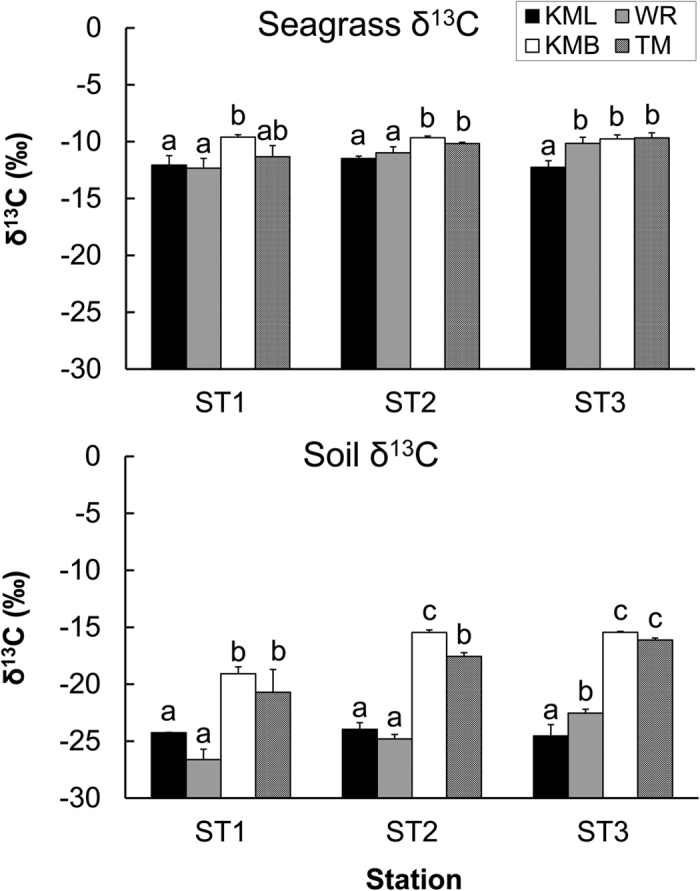
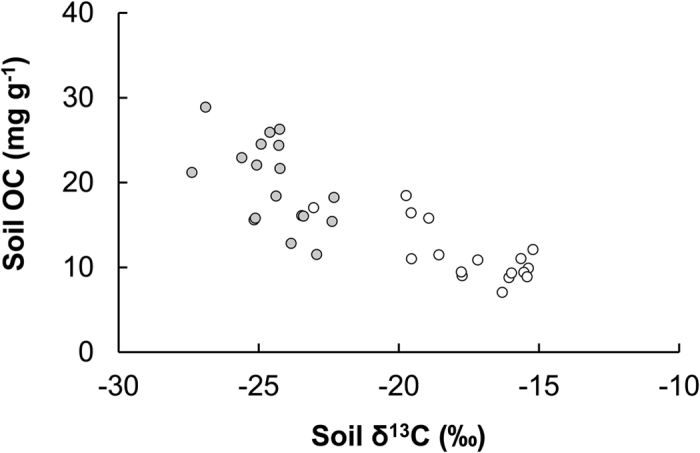
Mangrove forests have the potential to export carbon to adjacent ecosystems but whether mangrove-derived organic carbon (OC) would enhance the soil OC storage in seagrass meadows adjacent to mangroves is unclear. In this study we examine the potential for the contribution of mangrove OC to seagrass soils on the coast of North Sulawesi, Indonesia. We found that seagrass meadows adjacent to mangroves had significantly higher soil OC concentrations, soil OC with lower δ 13C, and lower bulk density than those at the non-mangrove adjacent meadows. Soil OC storage to 30 cm depth ranged from 3.21 to 6.82 kg C m-2, and was also significantly higher at the mangrove adjacent meadows than those non-adjacent meadows. δ13C analyses revealed that mangrove OC contributed 34 to 83% to soil OC at the mangrove adjacent meadows. The δ13C value of seagrass plants was also different between the seagrasses adjacent to mangroves and those which were not, with lower values measured at the seagrasses adjacent to mangroves. Moreover, we found significant spatial variation in both soil OC concentration and storage, with values decreasing toward sea, and the contribution of mangrove-derived carbon also reduced with distance from the forest.
Conflict of interest statement
The authors declare no competing financial interests.
Figures
References
-
- Duarte C. M., Middelburg J. J. & Caraco N. Major role of marine vegetation on the oceanic carbon cycle. Biogeosciences 2, 1–8 (2005).
-
- Dittmar T., Hertkorn N., Kattner G. & Lara R. J. Mangroves, a major source of dissolved organic carbon to the oceans. Global Biogeochem. Cy. 20, GB1012 (2006).
-
- Mcleod E. et al.. A blueprint for blue carbon: toward an improved understanding of the role of vegetated coastal habitats in sequestering CO2. Front. Ecol. Environ. 9, 552–560 (2011).
-
- Alongi D. M. Carbon cycling and storage in mangrove forests. Annu. Rev. Mar. Sci. 6, 195–219 (2014). - PubMed
-
- Duarte C. M., Kennedy H., Marbà N. & Hendriks I. Assessing the capacity of seagrass meadows for carbon burial: current limitations and future strategies. Ocean Coast. Manage, 83, 32–38 (2013).
Publication types
MeSH terms
Substances
LinkOut - more resources
Full Text Sources
Other Literature Sources
