. 2017 Feb 10:7:42288.
doi: 10.1038/srep42288.

Netrin-1 Improves Functional Recovery through Autophagy Regulation by Activating the AMPK/mTOR Signaling Pathway in Rats with Spinal Cord Injury

Affiliations

Netrin-1 Improves Functional Recovery through Autophagy Regulation by Activating the AMPK/mTOR Signaling Pathway in Rats with Spinal Cord Injury

Liangjie Bai et al. Sci Rep. .

Abstract

Autophagy is an process for the degradation of cytoplasmic aggregated proteins and damaged organelles and plays an important role in the development of SCI. In this study, we investigated the therapeutic effect of Netrin-1 and its potential mechanism for autophagy regulation after SCI. A rat model of SCI was established and used for analysis. Results showed that administration of Netrin-1 not only significantly enhanced the phosphorylation of AMP-activated protein kinase (AMPK) but also reduced the phosphorylation of mammalian target of rapamycin (mTOR) and P70S6K. In addition, the expression of Beclin-1 and the ratio of the light-chain 3B-II (LC3B-II)/LC3B-I in the injured spinal cord significantly increased in Netrin-1 group than those in SCI group. Moreover, the ratio of apoptotic neurons in the anterior horn of the spinal cord and the cavity area of spinal cord significantly decreased in Netrin-1 group compared with those in SCI group. In addition, Netrin-1 not only preserved motor neurons but also significantly improved motor fuction of injured rats. These results suggest that Netrin-1 improved functional recovery through autophagy stimulation by activating the AMPK/mTOR signaling pathway in rats with SCI. Thus, Netrin-1 treatment could be a novel therapeutic strategy for SCI.


Conflict of interest statement

The authors declare no competing financial interests.

Figures
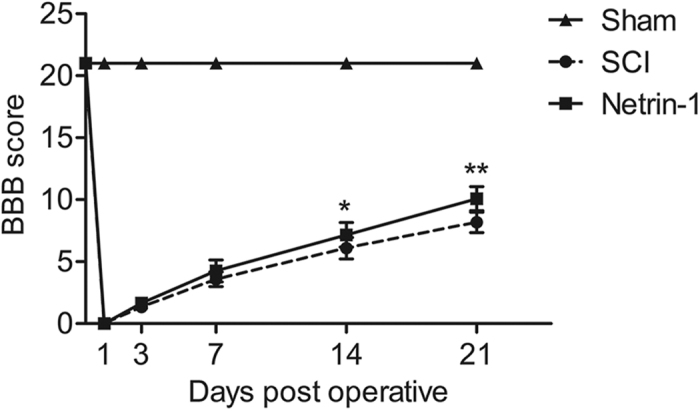
Figure 1
Figure 1. Netrin-1 treatment improves functional recovery after SCI.
BBB scores of the sham, SCI, and Netrin-1 groups were evaluated at 0, 1, 3, 7, 14, and 21 days after contusion. *P < 0.05 vs. the SCI group; **P < 0.01 vs. the SCI group. Data represented mean ± SEM (n = 6).
Figure 2
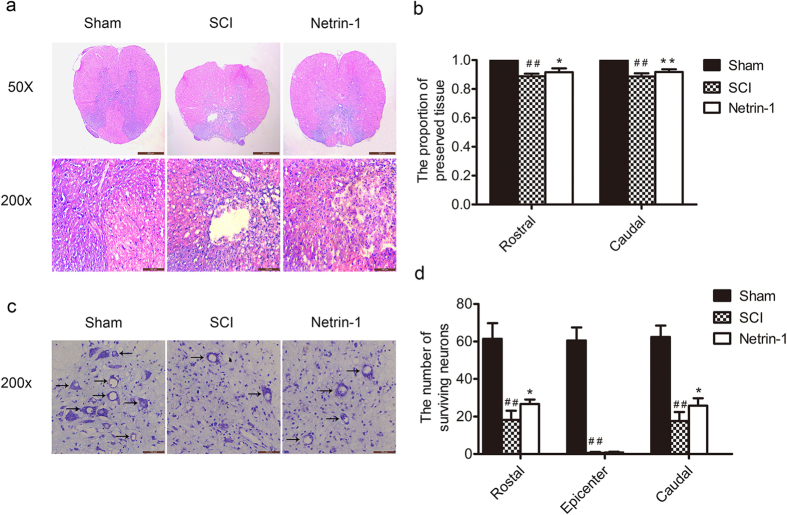
Figure 2. Netrin-1 treatment decreases tissue damage and the loss of neurons after SCI.
(a) HE staining at 21 days after contusion. Bars = 100 μm (50×) and 100 μm (200×). (b) Analysis of the proportion of preserved tissues of the transverse sections at 5 mm rostral and caudal sides; columns represent mean ± SD (n = 5). (c) Nissl staining at 21 days after injury. Scale bar = 100 μm (200×). (d) Quantification of the number of surviving neurons (black arrows: surviving neurons) at rostral 5 mm, caudal 5 mm, and lesion site. Data represented mean ± SD (n = 5, respectively). In addition, *P < 0.05 vs. the SCI group; **P < 0.01 vs. the SCI group; ##P < 0.01 vs. the sham group.
Figure 3
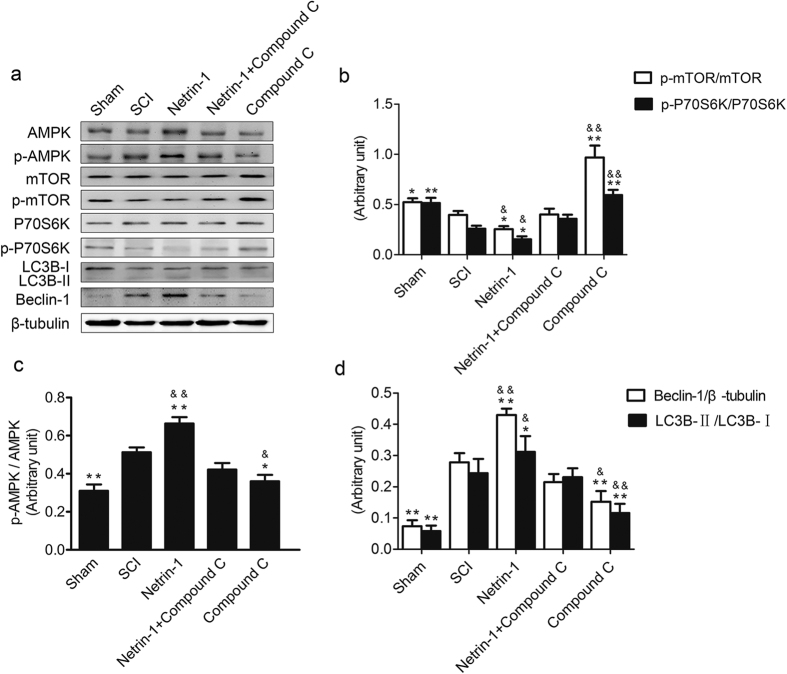
Figure 3. Netrin-1 administration activated the AMPK/mTOR signaling pathway after SCI.
(a) Expression of AMPK, p-AMPK, mTOR, p-mTOR, p-P70S6K, P70S6K, Beclin-1, LC3B, and β-tubulin in the sham, SCI, Netrin-1, Netrin-1+ compound C, and compound C groups. (b,c,d) Quantification analysis of p-mTOR/mTOR p-P70S6K/P70S6K, p-AMPK/AMPK, LC3B-II/LC3B-I, and Beclin-1/β-tubulin in each group. Mean ± SD, n = 3. *P < 0.05 vs. the SCI group; **P < 0.01 vs. the SCI group; &P < 0.05 vs. the Netrin-1+ compound C group; &&P < 0.01 vs. the Netrin-1+ compound C group.
Figure 4
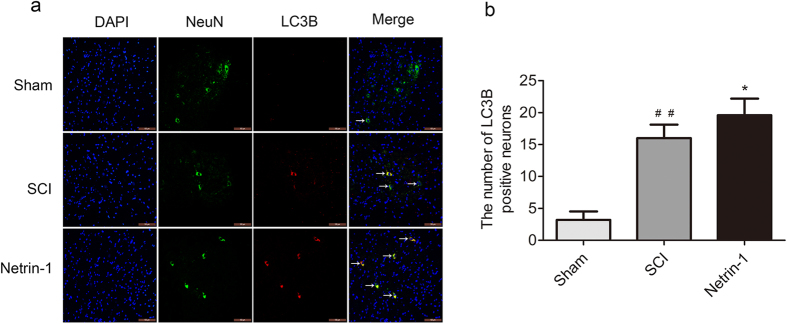
Figure 4. Immunofluorescence analysis of LC3B.
(a) Double staining for NeuN (green)/LC3B (red) of sections from the spinal cord sample in the sham, SCI, and Netrin-1 groups. Scale bar = 100 μm (white arrows: LC3B-positive neurons). (b) Quantification of the number of LC3B-positive neurons in each group. Data were represented as mean ± SD, n = 5. **P < 0.01 vs. the SCI group; ##P < 0.01 vs. the sham group.
Figure 5
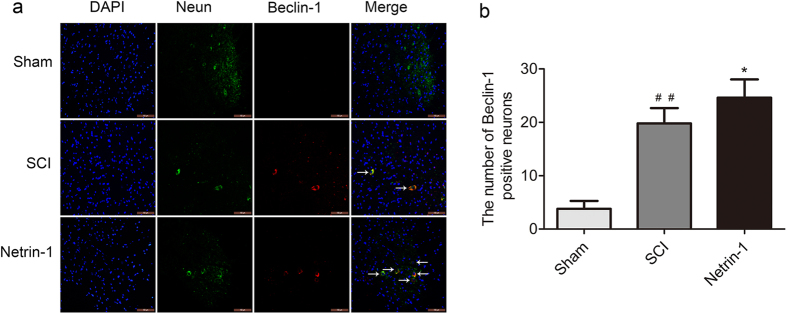
Figure 5. Immunofluorescence analysis of Beclin-1.
(a) Double staining for NeuN (green)/Beclin-1 (red) of sections from the spinal cord in the sham, SCI, and Netrin-1 groups. Scale bar = 100 μm (white arrows: Beclin-1-positive neurons). (b) Quantification of the number of Beclin-1-positive neurons in each group, Data were represented as mean ± SD, n = 5. **P < 0.01 vs. the SCI group; ##P < 0.01 vs. the sham group.
Figure 6
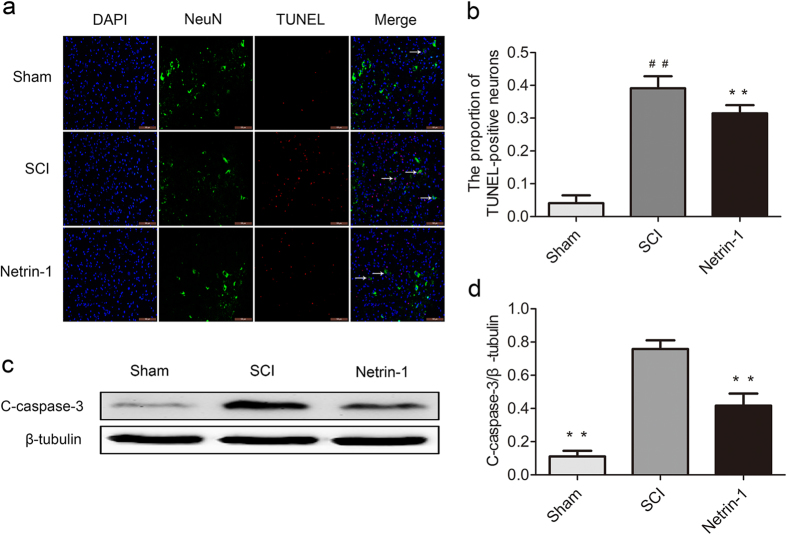
Figure 6. Netrin-1 decreased the number of TUNEL-positive neurons and the expression of C-caspase-3 after SCI.
(a) TUNEL/NeuN/DAPI double labeling was employed to count the number of TUNEL-positive neurons (white arrows: TUNEL-positive neurons) in the sham, SCI, and Netrin-1 groups. Scale bar = 100 μm. (b) Quantification of the ratio of TUNEL-positive neurons in each group. Data were represented as mean ± SD, n = 5. (c) Expression of C-caspase-3 in the sham, SCI, and Netrin-1 groups. (d) Quantification of the expression of C-caspase-3 in each group. Mean ± SD, n = 3. **P < 0.01 vs. the SCI group; ##P < 0.01 vs. the sham group.

References

    1. Dumont R. J. et al.. Acute spinal cord injury, part II: contemporary pharmacotherapy. Clin Neuropharmacol 24, 265–279 (2001). - PubMed
    1. Beattie M. S., Hermann G. E., Rogers R. C. & Bresnahan J. C. Cell death in models of spinal cord injury. Prog Brain Res 137, 37–47 (2002). - PubMed
    1. Werner C. & Engelhard K. Pathophysiology of traumatic brain injury. Br J Anaesth 99, 4–9, doi: 10.1093/bja/aem131 (2007). - DOI - PubMed
    1. Rabchevsky A. G., Patel S. P. & Springer J. E. Pharmacological interventions for spinal cord injury: where do we stand? How might we step forward? Pharmacol Ther 132, 15–29, doi: 10.1016/j.pharmthera.2011.05.001 (2011). - DOI - PubMed
    1. Warden P. et al.. Delayed glial cell death following wallerian degeneration in white matter tracts after spinal cord dorsal column cordotomy in adult rats. Exp Neurol 168, 213–224, doi: 10.1006/exnr.2000.7622 (2001). - DOI - PubMed

Publication types

MeSH terms