


An analysis of drug resistance among people living with HIV/AIDS in Shanghai, China
- PMID: 28187212
- PMCID: PMC5302315
- DOI: 10.1371/journal.pone.0165110
An analysis of drug resistance among people living with HIV/AIDS in Shanghai, China
Abstract
Background: Understanding the mechanisms of drug resistance can facilitate better management of antiretroviral therapy, helping to prevent transmission and decrease the morbidity and mortality of people living with HIV/AIDS. However, there is little data about transmitted drug resistance and acquired drug resistance for HIV/AIDS patients in Shanghai.
Methods: A retrospective cohort study of HIV-infected patients who visited the Department of Infectious Disease from June 2008 to June 2015 was conducted in Shanghai, China. Logistic regression analysis was performed to analyze risk factors for drug resistance among HIV-infected people with virological failure. The related collected factors included patient age, gender, marital status, infection route, baseline CD4 count, antiretroviral therapy regimens, time between HIV diagnosis and initiating antiretroviral therapy. Factors with p<0.1 in the univariate logistic regression test were analyzed by multivariate logistic regression test.
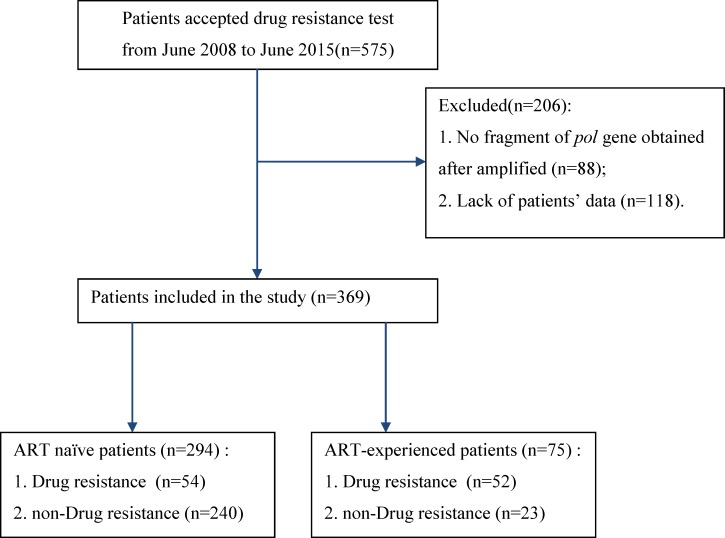
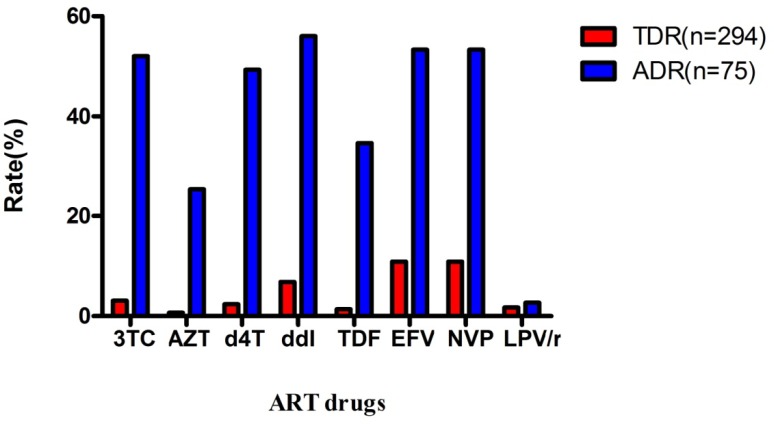
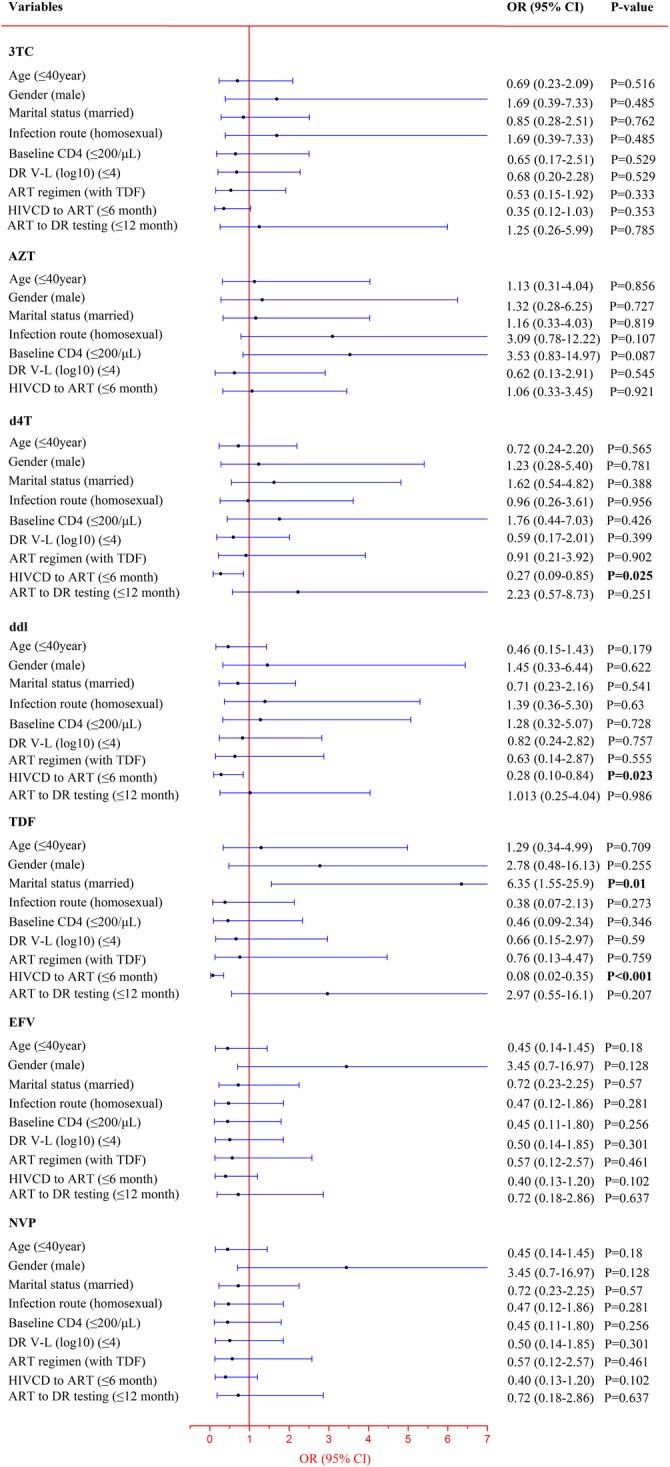
Results: There were 575 subjects selected for this study and 369 participated in this research. For the antiretroviral therapy drugs, the rates of transmitted drug resistance and acquired drug resistance were significantly different. The non-nucleoside reverse transcriptase inhibitor (NNRTI) had the highest drug resistance rate (transmitted drug resistance, 10.9%; acquired drug resistance, 53.3%) and protease inhibitors (PIs) had the lowest drug resistance rate (transmitted drug resistance, 1.7%; acquired drug resistance, 2.7%). Logistic regression analysis found no factors that were related to drug resistance except marital status (married status for tenofovir: odds ratio = 6.345, 95% confidence interval = 1.553-25.921, P = 0.010) and the time span between HIV diagnosis and initiating antiretroviral therapy (≤6M for stavudine: odds ratio = 0.271, 95% confidence interval = 0.086-0.850, P = 0.025; ≤6M for didanosine: odds ratio = 0.284, 95% confidence interval = 0.096-0.842, P = 0.023; ≤6M for tenofovir: odds ratio = 0.079, 95% confidence interval = 0.018-0.350,P<0.001).
Conclusion: NNRTI had a higher DR rate compared with nucleoside reverse transcriptase inhibitor (NRTI) and PIs, consequently, LPV/r was a reasonable choice for patients with NNRTI drugs resistance in China. Only married status and a time span≤6 month between the HIV confirmed date and the time initiating antiretroviral therapy were risk factors for TDF drug resistance. Both baseline HIV-RNA load and resistance test is crucial for TDR diagnosis, and frequent monitoring of HIV-RNA load is crucial for ADR identification and intervention. Treatment adherence still plays a positive role on the outcome of ART.
Conflict of interest statement
The authors have declared that no competing interests exist.
Figures
References
-
- Bulteel N, Bansi-Matharu L, Churchill D, Dunn D, Bibby D, Hill T, et al. The emergence of drug resistant HIV variants at virological failure of HAART combinations containing efavirenz, tenofovir and lamivudine or emtricitabine within the UK Collaborative HIV Cohort. The Journal of infection. 2014;68(1):77–84. 10.1016/j.jinf.2013.09.005 - DOI - PubMed
-
- Hoffmann CJ, Charalambous S, Sim J, Ledwaba J, Schwikkard G, Chaisson RE, et al. Viremia, resuppression, and time to resistance in human immunodeficiency virus (HIV) subtype C during first-line antiretroviral therapy in South Africa. Clinical infectious diseases: an official publication of the Infectious Diseases Society of America. 2009;49(12):1928–35. PubMed Central PMCID: PMC2789416. - PMC - PubMed
-
- Gupta RK, Goodall RL, Ranopa M, Kityo C, Munderi P, Lyagoba F, et al. High rate of HIV resuppression after viral failure on first-line antiretroviral therapy in the absence of switch to second-line therapy. Clinical infectious diseases: an official publication of the Infectious Diseases Society of America. 2014;58(7):1023–6. PubMed Central PMCID: PMC3952602. - PMC - PubMed
MeSH terms
Substances
LinkOut - more resources
Full Text Sources
Other Literature Sources
Medical
Research Materials
