Review
. 2017 Mar;23(3):246-263.
doi: 10.1016/j.molmed.2017.01.001. Epub 2017 Feb 7.

Kidney Organoids: A Translational Journey

Affiliations
Review

Kidney Organoids: A Translational Journey

Ryuji Morizane et al. Trends Mol Med. 2017 Mar.

Abstract

Human pluripotent stem cells (hPSCs) are attractive sources for regenerative medicine and disease modeling in vitro. Directed hPSC differentiation approaches have derived from knowledge of cell development in vivo rather than from stochastic cell differentiation. Moreover, there has been great success in the generation of 3D organ-buds termed 'organoids' from hPSCs; these consist of a variety of cell types in vitro that mimic organs in vivo. The organoid bears great potential in the study of human diseases in vitro, especially when combined with CRISPR/Cas9-based genome-editing. We summarize the current literature describing organoid studies with a special focus on kidney organoids, and discuss goals and future opportunities for organoid-based studies.


Conflict of interest statement

COMPETING FINANCIAL INTERESTS

J.V.B. is a co-inventor on KIM-1 patents that have been licensed by Partners Healthcare to several companies. He has received royalty income from Partners Healthcare. J.V.B. and R.M. are co-inventors on patents (PCT/US16/52350) on organoid technologies that are assigned to Partners Healthcare. J.V.B. or his family has received income for consulting from companies interested in biomarkers: Sekisui, Millennium, Johnson & Johnson and Novartis. J.V.B. is a co-founder, consultant to, and owns equity in, Goldfinch Bio.

Figures
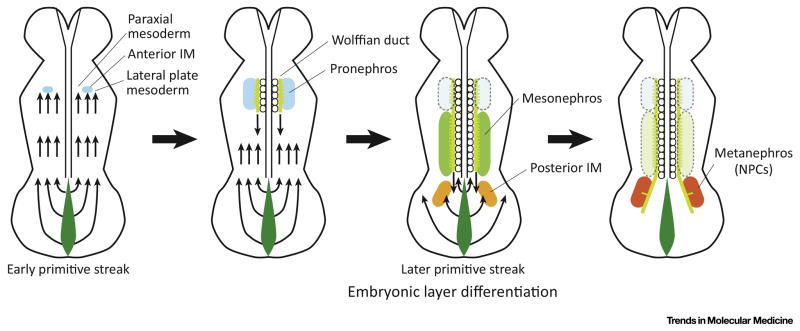
Figure 1
Figure 1. Mesoderm Patterning from the Primitive Streak in Mammals
The location of cells in the primitive streak defines the subsequent differentiation into paraxial mesoderm, intermediate mesoderm, and lateral plate mesoderm. The early-stage primitive streak cells migrate anteriorly, and form mesoderm tissues at the anterior part of the embryo while the late-stage primitive streak cells forms the posterior mesoderm. The metanephros (containing NPCs) is derived from the late-stage mid-primitive streak cells. IM: intermediate mesoderm. NPCs: nephron progenitor cells.
Figure 2
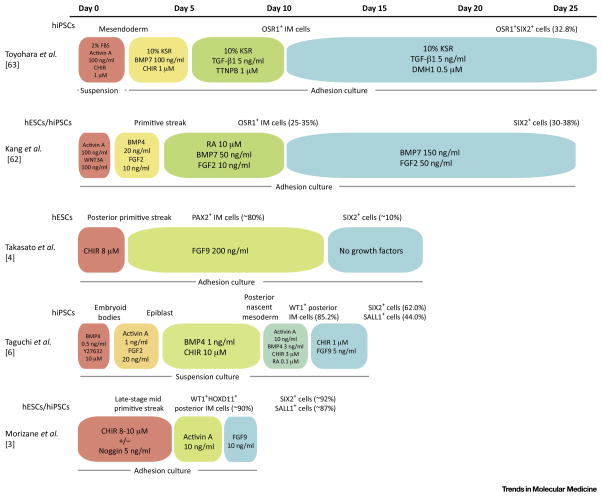
Figure 2. Comparison of Human Nephron Progenitor Cell Differentiation Protocols
The depicted schematic summarizes recent protocols that have been used to differentiate nephron progenitor cells from hPSCs. Inducing factors, concentrations, and treatment duration in each step of differentiation protocols are shown with colored boxes. The culture method, and the suspension or adhesion culture, is indicated at the bottom of each protocol. The cell types induced by each step of differentiation are shown on the top of the protocols. IM: intermediate mesoderm. FBS: fetal bovine serum. CHIR: CHIR99021. KSR: knockout serum replacement. BMP: bone morphogenetic protein. TGF: transforming growth factor. TTNPB: 4-[(E)-2-(5,6,7,8-Tetrahydro-5,5,8,8-tetramethyl-2-naphthalenyl)-1-propenyl]benzoic acid, a retinoic acid receptor agonist. DMH1: 4-[6-(4-Isopropoxyphenyl)pyrazolo[1,5-a]pyrimidin-3-yl]quinoline, 4-[6-[4-(1-Methylethoxy)phenyl]pyrazolo[1,5-a]pyrimidin-3-yl]-quinoline, a selective inhibitor of BMP ALK2 receptor. Wnt3a: wingless-type MMTV integration site family, member 3A. FGF: fibroblast growth factor. RA: retinoic acid. Y27632: a selective p160ROCK inhibitor. OSR1: odd-skipped related transcription factor 1. SIX2: SIX homeobox 2. PAX2: paired box 2. WT1: Wilms tumor 1. SALL1: spalt like transcription factor 1. HOXD11: homeobox D11.
Key Figure, Figure 3
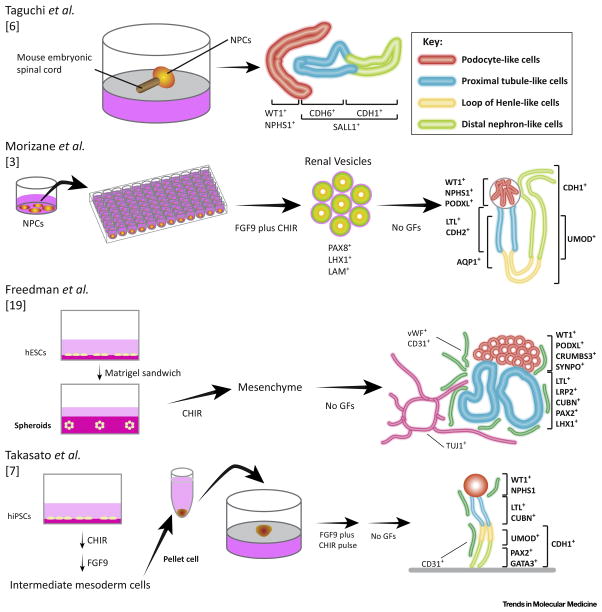
Key Figure, Figure 3. Methods for Generating Kidney Organoids
The diagram depicts recent protocols used to generate kidney organoids from human pluripotent stem cells. Taguchi [6], Morizane [3] and colleagues generated kidney organoids from nephron progenitor cells (NPCs) while Freedman [19], Takasato [7] and colleagues differentiated mesenchyme cells or intermediate mesoderm cells into kidney organoids. Red lines: podocyte-like cells. Light blue lines: proximal tubule-like cells. Yellow lines: loops of Henle-like cells. Light green lines: distal nephron-like cells. NPCs: nephron progenitor cells. WT1: Wilms tumor 1. NPHS1: nephrosis 1, nephrin. CDH6: cadherin 6. CDH1: cadherin 1. SALL1: spalt like transcription factor 1. PAX8: paired box 8. LHX1: LIM homeobox 1. LAM: laminin. PODXL: podocalyxin like. LTL: lotus tetragonolobus lectin. CDH1: cadherin 2. AQP1: aquaporin 1. UMOD: uromodulin. vWF: von Willebrand factor. CD31: cluster of differentiation 31. TUJ1: neuron-specific class 3 beta-tubulin. SYNPO: synaptopodin. LRP2: LDL receptor related protein 2. CUBN: cubilin. PAX2: paired box 2. GATA3: GATA binding protein 3. FGF: fibroblast growth factor. CHIR: CHIR99021.
Figure 4
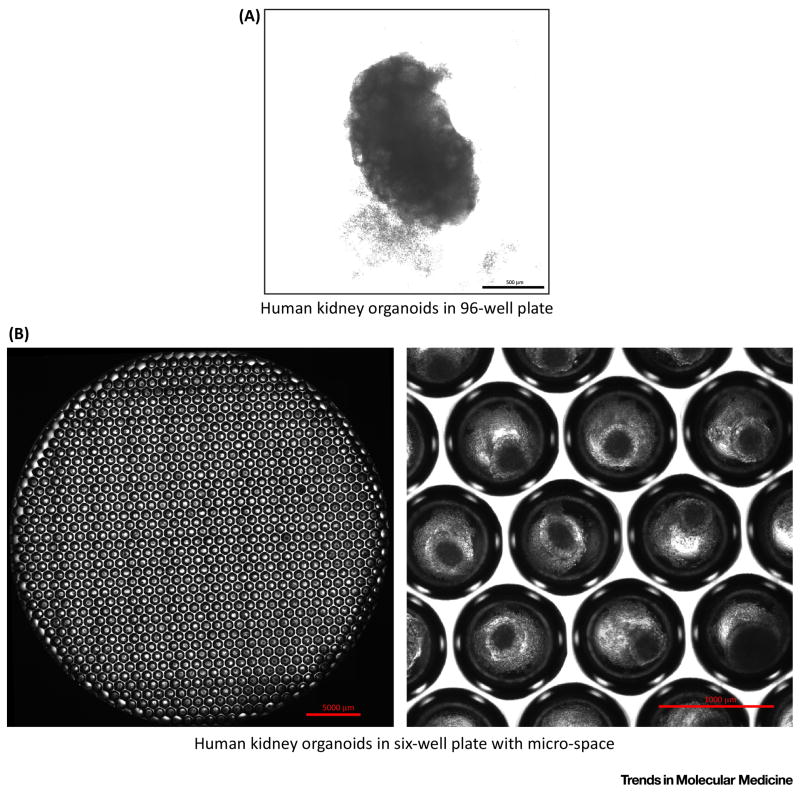
Figure 4. Human Kidney Organoids in Culture
Representative micrograph images of human kidney organoids are shown in 3D culture. (a) Human kidney organoids were generated in 96-well ultra-low attachment plates with U-shaped bottom on day 24 of initiation of differentiation. Scale bar: 500 μm. Images were taken with an inverted microscope (Nikon, Eclipse Ti) at 40x magnification. (b) Human kidney organoids were generated in 6-well plates with micro-space (Elplasia, #RB900700NA6) on day 22 of initiation of differentiation. Scale bars: 5 mm (left), and 1 mm (right). Photographs were taken with an inverted microscope (Nikon, Eclipse Ti) at 40x magnification. The left picture was generated by merging 40x pictures to show a whole well of a 6-well plate.

References

    1. Thomson JA, et al. Embryonic stem cell lines derived from human blastocysts. Science. 1998;282:1145–1147. - PubMed
    1. Takahashi K, et al. Induction of pluripotent stem cells from adult human fibroblasts by defined factors. Cell. 2007;131:861–872. - PubMed
    1. Morizane R, et al. Nephron organoids derived from human pluripotent stem cells model kidney development and injury. Nature biotechnology 2015 - PMC - PubMed
    1. Takasato M, et al. Directing human embryonic stem cell differentiation towards a renal lineage generates a self-organizing kidney. Nature cell biology. 2014;16:118–126. - PubMed
    1. Lam AQ, et al. Rapid and efficient differentiation of human pluripotent stem cells into intermediate mesoderm that forms tubules expressing kidney proximal tubular markers. Journal of the American Society of Nephrology: JASN. 2014;25:1211–1225. - PMC - PubMed

Publication types