


Self-administered nicotine differentially impacts body weight gain in obesity-prone and obesity-resistant rats
- PMID: 28189503
- PMCID: PMC6044443
- DOI: 10.1016/j.physbeh.2017.02.007
Self-administered nicotine differentially impacts body weight gain in obesity-prone and obesity-resistant rats
Abstract
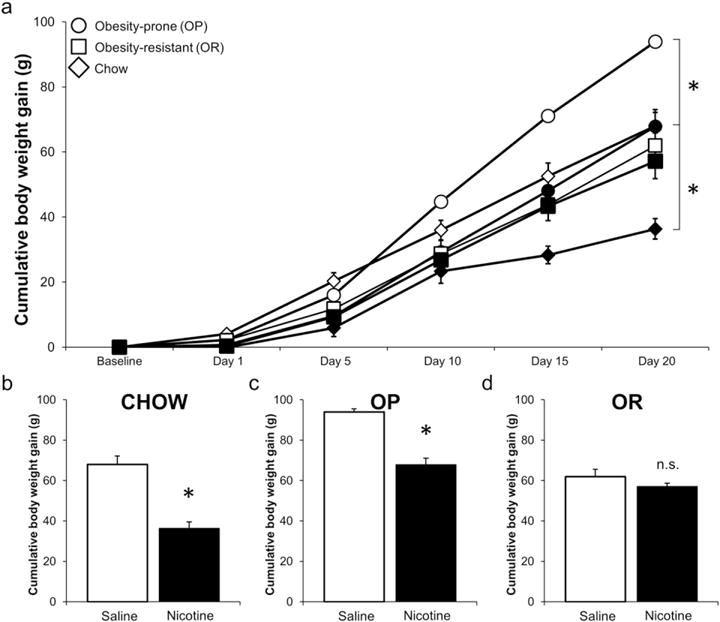
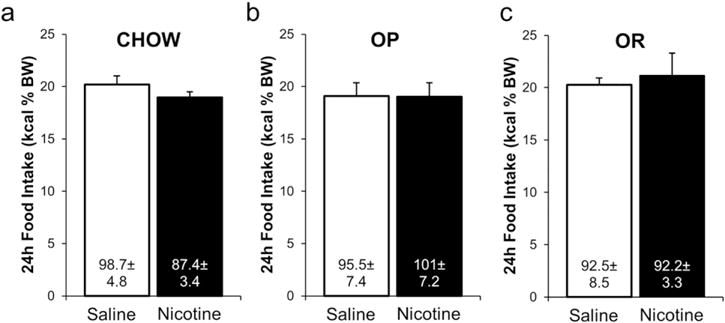
Obesity and tobacco smoking represent the largest challenges to public health, but the causal relationship between nicotine and obesity is poorly understood. Nicotine suppresses body weight gain, a factor impacting smoking initiation and the failure to quit, particularly among obese smokers. The impact of nicotine on body weight regulation in obesity-prone and obesity-resistant populations consuming densely caloric diets is unknown. In the current experiment, body weight gain of adult male rats maintained on a high energy diet (31.8% kcal from fat) distributed into obesity-prone (OP), obesity-resistant (OR) and an intermediate group, which was placed on standard rodent chow (Chow). These rats were surgically implanted with intravenous catheters and allowed to self-administer nicotine (0 or 60μg/kg/infusion, a standard self-administration dose) in 1-h sessions for 20 consecutive days. Self-administered nicotine significantly suppressed body weight gain but not food intake in OP and Chow rats. Self-administered nicotine had no effect on body weight gain in OR rats. These data suggest that: 1) OR rats are also resistant to nicotine-induced suppression of body weight gain; and 2) nicotine may reduce levels of obesity in a subset of smokers prone to obesity.
Keywords: Dietary intake; Drugs; Nicotine; Obesity phenotypes.
Copyright © 2017 Elsevier Inc. All rights reserved.
Figures
References
-
- Flegal KM, Troiano RP, Pamuk ER, Kuczmarski RJ, Campbell SM. The influence of smoking cessation on the prevalence of overweight in the United States. N Engl J Med. 1995;333:1165–1170. - PubMed
MeSH terms
Substances
Grants and funding
LinkOut - more resources
Full Text Sources
Other Literature Sources
Medical
Miscellaneous
