


Brentuximab Vedotin: A Review in CD30-Positive Hodgkin Lymphoma
- PMID: 28190142
- PMCID: PMC7102329
- DOI: 10.1007/s40265-017-0705-5
Brentuximab Vedotin: A Review in CD30-Positive Hodgkin Lymphoma
Abstract
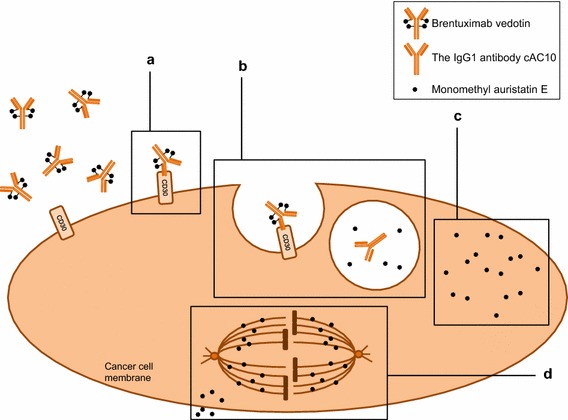
Intravenous brentuximab vedotin (ADCETRIS®) is a targeted antibody-drug conjugate (ADC) active against CD30-positive cancer cells such as those associated with classical Hodgkin lymphoma (HL). In noncomparative, phase 2 trials and in the real-world setting, salvage therapy with brentuximab vedotin resulted in high objective response (complete plus partial remission) rates in patients with relapsed or refractory CD30-positive HL, including as retreatment in patients who had an objective response to previous brentuximab vedotin therapy and subsequently relapsed. These beneficial outcomes were durable during long-term follow-up. As consolidation therapy after autologous haematopoietic stem cell transplant (ASCT) in the multinational, phase 3 AETHERA trial, brentuximab vedotin prolonged progression-free-survival (PFS) compared with placebo at a median follow-up of 30 months (primary analysis), with a 43% reduction in the risk of disease progression or death. The beneficial effects of brentuximab vedotin consolidation therapy were maintained during long-term follow-up. In the clinical trial and real-world setting, brentuximab vedotin had an acceptable tolerability and safety profile, with most adverse events manageable with dose reductions and/or delays [including peripheral sensory neuropathy (PSN) and neutropenia]. With a paucity of treatments available for many patients with relapsed or refractory HL, brentuximab vedotin represents an important option for the management of patients who have failed high-dose chemotherapy/ASCT or at least two prior chemotherapy regimens and as post-ASCT consolidation therapy in patients who are at increased risk/high-risk of relapse or progression after ASCT.
Conflict of interest statement
Lesley Scott is a salaried employee of Adis/Springer, is responsible for the article content and declares no relevant conflicts of interest.
Figures
References
-
- Eichenauer DA, Engert A, André M, et al. Hodgkin’s lymphoma: ESMO clinical practice guidelines for diagnosis, treatment and follow-up. Ann Oncol. 2014;25(Suppl 3):vi70–5. - PubMed
-
- National Comprehensive Cancer Network. NCCN Guidelines Version 2.2014: Hodgkin lymphoma. 2014. http://www.nccn.org/. Accessed 24 Nov 2016.
Publication types
MeSH terms
Substances
LinkOut - more resources
Full Text Sources
Other Literature Sources
Research Materials
