


Allostatic Load as a Complex Clinical Construct: A Case-Based Computational Modeling Approach
- PMID: 28190951
- PMCID: PMC5300684
- DOI: 10.1002/cplx.21743
Allostatic Load as a Complex Clinical Construct: A Case-Based Computational Modeling Approach
Abstract
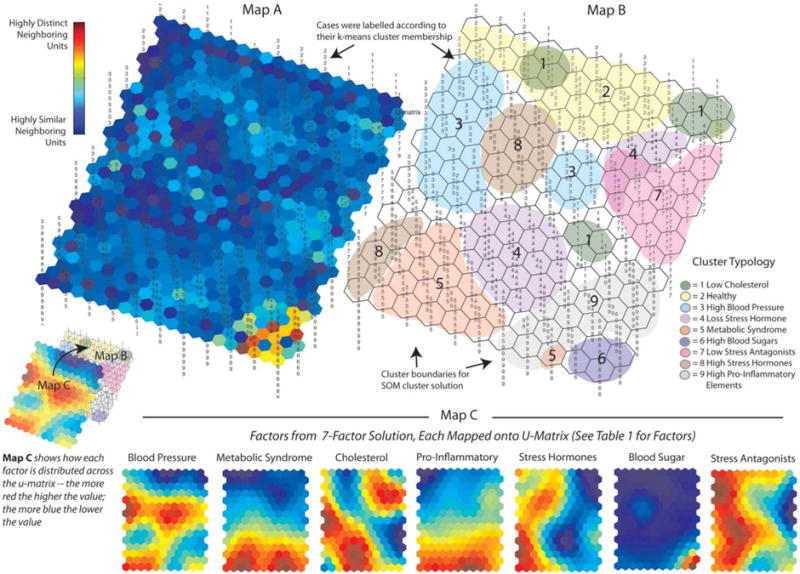
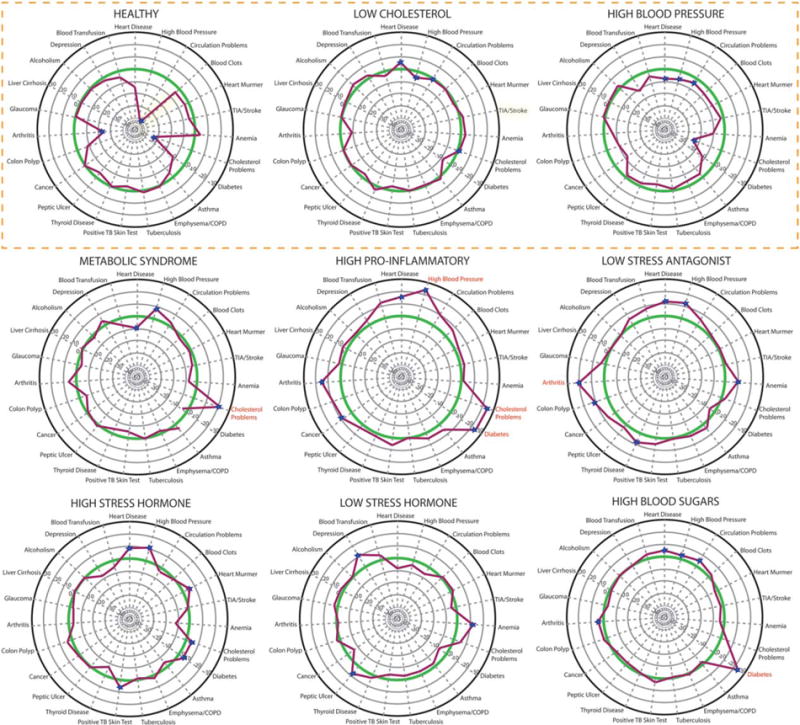
Allostatic load (AL) is a complex clinical construct, providing a unique window into the cumulative impact of stress. However, due to its inherent complexity, AL presents two major measurement challenges to conventional statistical modeling (the field's dominant methodology): it is comprised of a complex causal network of bioallostatic systems, represented by an even larger set of dynamic biomarkers; and, it is situated within a web of antecedent socioecological systems, linking AL to differences in health outcomes and disparities. To address these challenges, we employed case-based computational modeling (CBM), which allowed us to make four advances: (1) we developed a multisystem, 7-factor (20 biomarker) model of AL's network of allostatic systems; (2) used it to create a catalog of nine different clinical AL profiles (causal pathways); (3) linked each clinical profile to a typology of 23 health outcomes; and (4) explored our results (post hoc) as a function of gender, a key socioecological factor. In terms of highlights, (a) the Healthy clinical profile had few health risks; (b) the pro-inflammatory profile linked to high blood pressure and diabetes; (c) Low Stress Hormones linked to heart disease, TIA/Stroke, diabetes, and circulation problems; and (d) high stress hormones linked to heart disease and high blood pressure. Post hoc analyses also found that males were overrepresented on the High Blood Pressure (61.2%), Metabolic Syndrome (63.2%), High Stress Hormones (66.4%), and High Blood Sugar (57.1%); while females were overrepresented on the Healthy (81.9%), Low Stress Hormones (66.3%), and Low Stress Antagonists (stress buffers) (95.4%) profiles.
Keywords: allostatic load; artificial neural nets; case-based modeling; complexity theory; computational modeling; health risk outcomes.
Figures
References
-
- McEwen BS. Allostasis and allostatic load: implications for neuropsycho-pharmacology. Neuropsychopharmacology. 2000;22:108–124. - PubMed
-
- McEwen BS. Interacting mediators of allostasis and allostatic load: towards an understanding of resilience in aging. Metabolism. 2003;52:10–16. - PubMed
-
- McEwen BS, Seeman T. Protective and damaging effects of mediators of stress: Elaborating and testing the concepts of allostasis and allostatic load. Ann N Y Acad Sci. 1999;896:30–47. - PubMed
-
- McEwen BS, Stellar E. Stress and the individual: mechanisms leading to disease. Arch Intern Med. 1993;153:2093. - PubMed
Grants and funding
LinkOut - more resources
Full Text Sources
Other Literature Sources
Miscellaneous