


Comparative genomic analysis of Shiga toxin-producing and non-Shiga toxin-producing Escherichia coli O157 isolated from outbreaks in Korea
- PMID: 28191041
- PMCID: PMC5292798
- DOI: 10.1186/s13099-017-0156-2
Comparative genomic analysis of Shiga toxin-producing and non-Shiga toxin-producing Escherichia coli O157 isolated from outbreaks in Korea
Abstract
Background: The Shiga toxin-producing Escherichia coli (STEC) O157 strain NCCP15739 and non-STEC O157 strain NCCP15738 were isolated from outbreaks in Korea. We characterized NCCP15739 and NCCP15738 by genome sequencing and a comparative genomic analysis using two additional strains, E. coli K-12 substr. MG1655 and O157:H7 EDL933.
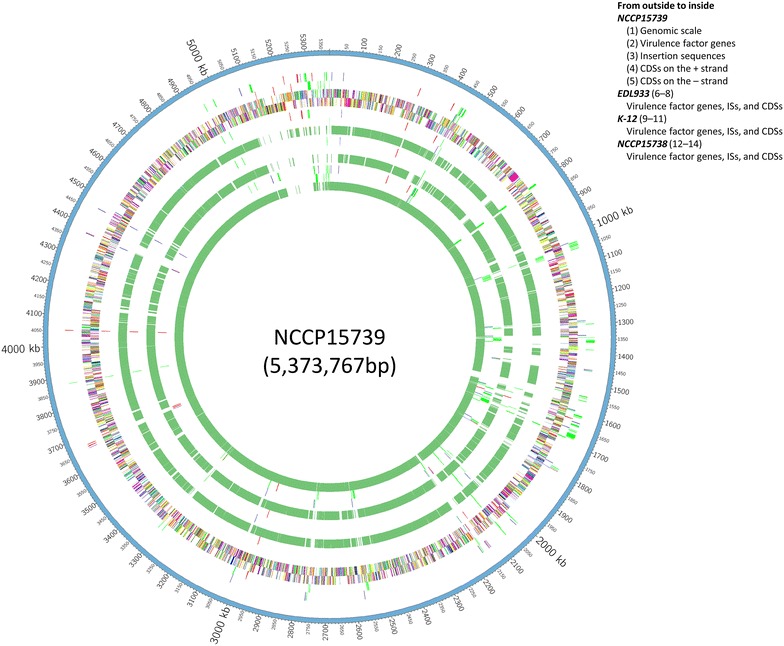
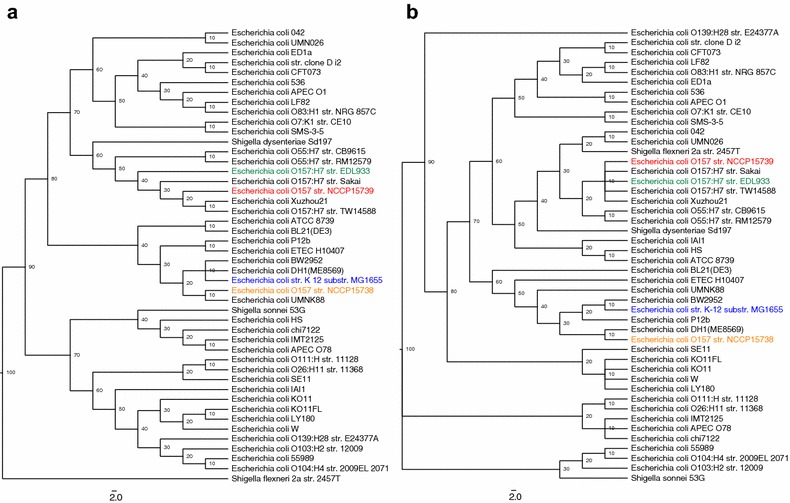
Results: Using the Illumina HiSeq 2000 platform and the RAST server, the whole genomes of NCCP15739 and NCCP15738 were obtained and annotated. NCCP15739 and NCCP15738 clustered with different E. coli strains based on a whole-genome phylogeny and multi-locus sequence typing analysis. Functional annotation clustering indicated enrichment for virulence plasmid and hemolysis-related genes in NCCP15739 and conjugation- and flagellum-related genes in NCCP15738. Defense mechanism- and pathogenicity-related pathways were enriched in NCCP15739 and pathways related to the assimilation of energy sources were enriched in NCCP15738. We identified 66 and 18 virulence factors from the NCCP15739 and NCCP15738 genome, respectively. Five and eight antibiotic resistance genes were identified in the NCCP15739 and NCCP15738 genomes, respectively. Based on a comparative analysis of phage-associated regions, NCCP15739 and NCCP15738 had specific prophages. The prophages in NCCP15739 carried virulence factors, but those in NCCP15738 did not, and no antibiotic resistance genes were found in the phage-associated regions.
Conclusions: Our whole-genome sequencing and comparative genomic analysis revealed that NCCP15739 and NCCP15738 have specific genes and pathways. NCCP15739 had more genes (410), virulence factors (48), and phage-related regions (11) than NCCP15738. However, NCCP15738 had three more antibiotic resistance genes than NCCP15739. These differences may explain differences in pathogenicity and biological characteristics.
Keywords: Alpha-hemolysin; Comparative genomics; Draft genome; Non-Shiga-like toxin-producing Escherichia coli O157; Shiga-like toxin-producing Escherichia coli O157.
Figures
References
Publication types
LinkOut - more resources
Full Text Sources
Other Literature Sources
