


Digital transillumination in caries detection versus radiographic and clinical methods: an in-vivo study
- PMID: 28191797
- PMCID: PMC5595005
- DOI: 10.1259/dmfr.20160417
Digital transillumination in caries detection versus radiographic and clinical methods: an in-vivo study
Abstract
Objectives: This article aimed to evaluate: (a) the agreement between a near-infrared light transillumination device and clinical and radiographic examinations in caries lesion detection and (b) the reliability of images captured by the transillumination device.
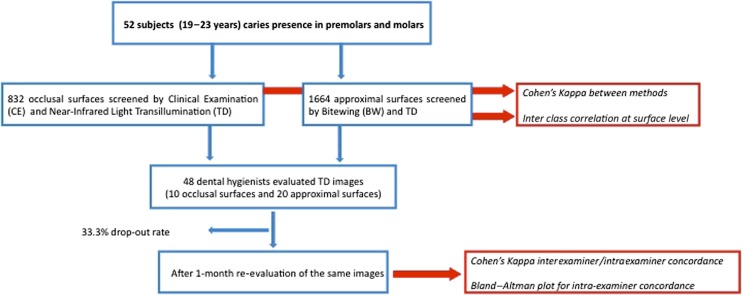
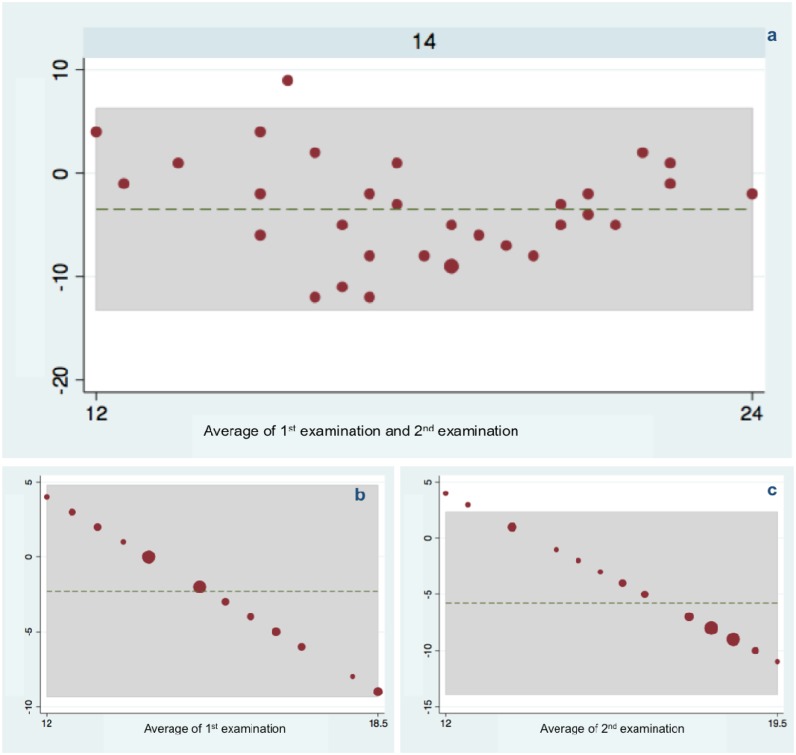
Methods: Two calibrated examiners evaluated the caries status in premolars and molars on 52 randomly selected subjects by comparing the transillumination device with a clinical examination for the occlusal surfaces and by comparing the transillumination device with a radiographic examination (bitewing radiographs) for the approximal surfaces. Forty-eight trained dental hygienists evaluated and reevaluated 30 randomly selected images 1-month later.
Results: A high concordance between transillumination method and clinical examination (kappa = 0.99) was detected for occlusal caries lesions, while for approximal surfaces, the transillumination device identified a higher number of lesions with respect to bitewing (kappa = 0.91). At the dentinal level, the two methods identified the same number of caries lesions (kappa = 1), whereas more approximal lesions were recorded using the transillumination device in the enamel (kappa = 0.24). The intraexaminer reliability was substantial/almost perfect in 59.4% of the participants.
Conclusions: The transillumination method showed a high concordance compared with traditional methods (clinical examination and bitewing radiographs). Caries detection reliability using the transillumination device images showed a high intraexaminer agreement. Transillumination showed to be a reliable method and as effective as traditional methods in caries detection.
Keywords: bitewing radiography; dental caries; reproducibility of results; transillumination.
Figures
References
-
- Pitts NB. Are we ready to move from operative to non-operative/preventive treatment of dental caries in clinical practice? Caries Res 2004; 38: 294–304. doi: https://doi.org/10.1159/000077769 - DOI - PubMed
-
- Piovesan C, Moro BL, Lara JS, Ardenghi TM, Guedes RS, Haddad AE, et al. Laboratorial training of examiners for using a visual caries detection system in epidemiological surveys. BMC Oral Health 2013; 13: 49. doi: https://doi.org/10.1186/1472-6831-13-49 - DOI - PMC - PubMed
-
- International Caries Detection and Assessment System Coordinating Committee: Criteria Manual. International Caries Detection and Assessment System (ICDAS II) Workshop. Baltimore, MD, USA; March 2005.
-
- Pitts NB, Ekstrand KR, ICDAS Foundation. International Caries Detection and Assessment System (ICDAS) and its International Caries Classification and Management System (ICCMS)—methods for staging of the caries process and enabling dentists to manage caries. Community Dent Oral Epidemiol 2013; 41: e41–52. doi: https://doi.org/10.1111/cdoe.12025 - DOI - PubMed
-
- Assaf AV, de Castro Meneghim M, Zanin L, Tengan C, Pereira AC. Effect of different diagnostic thresholds on dental caries calibration—a 12 month evaluation. Community Dent Oral Epidemiol 2006; 34: 213–19. - PubMed
Publication types
MeSH terms
LinkOut - more resources
Full Text Sources
Other Literature Sources
Medical
