


Guinea worm infection in northern Nigeria: reflections on a disease approaching eradication
- PMID: 28196301
- PMCID: PMC5434933
- DOI: 10.1111/tmi.12855
Guinea worm infection in northern Nigeria: reflections on a disease approaching eradication
Abstract
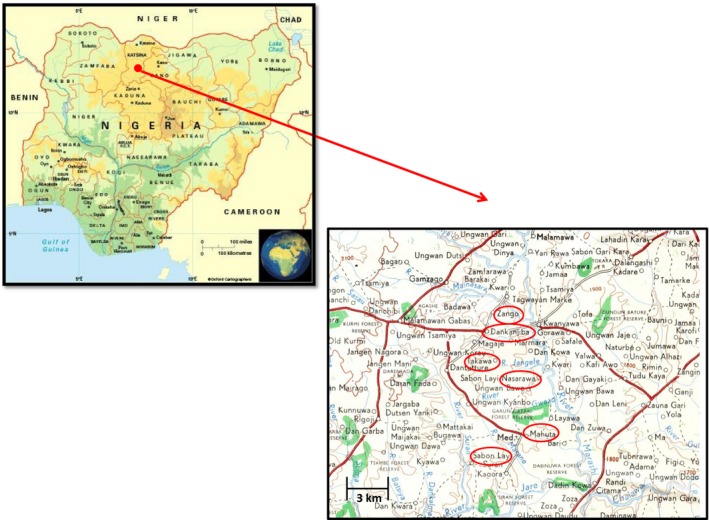
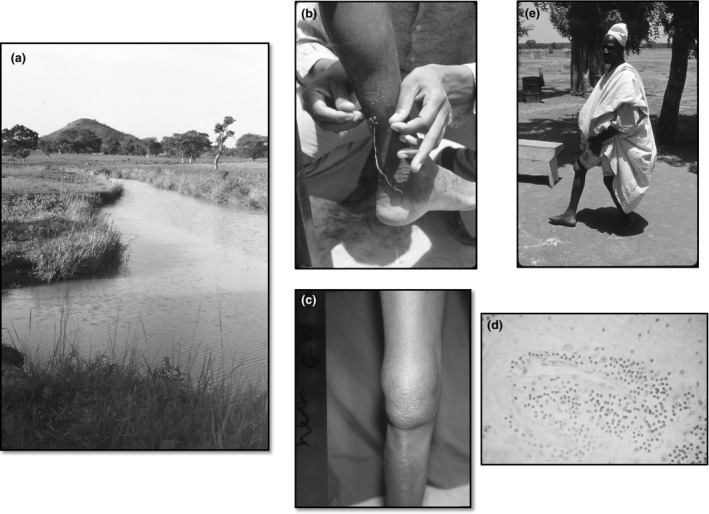
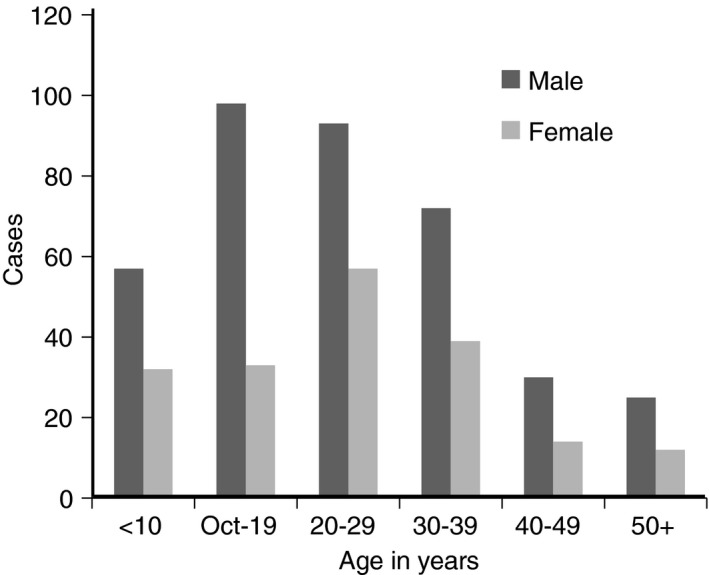
Global eradication of the guinea worm (Dracunculus medinensis) is near, although perhaps delayed a little by the discovery of a transmission cycle in dogs. It is therefore an appropriate time to reflect on the severe impact of this infection on the life of the communities where it was endemic prior to the start of the global eradication programme in 1981. From 1971 to 1974, we conducted a series of unpublished studies on guinea worm in a group of villages in Katsina State, northern Nigeria, where the infection was highly endemic. These studies demonstrated the high rate of infection in affected communities, the frequent recurrence of the infection in some subjects and the long-standing disability that remained in some infected individuals. Immunological studies showed a high level of immediate hypersensitivity to adult worm and larval antigens but a downregulation of Th1-type T-cell responses to worm antigens. Freeing communities such as those described in this article from the scourge of guinea worm infection for good will be an important public health triumph.
L’éradication mondiale du ver de Guinée (Dracunculus medinensis) est proche, quoique peut‐être un peu retardée par la découverte d'un cycle de transmission chez les chiens. Il est donc opportun de réfléchir à l'impact sévère de cette infection sur la vie des communautés où elle était endémique avant le début du programme mondial d’éradication en 1981. De 1971 à 1974, nous avions mené une série d’études non publiées sur le ver de Guinée dans un groupe de villages dans l'Etat de Katsina, dans le nord du Nigeria, où l'infection était fortement endémique. Ces études ont démontré le taux élevé d'infection dans les communautés affectées, la récurrence fréquente de l'infection chez certains sujets et le handicap de longue durée qui restait chez certaines personnes infectées. Des études immunologiques ont montré un niveau élevé d'hypersensibilité immédiate aux vers adultes et aux antigènes larvaires mais une régulation négative des réponses des lymphocytes T de type
La erradicación global del gusano de Guinea (Dracunculus medinensis) está cerca, aunque tal vez se ha retrasado un poco por el descubrimiento de un ciclo de transmisión en perros. Por lo tanto, es el momento apropiado de reflexionar sobre el impacto severo que esta infección tiene sobre la vida de las comunidades en donde era endémica antes del inicio del programa global de erradicación en 1981. Entre 1971‐74 realizamos una serie de estudios no publicados sobre el gusano de Guinea en un grupo de poblados del Estado de Katsina, al norte de Nigeria, en donde la infección era altamente endémica. Estos estudios demostraron la alta tasa de infección en las comunidades afectadas, la frecuente recurrencia de la infección en algunos sujetos y la discapacidad prolongada en algunos de los individuos infectados. Los estudios inmunológicos mostraban un alto nivel de hipersensibilidad a los antígenos del gusano adulto y de las larvas pero una regulación decreciente de la respuesta de inmunidad celular
Keywords: eradication; erradicación; guinea worm; gusano de Guinea; immunologie; immunology; inmunología; morbidity; morbidité; morbilidad; vers de Guinée; éradication.
© 2017 The Authors. Tropical Medicine & International Health Published by John Wiley & Sons Ltd.
Figures
References
Publication types
MeSH terms
Substances
Grants and funding
LinkOut - more resources
Full Text Sources
Other Literature Sources
