


Tumor-infiltrating lymphocyte composition, organization and PD-1/ PD-L1 expression are linked in breast cancer
- PMID: 28197375
- PMCID: PMC5283629
- DOI: 10.1080/2162402X.2016.1257452
Tumor-infiltrating lymphocyte composition, organization and PD-1/ PD-L1 expression are linked in breast cancer
Abstract
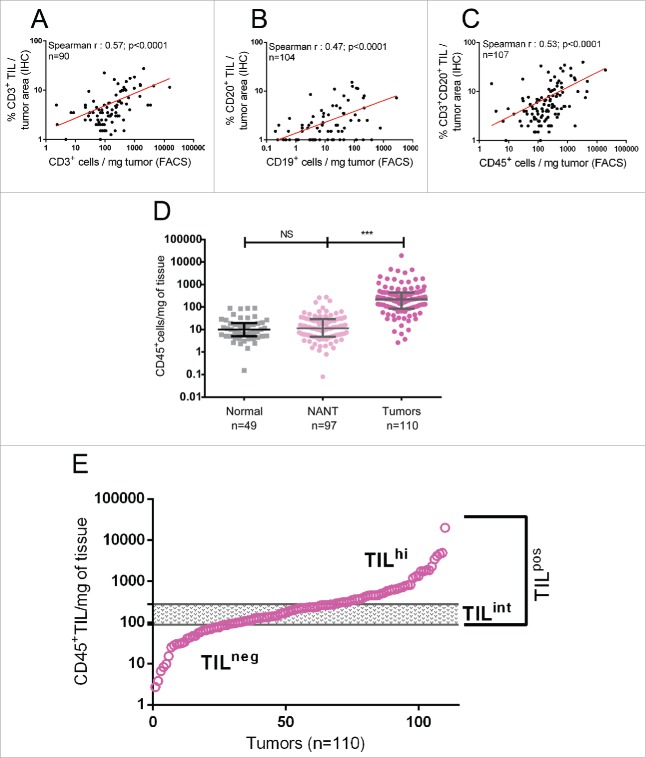
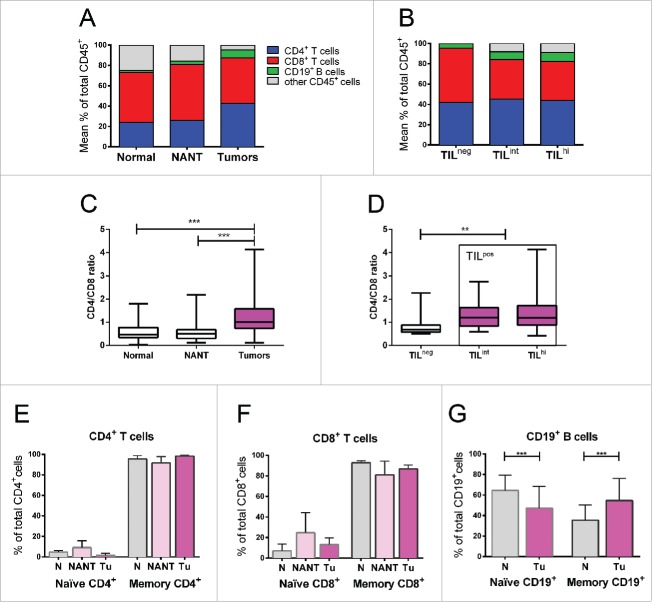
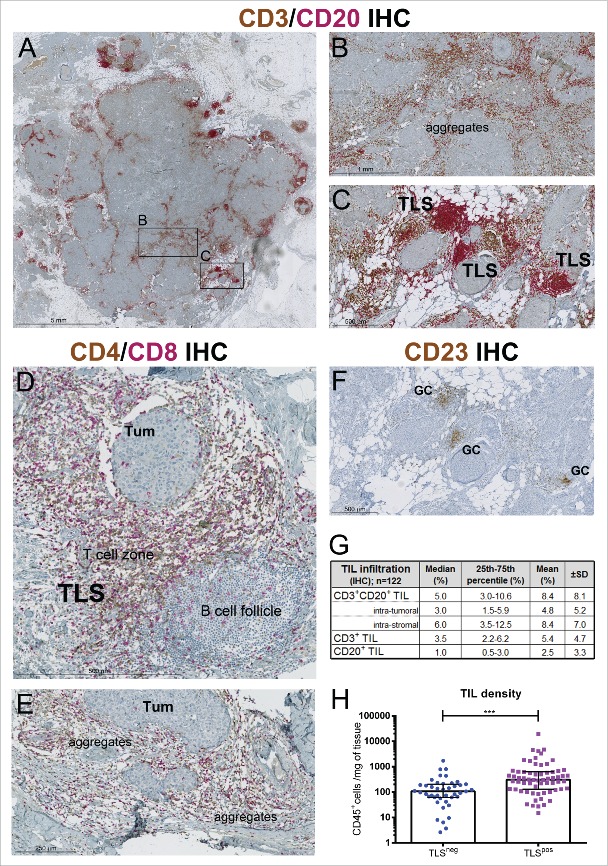
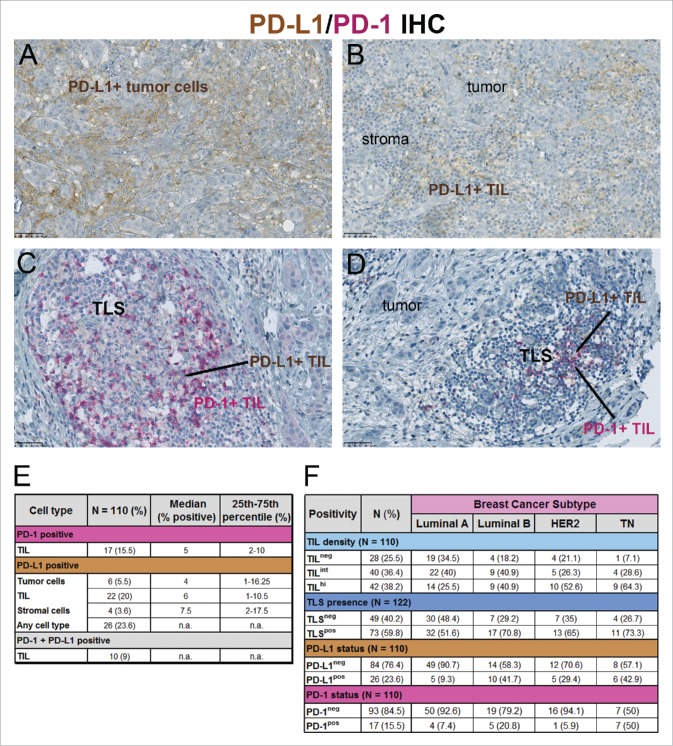
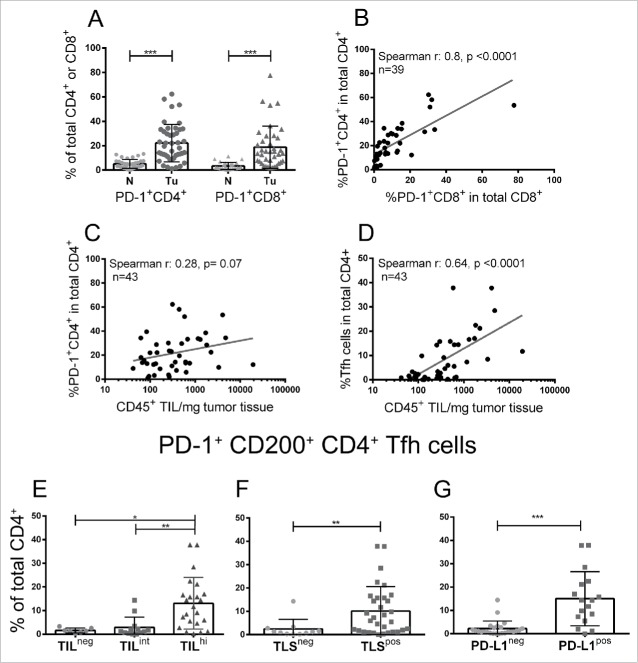
The clinical relevance of tumor-infiltrating lymphocytes (TIL) in breast cancer (BC) has been clearly established by their demonstrated correlation with long-term positive outcomes. Nevertheless, the relationship between protective immunity, observed in some patients, and critical features of the infiltrate remains unresolved. This study examined TIL density, composition and organization together with PD-1 and PD-L1 expression in freshly collected and paraffin-embedded tissues from 125 patients with invasive primary BC. Tumor and normal breast tissues were analyzed using both flow cytometry and immunohistochemistry. TIL density distribution is a continuum with 25% of tumors identified as TIL-negative at a TIL density equivalent to normal breast tissues. TIL-positive tumors (75%) were equally divided into TIL-intermediate and TIL-high. Tumors had higher mean frequencies of CD4+ T cells and CD19+ B cells and a lower mean frequency of CD8+ T cells compare with normal tissues, increasing the CD4+/CD8+ T-cell ratio. Tertiary lymphoid structures (TLS), principally located in the peri-tumoral stroma, were detected in 60% of tumors and correlated with higher TIL infiltration. PD-1 and PD-L1 expression were also associated with higher TIL densities and TLS. TIL density, TLS and PD-L1 expression were correlated with more aggressive tumor characteristics, including higher proliferation and hormone receptor negativity. Our findings reveal an important relationship between PD-1/PD-L1 expression, increased CD4+ T and B-cell infiltration, TIL density and TLS, suggesting that evaluating not only the extent but also the nature and location of the immune infiltrate should be considered when evaluating antitumor immunity and the potential for benefit from immunotherapies.
Keywords: Breast cancer; PD-1; PD-L1; tertiary lymphoid structures; tumor-infiltrating lymphocytes.
Figures
References
-
- Weiss SA, Hanniford D, Hernando E, Osman I. Revisiting determinants of prognosis in cutaneous melanoma. Cancer 2015; 121:4108-23; PMID:26308244; http://dx.doi.org/ 10.1002/cncr.29634 - DOI - PMC - PubMed
-
- Reissfelder C, Stamova S, Gossmann C, Braun M, Bonertz A, Walliczek U, Grimm M, Rahbari NN, Koch M, Saadati M et al.. Tumor-specific cytotoxic T lymphocyte activity determines colorectal cancer patient prognosis. J Clin Invest 2015; 125:739-51; PMID:25562322; http://dx.doi.org/ 10.1172/JCI74894 - DOI - PMC - PubMed
-
- Brambilla E, Le Teuff G, Marguet S, Lantuejoul S, Dunant A, Graziano S, Pirker R, Douillard JY, Le Chevalier T, Filipits M et al.. Prognostic effect of tumor lymphocytic infiltration in Resectable Non-small-cell lung cancer. J Clin Oncol 2016; 34:1223-30; PMID:26834066; http://dx.doi.org/ 10.1200/JCO.2015.63.0970 - DOI - PMC - PubMed
-
- Salgado R, Denkert C, Demaria S, Sirtaine N, Klauschen F, Pruneri G, Wienert S, Van den Eynden G, Baehner FL, Penault-Llorca F et al.. The evaluation of tumor-infiltrating lymphocytes (TILs) in breast cancer: recommendations by an International TILs Working Group 2014. Ann Oncol 2015; 26:259-71; PMID:25214542; http://dx.doi.org/ 10.1093/annonc/mdu450 - DOI - PMC - PubMed
-
- Savas P, Salgado R, Denkert C, Sotiriou C, Darcy PK, Smyth MJ, Loi S. Clinical relevance of host immunity in breast cancer: from TILs to the clinic. Nat Rev Clin Oncol 2016; 13:228-41; PMID:26667975; http://dx.doi.org/ 10.1038/nrclinonc.2015.215 - DOI - PubMed
Publication types
LinkOut - more resources
Full Text Sources
Other Literature Sources
Research Materials
