


Gemfibrozil, food and drug administration-approved lipid-lowering drug, increases longevity in mouse model of late infantile neuronal ceroid lipofuscinosis
- PMID: 28199020
- PMCID: PMC5395327
- DOI: 10.1111/jnc.13987
Gemfibrozil, food and drug administration-approved lipid-lowering drug, increases longevity in mouse model of late infantile neuronal ceroid lipofuscinosis
Abstract
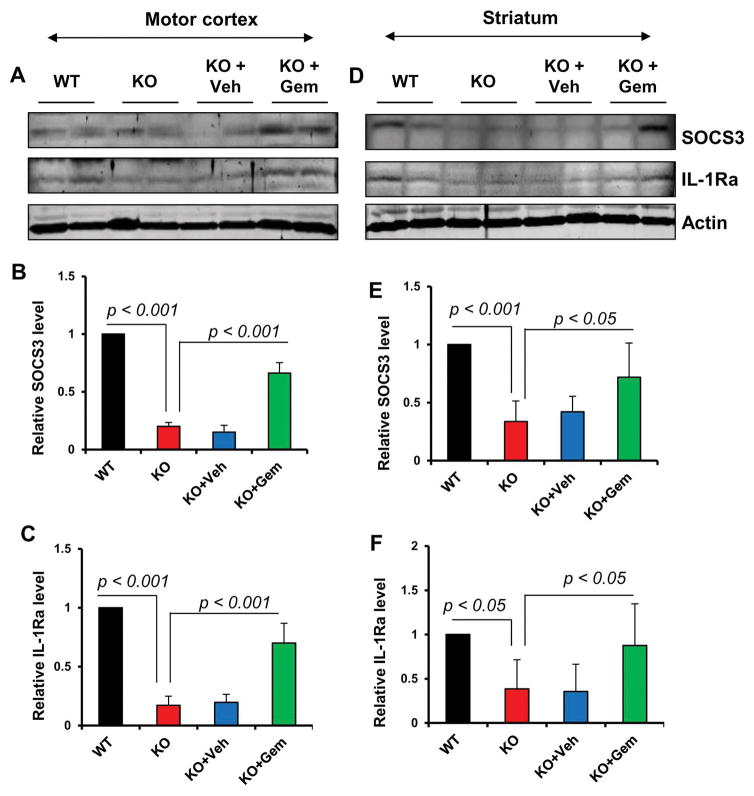
Late Infantile Neuronal Ceroid Lipofuscinosis (LINCL) is a rare neurodegenerative disease caused by mutations in the Cln2 gene that leads to deficiency or loss of function of the tripeptidyl peptidase 1 (TPP1) enzyme. TPP1 deficiency is known to cause the accumulation of autofluoroscent lipid-protein pigments in brain. Similar to other neurodegenerative disorders, LINCL is also associated with neuroinflammation and neuronal damage. Despite investigations, no effective therapy is currently available for LINCL. Therefore, we administered gemfibrozil (gem), an food and drug administration (FDA)-approved lipid-lowering drug, which has been shown to stimulate lysosomal biogenesis and induce anti-inflammation, orally, at a dose of 7.5 mg/kg body wt/day to Cln2(-/-) mice. We observed that gem-fed Cln2(-/-) mice lived longer by more than 10 weeks and had better motor activity compared to vehicle (0.1% Methyl cellulose) treatment. Gem treatment lowered the burden of storage materials, increased anti-inflammatory factors like SOCS3 and IL-1Ra, up-regulated anti-apoptotic molecule like phospho-Bad, and reduced neuronal apoptosis in the brain of Cln2(-/-) mice. Collectively, this study reinforces a neuroprotective role of gem that may be of therapeutic interest in improving the quality of life in LINCL patients.
Keywords: anti-inflammation; apoptosis; batten disease; gemfibrozil; longevity; mouse model.
© 2017 International Society for Neurochemistry.
Conflict of interest statement
Figures




References
-
- Backes JM, Gibson CA, Ruisinger JF, Moriarty PM. Fibrates: what have we learned in the past 40 years? Pharmacotherapy. 2007;27:412–424. - PubMed
-
- Basu A, Krady JK, Levison SW. Interleukin-1: a master regulator of neuroinflammation. J Neurosci Res. 2004;78:151–156. - PubMed
-
- Bellettato CM, Scarpa M. Pathophysiology of neuropathic lysosomal storage disorders. J Inherit Metab Dis. 2010;33:347–362. - PubMed
-
- Boustany RM. Lysosomal storage diseases--the horizon expands. Nat Rev Neurol. 2013;9:583–598. - PubMed
MeSH terms
Substances
Grants and funding
LinkOut - more resources
Full Text Sources
Other Literature Sources
Medical
Molecular Biology Databases
Research Materials
