Comparative Study
. 2017 Feb 15;11(2):e0005313.
doi: 10.1371/journal.pntd.0005313. eCollection 2017 Feb.

Comparative and functional triatomine genomics reveals reductions and expansions in insecticide resistance-related gene families

Affiliations
Comparative Study

Comparative and functional triatomine genomics reveals reductions and expansions in insecticide resistance-related gene families

Lucila Traverso et al. PLoS Negl Trop Dis. .

Abstract

Background: Triatomine insects are vectors of Trypanosoma cruzi, a protozoan parasite that is the causative agent of Chagas' disease. This is a neglected disease affecting approximately 8 million people in Latin America. The existence of diverse pyrethroid resistant populations of at least two species demonstrates the potential of triatomines to develop high levels of insecticide resistance. Therefore, the incorporation of strategies for resistance management is a main concern for vector control programs. Three enzymatic superfamilies are thought to mediate xenobiotic detoxification and resistance: Glutathione Transferases (GSTs), Cytochromes P450 (CYPs) and Carboxyl/Cholinesterases (CCEs). Improving our knowledge of key triatomine detoxification enzymes will strengthen our understanding of insecticide resistance processes in vectors of Chagas' disease.

Methods and findings: The discovery and description of detoxification gene superfamilies in normalized transcriptomes of three triatomine species: Triatoma dimidiata, Triatoma infestans and Triatoma pallidipennis is presented. Furthermore, a comparative analysis of these superfamilies among the triatomine transcriptomes and the genome of Rhodnius prolixus, also a triatomine vector of Chagas' disease, and other well-studied insect genomes was performed. The expression pattern of detoxification genes in R. prolixus transcriptomes from key organs was analyzed. The comparisons reveal gene expansions in Sigma class GSTs, CYP3 in CYP superfamily and clade E in CCE superfamily. Moreover, several CYP families identified in these triatomines have not yet been described in other insects. Conversely, several groups of insecticide resistance related enzymes within each enzyme superfamily are reduced or lacking in triatomines. Furthermore, our qRT-PCR results showed an increase in the expression of a CYP4 gene in a T. infestans population resistant to pyrethroids. These results could point to an involvement of metabolic detoxification mechanisms on the high levels of pyrethroid resistance detected in triatomines from the Gran Chaco ecoregion.

Conclusions and significance: Our results help to elucidate the potential insecticide resistance mechanisms in vectors of Chagas' disease and provide new relevant information for this field. This study shows that metabolic resistance might be a contributing cause of the high pyrethroid resistance observed in wild T. infestans populations from the Gran Chaco ecoregion, area in which although subjected to intense pyrethroid treatments, vector control has failed. This study opens new avenues for further functional studies on triatomine detoxification mechanisms.


Conflict of interest statement

The authors have declared that no competing interests exist.

Figures
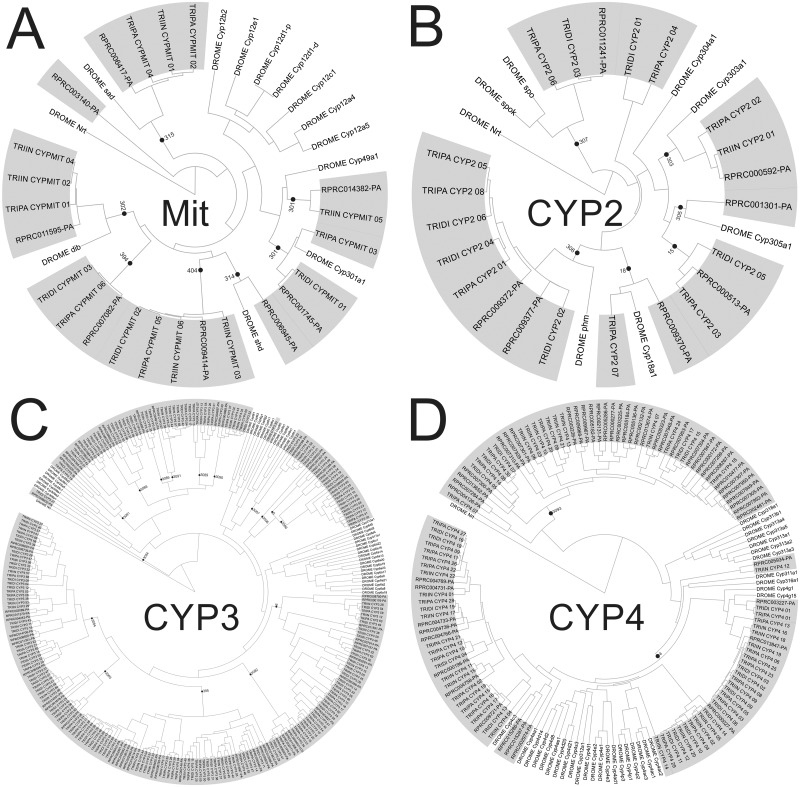
Fig 1
Fig 1. Phylogeny of the CYP superfamily from R. prolixus (VectorBase ID shown), T. infestans (TRIIN), T. dimidiata (TRIDI), T. pallidipennis (TRIPA) and D. melanogaster (DROME).
(A) Phylogeny of mitochondrial clade. (B) Phylogeny of CYP2 clade. (C) Phylogeny of CYP3 clade. (D) Phylogeny of CYP4 clade. The sequence of Neurotactin from D. melanogaster (CG9704) was used as outgroup. The triatomine sequences are painted in grey.
Fig 2
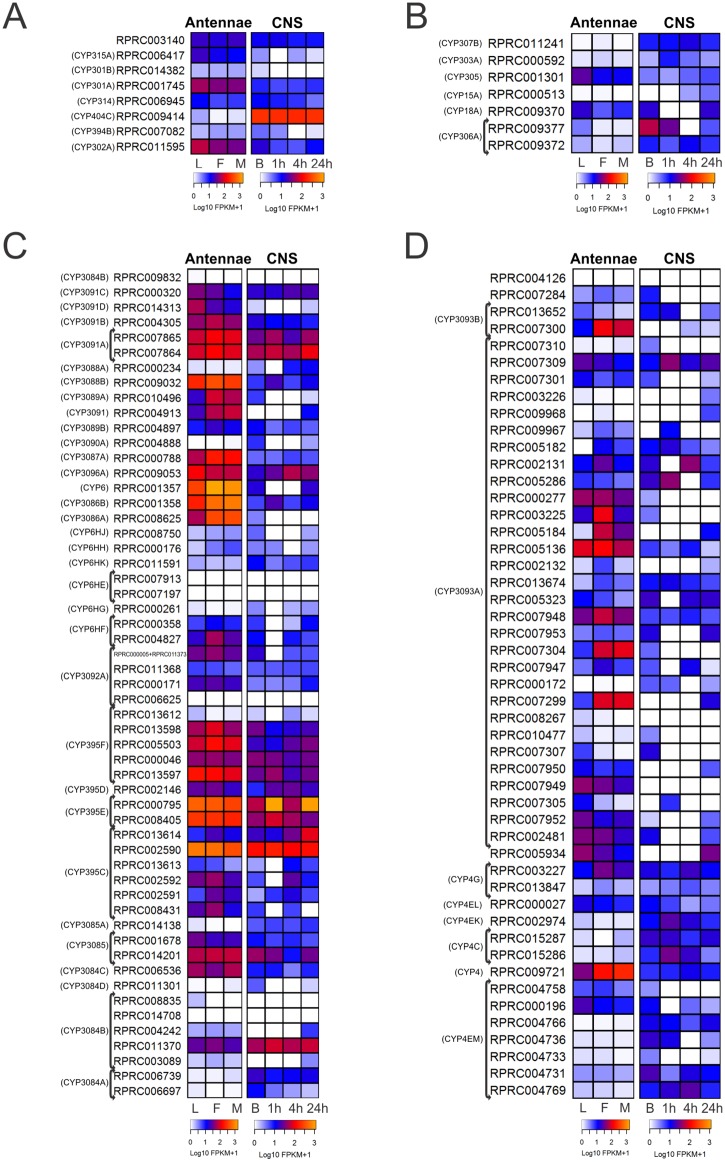
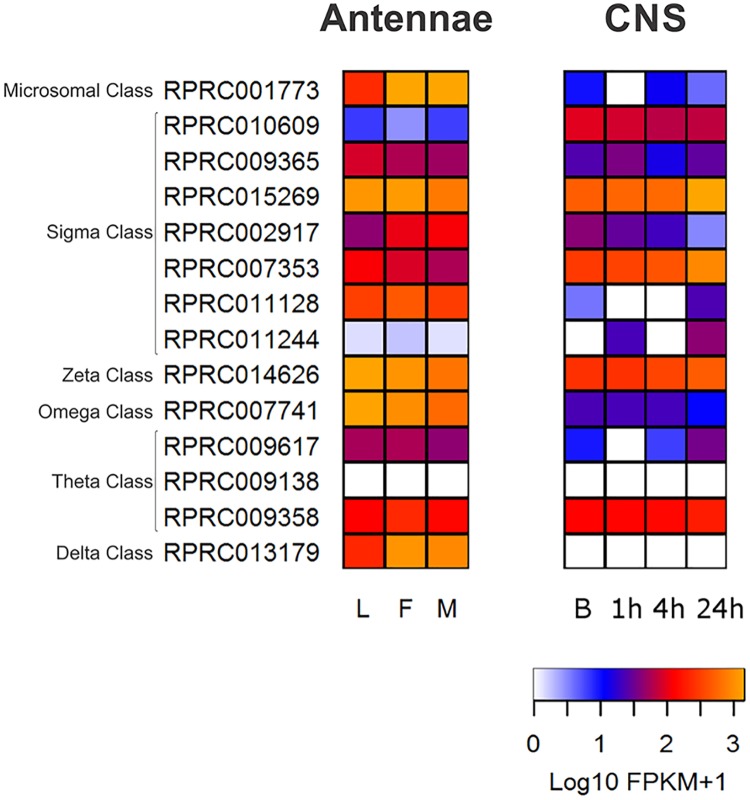
Fig 2. Heat maps comparing expression levels of CYP members in antennae and the central nervous system (CNS) of R. prolixus in different conditions. (A) Mitochondrial clade. (B) CYP2 clade. (C) CYP3 clade. (D) CYP4 clade.
In each figure, on the left, expression levels in larvae (L), female (F) and male (M) adult antennae; on the right, expression levels in the central nervous system (CNS) from adult bugs in basal condition (B), one, four and twenty-four hours after blood ingestion. Expression levels (represented as Log10 FPKM +1) were depicted with a color scale, in which white represents lower expression and yellow represents higher expression. The phylogenetic classification of CYP members according to Schama et al. (2015) is shown on the left.
Fig 3
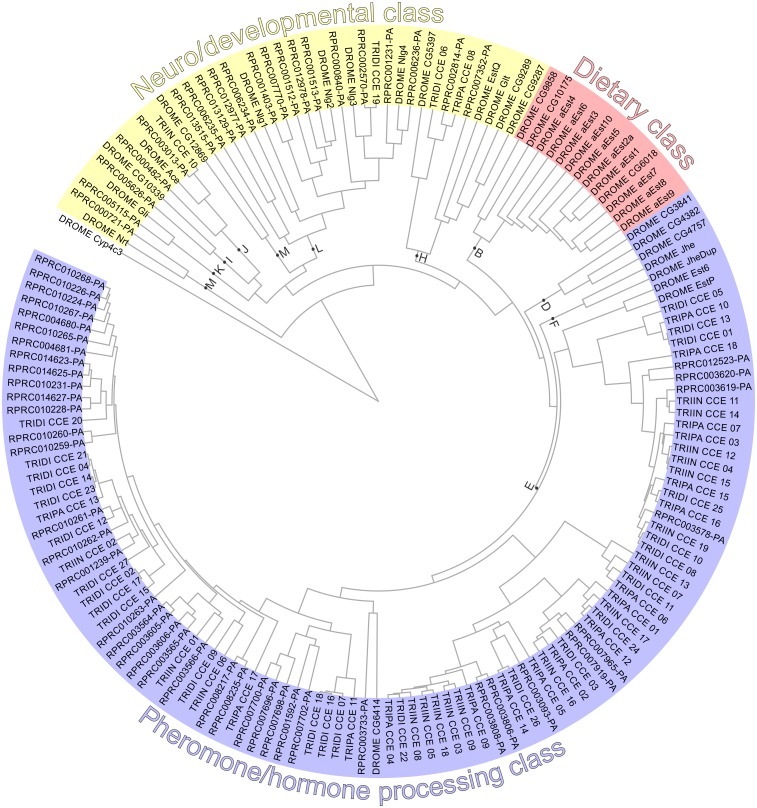
Fig 3. Phylogeny of the CCE superfamily from R. prolixus (VectorBase ID shown), T. infestans (TRIIN), T. dimidiata (TRIDI), T. pallidipennis (TRIPA) and D. melanogaster (DROME).
The sequence of Cyp4c3 from D. melanogaster (CG14031) was used as outgroup. The letters depicted next to the dots in the branches of the tree indicate the delimitation of each clade.
Fig 4
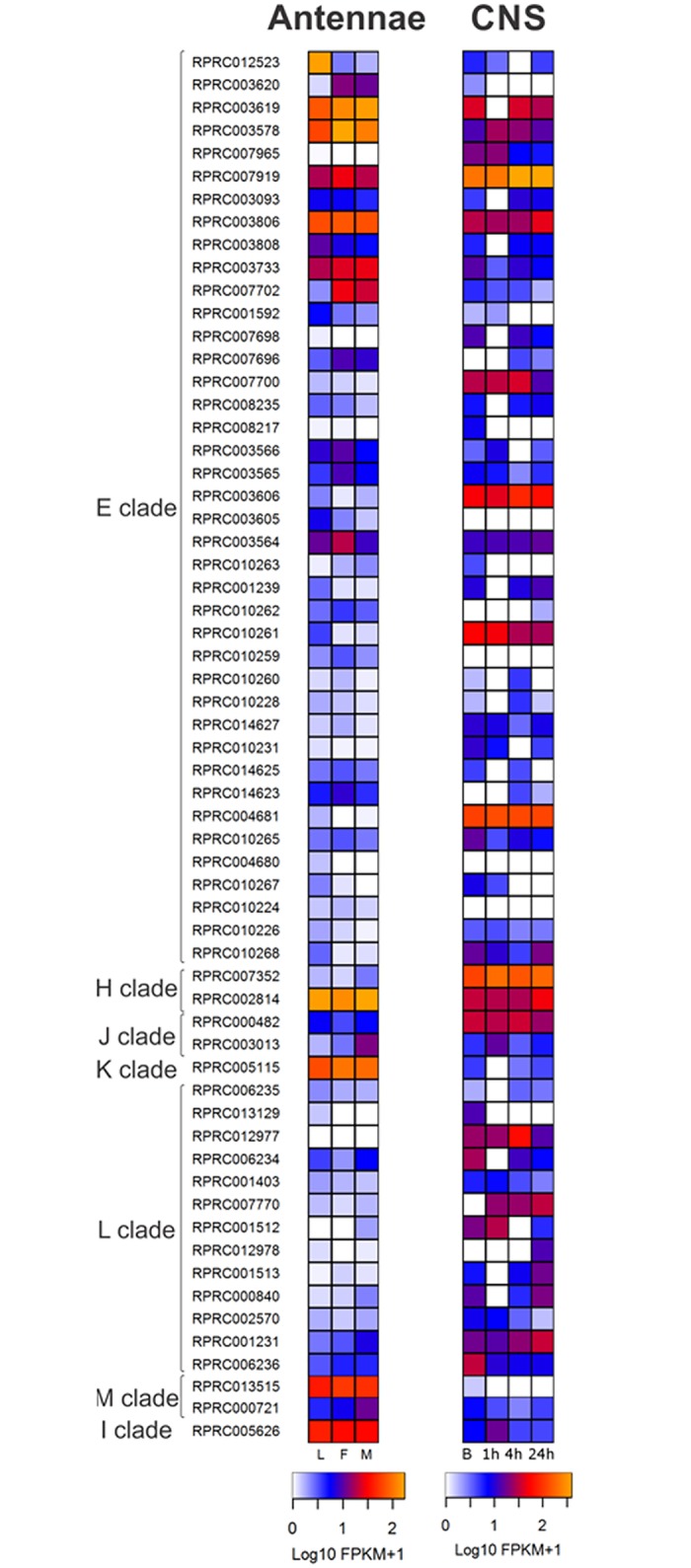
Fig 4. Heat maps comparing CCE expression levels in antennae and the central nervous system (CNS) of R. prolixus in different conditions.
On the left, expression levels in larvae (L), female (F) and male (M) adult antennae. On the right, expression levels in central nervous system from adult bugs in basal condition (B), one, four and twenty-four hours after blood ingestion. Expression levels (represented as Log10 FPKM +1) were depicted with a color scale, in which white represents lower expression and yellow represents higher expression. The classification according the phylogenetic tree is shown on the left.
Fig 5
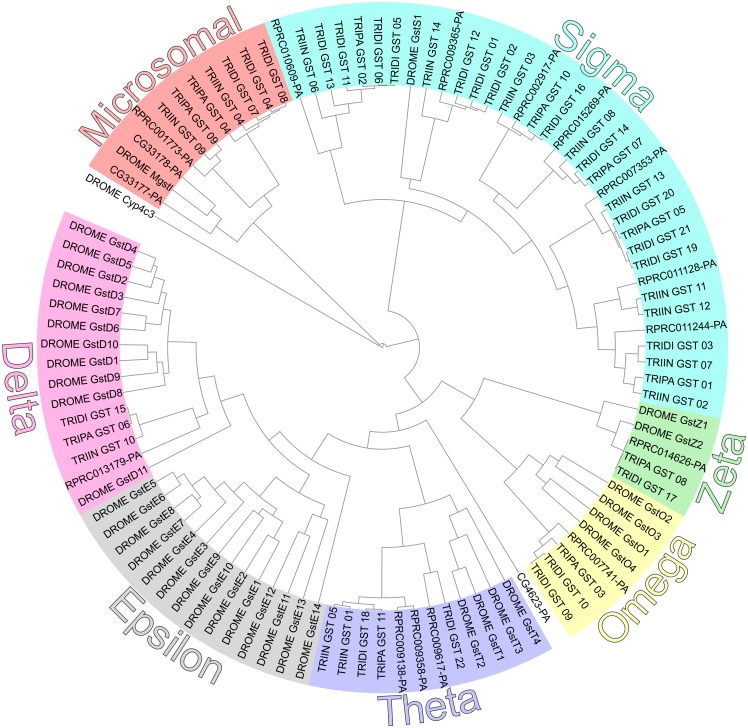
Fig 5. Phylogeny of the Glutathione Transferase superfamily from R. prolixus (VectorBase ID shown), T. infestans (TRIIN), T. dimidiata (TRIDI), T. pallidipennis (TRIPA) and D. melanogaster (DROME).
The sequence of Cyp4c3 from D. melanogaster (CG14031) was used as outgroup.
Fig 6
Fig 6. Heat maps comparing Glutathione Transferase expression levels in antennae and the central nervous system (CNS) of R. prolixus in different conditions.
On the left, expression levels in larvae (L), female (F) and male (M) adult antennae. On the right, expression levels in the central nervous system from adult bugs in basal condition (B), one, four and twenty-four hours after blood ingestion. Expression levels (represented as Log10 FPKM +1) were depicted with a color scale, in which white represents lower expression and yellow represents higher expression. The classification according the phylogenetic tree is shown on the left.
Fig 7
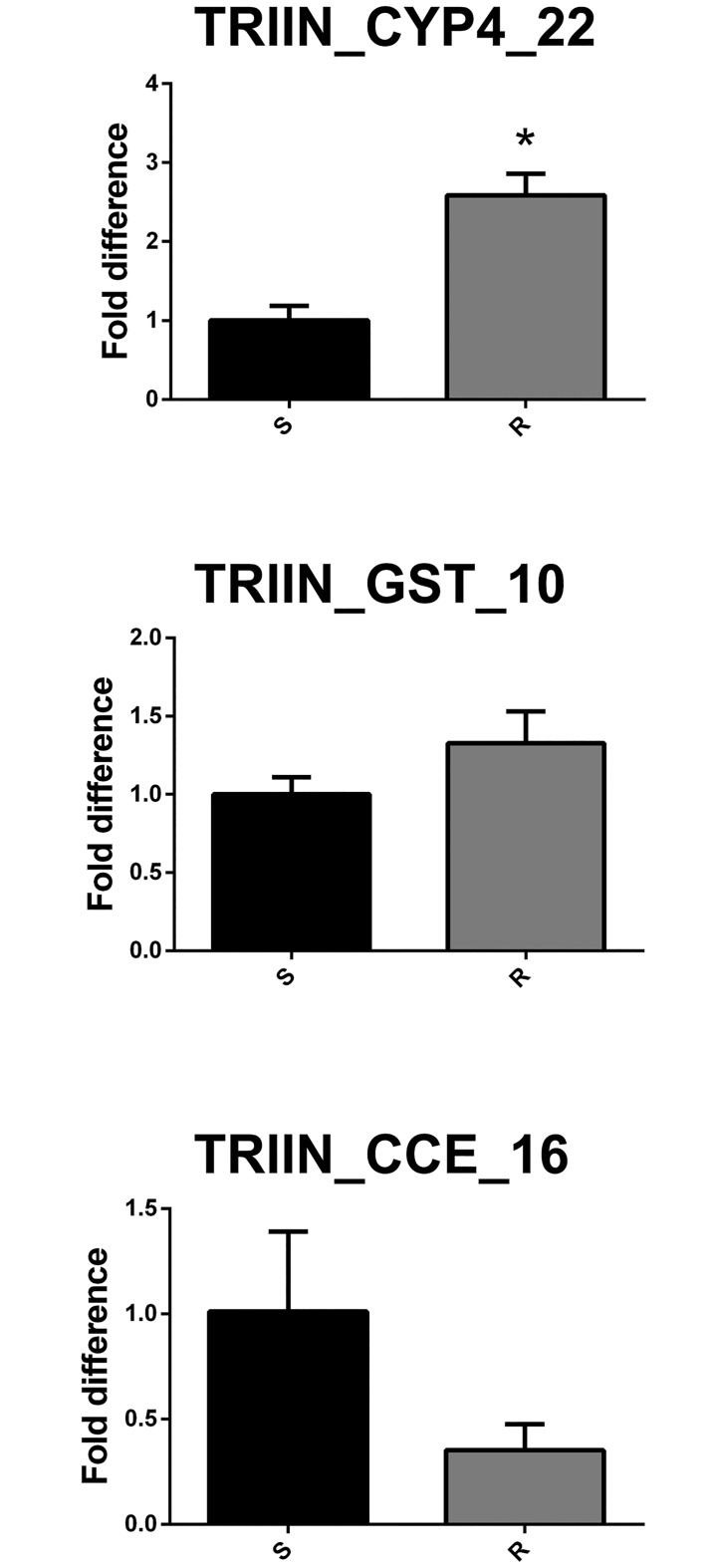
Fig 7. Gene expression analysis of detoxification-related genes in T. infestans from a sensitive laboratory (S) and a resistant (R) population.
Results are expressed as the mean ± S.E (n = 4/group) of the fold difference respect to average for the sensitive population. * = p<0.05.

References

    1. Rassi A Jr., Rassi A, Marin-Neto JA (2010) Chagas disease. Lancet 375: 1388–1402. 10.1016/S0140-6736(10)60061-X - DOI - PubMed
    1. Dias JC (2007) Southern Cone Initiative for the elimination of domestic populations of Triatoma infestans and the interruption of transfusional Chagas disease. Historical aspects, present situation, and perspectives. Mem Inst Oswaldo Cruz 102 Suppl 1: 11–18. - PubMed
    1. Gurtler RE (2009) Sustainability of vector control strategies in the Gran Chaco Region: current challenges and possible approaches. Mem Inst Oswaldo Cruz 104 Suppl 1: 52–59. - PMC - PubMed
    1. Barbu C, Dumonteil E, Gourbiere S (2009) Optimization of control strategies for non-domiciliated Triatoma dimidiata, Chagas disease vector in the Yucatan Peninsula, Mexico. PLoS Negl Trop Dis 3: e416 10.1371/journal.pntd.0000416 - DOI - PMC - PubMed
    1. Mougabure-Cueto G, Picollo MI (2015) Insecticide resistance in vector Chagas disease: evolution, mechanisms and management. Acta Trop 149: 70–85. 10.1016/j.actatropica.2015.05.014 - DOI - PubMed

Publication types

LinkOut - more resources