


Costs and benefits of natural transformation in Acinetobacter baylyi
- PMID: 28202049
- PMCID: PMC5312590
- DOI: 10.1186/s12866-017-0953-2
Costs and benefits of natural transformation in Acinetobacter baylyi
Abstract
Background: Natural transformation enables acquisition of adaptive traits and drives genome evolution in prokaryotes. Yet, the selective forces responsible for the evolution and maintenance of natural transformation remain elusive since taken-up DNA has also been hypothesized to provide benefits such as nutrients or templates for DNA repair to individual cells.
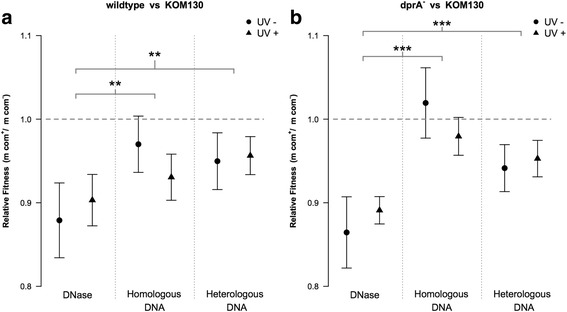
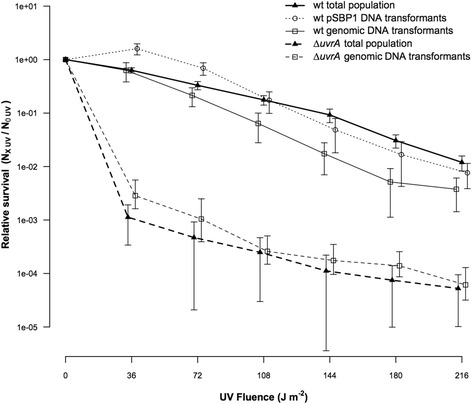
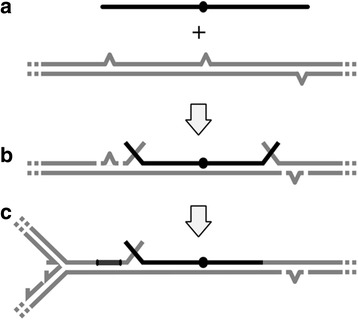
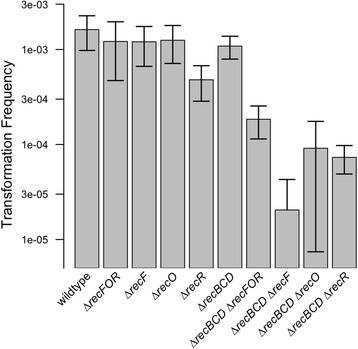
Results: We investigated the immediate effects of DNA uptake and recombination on the naturally competent bacterium Acinetobacter baylyi in both benign and genotoxic conditions. In head-to-head competition experiments between DNA uptake-proficient and -deficient strains, we observed a fitness benefit of DNA uptake independent of UV stress. This benefit was found with both homologous and heterologous DNA and was independent of recombination. Recombination with taken-up DNA reduced survival of transformed cells with increasing levels of UV-stress through interference with nucleotide excision repair, suggesting that DNA strand breaks occur during recombination attempts with taken-up DNA. Consistent with this, we show that absence of RecBCD and RecFOR recombinational DNA repair pathways strongly decrease natural transformation.
Conclusions: Our data show a physiological benefit of DNA uptake unrelated to recombination. In contrast, recombination during transformation is a strand break inducing process that represents a previously unrecognized cost of natural transformation.
Keywords: Bacterial evolution; Competence; DNA repair; DprA; Horizontal gene transfer; Natural transformation.
Figures
References
MeSH terms
Substances
Grants and funding
LinkOut - more resources
Full Text Sources
Other Literature Sources
