


Physical Activity Level and Sport Participation in Relation to Musculoskeletal Pain in a Population-Based Study of Adolescents: The Young-HUNT Study
- PMID: 28203603
- PMCID: PMC5298487
- DOI: 10.1177/2325967116685543
Physical Activity Level and Sport Participation in Relation to Musculoskeletal Pain in a Population-Based Study of Adolescents: The Young-HUNT Study
Abstract
Background: Prevalence of musculoskeletal pain among adolescents is high, and pain in adolescence increases the risk of chronic pain in adulthood. Studies have shown conflicting evidence regarding associations between physical activity and musculoskeletal pain, and few have evaluated the potential impact of sport participation on musculoskeletal pain in adolescent population samples.
Purpose: To examine the associations between physical activity level, sport participation, and musculoskeletal pain in the neck and shoulders, low back, and lower extremities in a population-based sample of adolescents.
Study design: Cross-sectional study; Level of evidence 4.
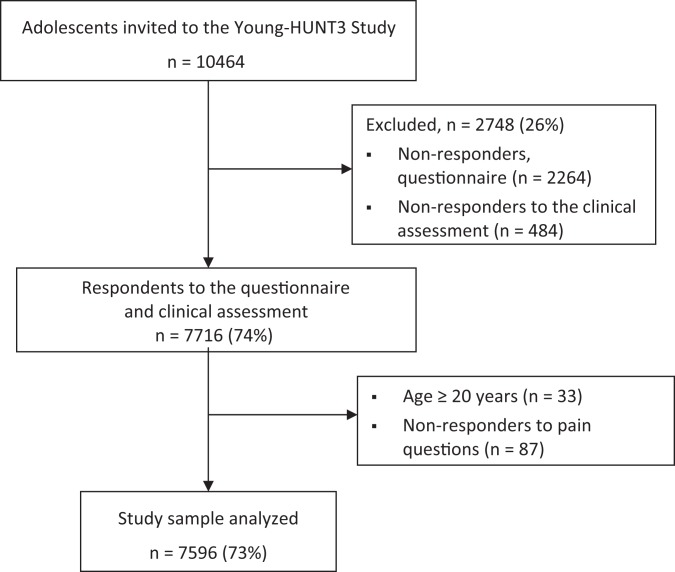
Methods: Data from the Nord-Trøndelag Health Study (Young-HUNT3) were used. All 10,464 adolescents in the Nord-Trøndelag county of Norway were invited, of whom 74% participated. Participants were asked how often they had experienced pain, unrelated to any known disease or acute injury, in the neck and shoulders, low back, and lower extremities in the past 3 months. The associations between (1) physical activity level (low [reference], medium or high) or (2) sport participation (weekly compared with no/infrequent participation) and pain were evaluated using logistic regression analyses, stratified by sex, and adjusted for age, socioeconomic status, and psychological distress.
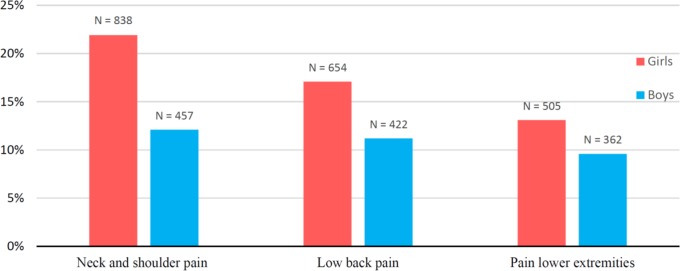
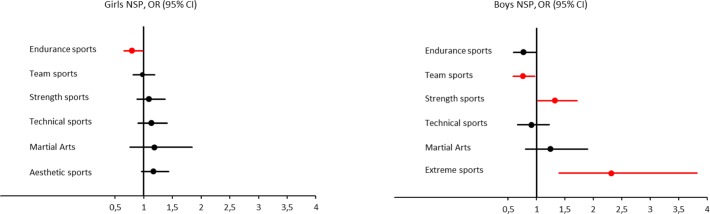
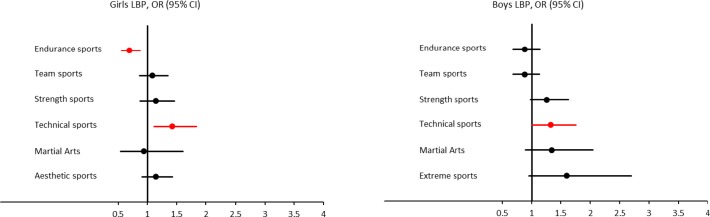
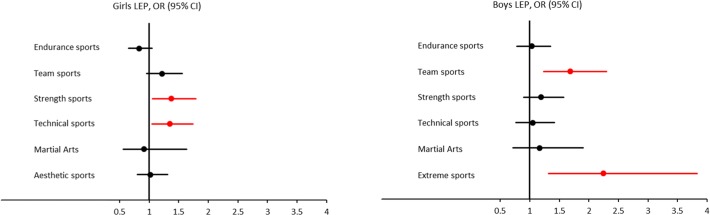
Results: The analyses included 7596 adolescents (mean age, 15.8 years; SD, 1.7). Neck and shoulder pain was most prevalent (17%). A moderate level of physical activity was associated with reduced odds of neck and shoulder pain (OR = 0.79 [95% CI, 0.66-0.94]) and low back pain (OR = 0.75 [95% CI, 0.62-0.91]), whereas a high level of activity increased the odds of lower extremity pain (OR = 1.60 [95% CI, 1.29-1.99]). Participation in endurance sports was associated with lower odds of neck and shoulder pain (OR = 0.79 [95% CI, 0.68-0.92]) and low back pain (OR = 0.77 [95% CI, 0.65-0.92]), especially among girls. Participation in technical sports was associated with increased odds of low back pain, whereas team sports were associated with increased odds of lower extremity pain. Strength and extreme sports were related to pain in all regions.
Conclusion: We found that a moderate physical activity level was associated with less neck and shoulder pain and low back pain, and that participation in endurance sports may be particularly beneficial. Our findings highlight the need for health care professionals to consider the types of sports adolescents participate in when evaluating their musculoskeletal pain.
Keywords: adolescents; epidemiology; musculoskeletal pain; overuse problems; physical activity; sport participation.
Conflict of interest statement
One or more of the authors has declared the following potential conflict of interest or source of funding: This work was funded by The Norwegian Fund for Post-Graduate Training in Physiotherapy.
Figures
References
-
- Aartun E, Hartvigsen J, Boyle E, Hestbaek L. No associations between objectively measured physical activity and spinal pain in 11-15-year-old Danes. Eur J Pain. 2016;20:447–457. - PubMed
-
- Auvinen J, Tammelin T, Taimela S, Zitting P, Karppinen J. Associations of physical activity and inactivity with low back pain in adolescents. Scand J Med Sci Sports. 2008;18:188–194. - PubMed
-
- Auvinen J, Tammelin TH, Taimela SP, Zitting PJ, Mutanen PO, Karppinen JI. Musculoskeletal pains in relation to different sport and exercise activities in youth. Med Sci Sports Exerc. 2008;40:1890–1900. - PubMed
-
- Barton CJ, Lack S, Hemmings S, Tufail S, Morrissey D. The ‘Best Practice Guide to Conservative Management of Patellofemoral Pain’: incorporating level 1 evidence with expert clinical reasoning. Br J Sports Med. 2015;49:923–934. - PubMed
-
- Bo Andersen L, Wedderkopp N, Leboeuf-Yde C. Association between back pain and physical fitness in adolescents. Spine (Phila Pa 1976). 2006;31:1740–1744. - PubMed
LinkOut - more resources
Full Text Sources
Other Literature Sources
Miscellaneous
