


Cognitive Control, Learning, and Clinical Motor Ratings Are Most Highly Associated with Basal Ganglia Brain Volumes in the Premanifest Huntington's Disease Phenotype
- PMID: 28205498
- PMCID: PMC5803794
- DOI: 10.1017/S1355617716001132
Cognitive Control, Learning, and Clinical Motor Ratings Are Most Highly Associated with Basal Ganglia Brain Volumes in the Premanifest Huntington's Disease Phenotype
Abstract
Objectives: Huntington's disease (HD) is a debilitating genetic disorder characterized by motor, cognitive and psychiatric abnormalities associated with neuropathological decline. HD pathology is the result of an extended chain of CAG (cytosine, adenine, guanine) trinucleotide repetitions in the HTT gene. Clinical diagnosis of HD requires the presence of an otherwise unexplained extrapyramidal movement disorder in a participant at risk for HD. Over the past 15 years, evidence has shown that cognitive, psychiatric, and subtle motor dysfunction is evident decades before traditional motor diagnosis. This study examines the relationships among subcortical brain volumes and measures of emerging disease phenotype in prodromal HD, before clinical diagnosis.
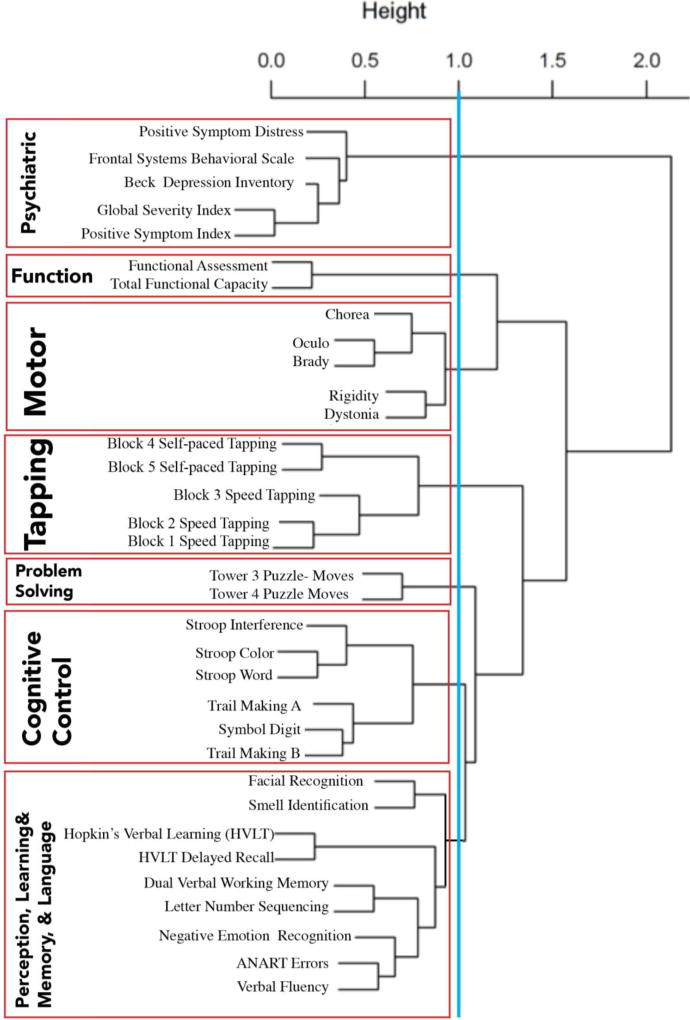
Methods: The dataset includes 34 cognitive, motor, psychiatric, and functional variables and five subcortical brain volumes from 984 prodromal HD individuals enrolled in the PREDICT HD study. Using cluster analyses, seven distinct clusters encompassing cognitive, motor, psychiatric, and functional domains were identified. Individual cluster scores were then regressed against the subcortical brain volumetric measurements.
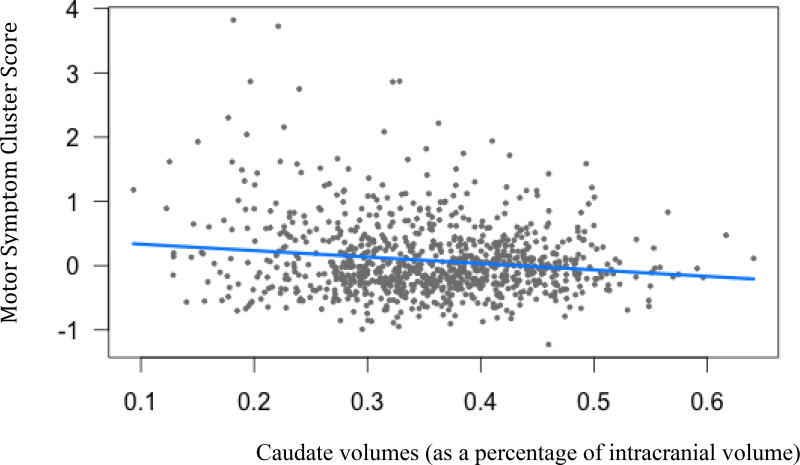
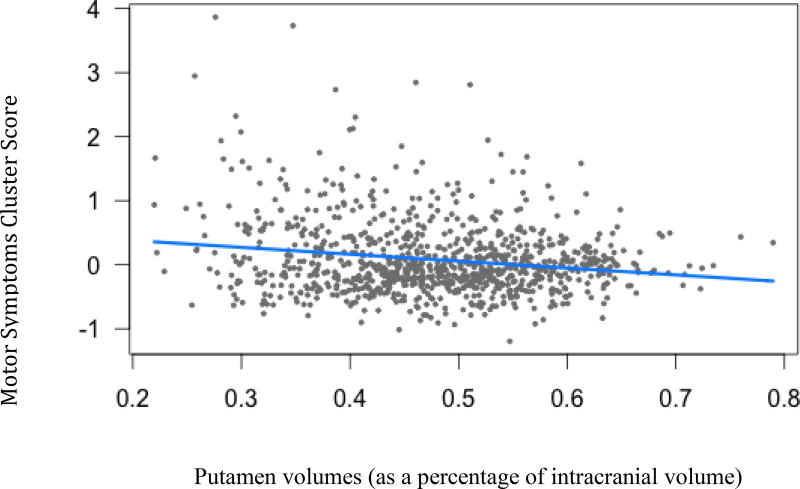
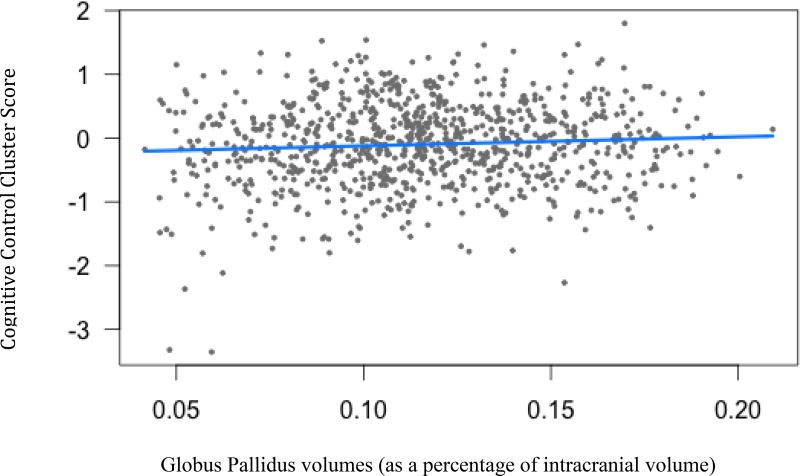
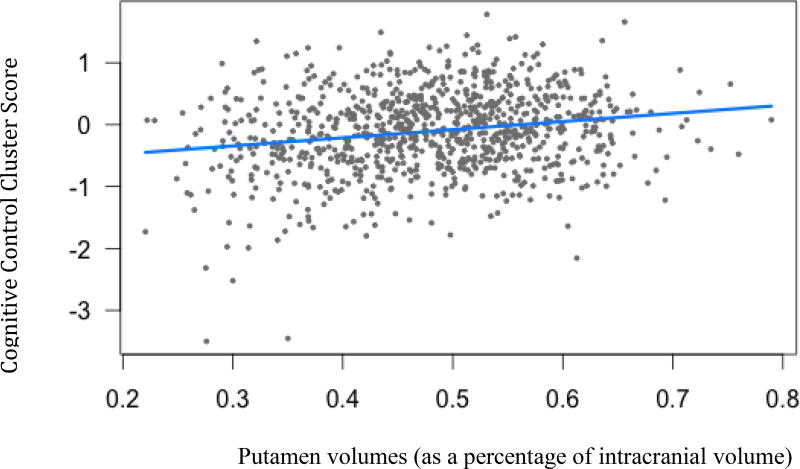
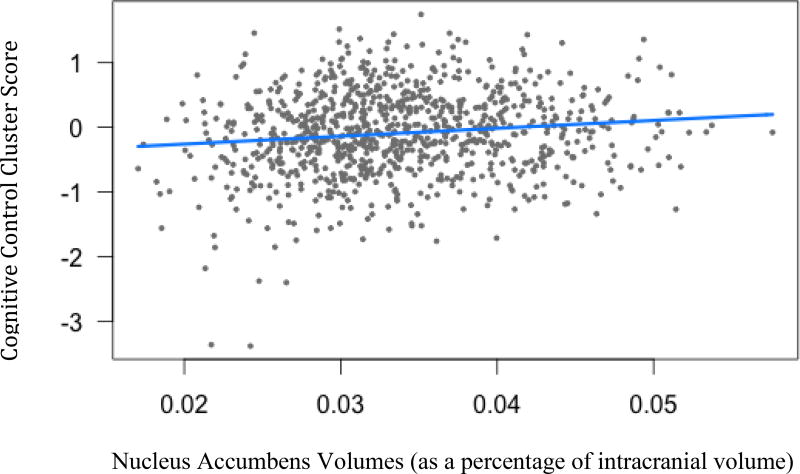
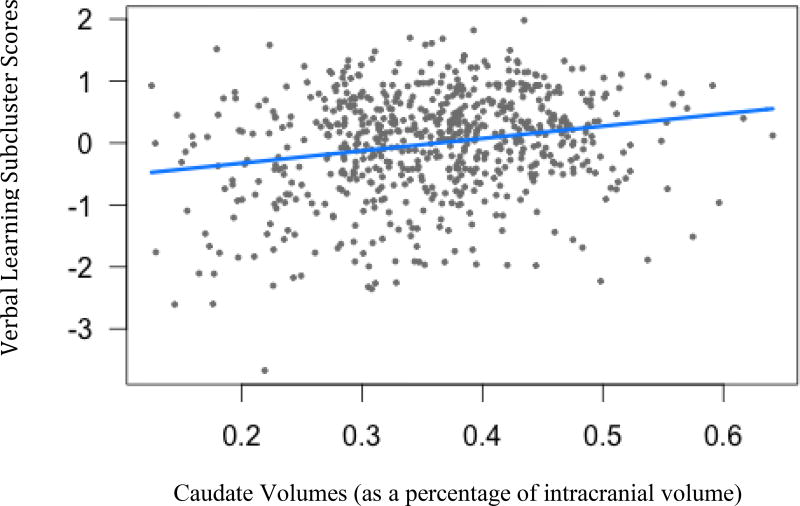
Results: Accounting for site and genetic burden (the interaction of age and CAG repeat length) smaller caudate and putamen volumes were related to clusters reflecting motor symptom severity, cognitive control, and verbal learning.
Conclusions: Variable reduction of the HD phenotype using cluster analysis revealed biologically related domains of HD and are suitable for future research with this population. Our cognitive control cluster scores show sensitivity to changes in basal ganglia both within and outside the striatum that may not be captured by examining only motor scores. (JINS, 2017, 23, 159-170).
Keywords: Basal ganglia; Caudate; Cluster analysis; Clustering; Cognition; Cognitive control; Neuropsychology; Prodromal Huntington’s disease; Psychiatric symptoms; Striatum.
Figures
References
-
- Alexander GE, Crutcher MD. Functional architecture of basal ganglia circuits: neural substrates of parallel processing. Trends In Neurosciences. 1990;13(7):266–271. - PubMed
-
- Aylward EH, Harrington DL, Mills JA, Nopoulos PC, Ross CA, Long JD the PREDICT-HD Investigators and Coordinators of the Huntington Study Group. Regional Atrophy Associated with Cognitive and Motor Function in Prodromal Huntington Disease. Journal of Huntington’s Disease. 2013;2(4):477–489. https://doi.org/10.3233/JHD-130076. - DOI - PMC - PubMed
-
- Aylward EH, Liu D, Nopoulos PC, Ross CA, Pierson RK, Mills JA, Paulsen JS. Striatal Volume Contributes to the Prediction of Onset of Huntington Disease in Incident Cases. Biol Psychiatry. 2011;71(9):822–828. https://doi.org/10.1016/j.biopsych.2011.07.030. - DOI - PMC - PubMed
-
- Aylward EH, Nopoulos PC, Ross CA, Langbehn DR, Pierson RK, Mills JA Coordinators of Huntington Study, G. Longitudinal change in regional brain volumes in prodromal Huntington disease. J Neurol Neurosurg Psychiatry. 2011;82(4):405–410. https://doi.org/10.1136/jnnp.2010.208264. - DOI - PMC - PubMed
-
- Dalley JW, Everitt BJ, Robbins TW. Impulsivity, Compulsivity, and Top-Down Cognitive Control. Neuron. 2011;69(4):680–694. https://doi.org/http://dx.doi.org/10.1016/j.neuron.2011.01.020. - DOI - PubMed
MeSH terms
Substances
Grants and funding
LinkOut - more resources
Full Text Sources
Other Literature Sources
Medical
Miscellaneous
