


An analysis of variations of indications and maternal-fetal prognosis for caesarean section in a tertiary hospital of Beijing: A population-based retrospective cohort study
- PMID: 28207498
- PMCID: PMC5319487
- DOI: 10.1097/MD.0000000000005509
An analysis of variations of indications and maternal-fetal prognosis for caesarean section in a tertiary hospital of Beijing: A population-based retrospective cohort study
Abstract
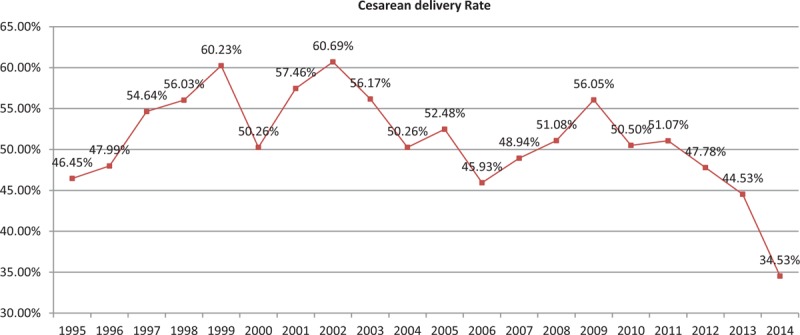
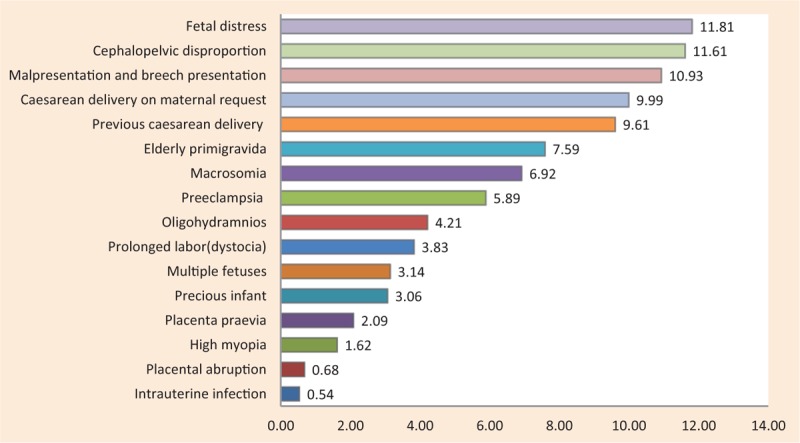
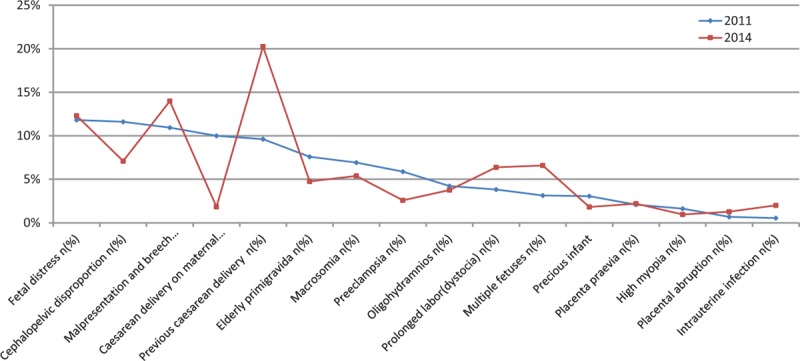
In recent decades, we have observed a remarkable increase in the rate of caesarean section (CS) in both developed and developing countries, especially in China. According to the World Health Organization (WHO) systematic review, if the increase in CS rate was between 10% and 15%, the maternal and neonatal mortality was decreased. However, above this level, increasing the rate of CS is no longer associated with reduced mortality. To date, no consensus has been reached on the main factors driving the cesarean epidemic. To reduce the progressively increasing rate of CS, we should find indications for the increasing CS rate. The aim of our study was to estimate the change of CS rate of Beijing Obstetrics and Gynecology Hospital and to find the variation of the indications.From January 1995 to December 2014, the CS rate of Beijing Obstetrics and Gynecology Hospital was analyzed. For our analysis, we selected 14,642 and 16,335 deliveries respectively that occurred during the year 2011 and 2014, to analyze the difference of indications, excluding incomplete data and miscarriages or termination of pregnancy before 28 weeks of gestation because of fatal malformations, intrauterine death, or other reasons.The average CS rate during the past 20 years was 51.15%. The highest caesarean delivery rate was 60.69% in 2002; however, the caesarean delivery rate declined to 34.53% in 2014. The obviously different indications were caesarean delivery on maternal request and previous CS delivery. The rate of CS due to maternal request in 2014 was decreased by 8.16% compared with the year 2011. However, the percentage of pregnancy women with a previous CS delivery increased from 9.61% to 20.42% in 3 years. Along with the decline of CS rate, the perinatal mortality and the rate of neonatal asphyxia decreased in 2014 compared with that in 2011.After a series of measures, the CS rate declined indeed. Compared with 2011, the perinatal mortality and the rate of neonatal asphyxia decreased in 2014. Caesarean delivery on maternal request (CDMR) cannot improve the maternal-fetal prognosis compared with the spontaneous vaginal delivery. With the releasing of China's 2 children policy, more CS will be implemented due to previous CS. There is a need for further research that evaluates interventions for increasing VBAC rates that target clinicians.
Conflict of interest statement
The authors have no conflicts of interest to disclose.
Figures

References
-
- Lumbiganon P, Laopaiboon M, Gülmezoglu AM, et al. Method of delivery and pregnancy outcomes in Asia: the WHO global survey on maternal and perinatal health 2007-08. Lancet 2010;375:490–9. - PubMed
-
- WHO Statement on caesarean section rates. Reproductive Health Matters 23:149–150. - PubMed
-
- Selinger H. Maternal request for caesarean section: an ethical consideration. J Med Ethics 2014;40:857–60. - PubMed
Publication types
MeSH terms
LinkOut - more resources
Full Text Sources
Other Literature Sources
Medical
Miscellaneous
