


Emergence of TNIK inhibitors in cancer therapeutics
- PMID: 28208209
- PMCID: PMC5448614
- DOI: 10.1111/cas.13203
Emergence of TNIK inhibitors in cancer therapeutics
Abstract
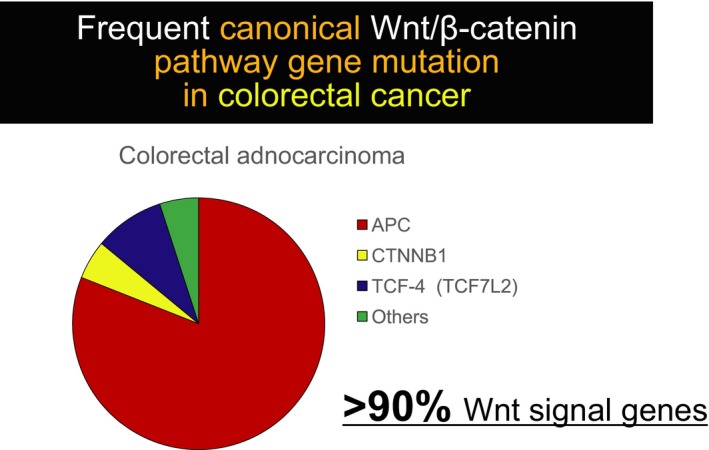
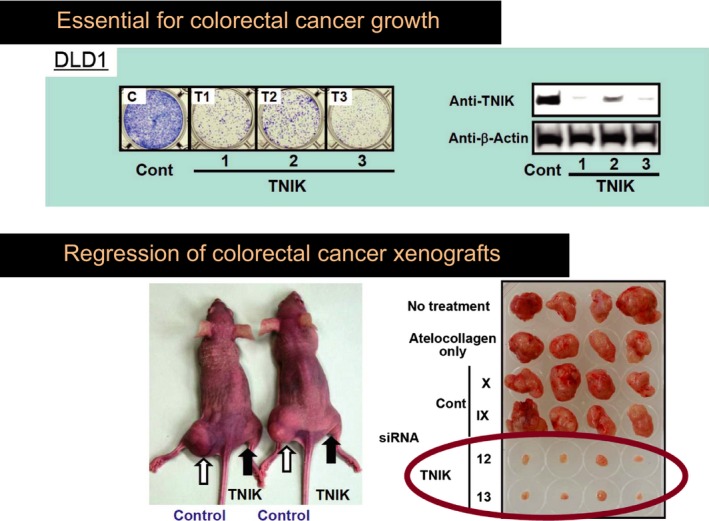
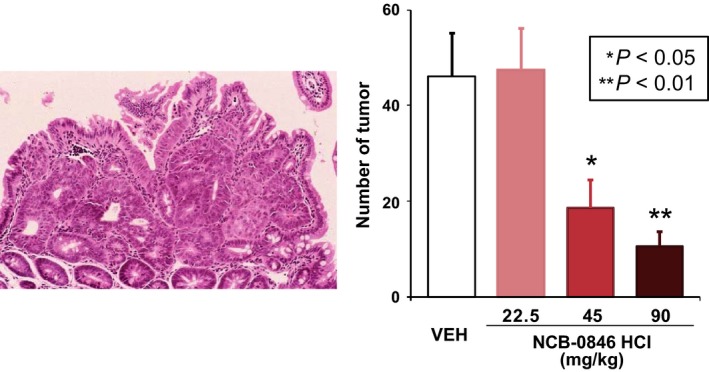
The outcome of patients with metastatic colorectal cancer remains unsatisfactory. To improve patient prognosis, it will be necessary to identify new drug targets based on molecules that are essential for colorectal carcinogenesis, and to develop therapeutics that target such molecules. The great majority of colorectal cancers (>90%) have mutations in at least one Wnt signaling pathway gene. Aberrant activation of Wnt signaling is a major force driving colorectal carcinogenesis. Several therapeutics targeting Wnt pathway molecules, including porcupine, frizzled receptors and tankyrases, have been developed, but none of them have yet been incorporated into clinical practice. Wnt signaling is most frequently activated by loss of function of the adenomatous polyposis coli (APC) tumor suppressor gene. Restoration of APC gene function does not seem to be a realistic therapeutic approach, and, therefore, only Wnt signaling molecules downstream of the APC gene product can be considered as targets for pharmacological intervention. Traf2 and Nck-interacting protein kinase (TNIK) was identified as a regulatory component of the β-catenin and T-cell factor-4 (TCF-4) transcriptional complex. Several small-molecule compounds targeting this protein kinase have been shown to have anti-tumor effects against various cancers. An anthelmintic agent, mebendazole, was recently identified as a selective inhibitor of TNIK and is under clinical evaluation. TNIK regulates Wnt signaling in the most downstream part of the pathway, and its pharmacological inhibition seems to be a promising therapeutic approach. We demonstrated the feasibility of this approach by developing a small-molecule TNIK inhibitor, NCB-0846.
Keywords: TNIK; Cancer stem cell; Wnt signaling; colorectal cancer; molecular targeted therapy.
© 2017 The Authors. Cancer Science published by John Wiley & Sons Australia, Ltd on behalf of Japanese Cancer Association.
Figures

References
-
- Kato H, Sobue T, Katanoda K et al Editorial Board of the Cancer Statistics in Japan. Cancer statistics in Japan 2007. Tokyo: Foundation for Promotion of Cancer Research (FPCF), 2007.
-
- Okuno K. Surgical treatment for digestive cancer. Current issues – Colon cancer. Dig Surg 2007; 24: 108–14. - PubMed
-
- Koutras AK, Starakis I, Kyriakopoulou U et al Targeted therapy in colorectal cancer: current status and future challenges. Curr Med Chem 2011; 18: 1599–612. - PubMed
-
- Omura K. Advances in chemotherapy against advanced or metastatic colorectal cancer. Digestion 2008; 77(Suppl 1): 13–22. - PubMed
-
- Grothey A, Van Cutsem E, Sobrero A et al Regorafenib monotherapy for previously treated metastatic colorectal cancer (CORRECT): an international, multicentre, randomised, placebo‐controlled, phase 3 trial. Lancet 2013; 381: 303–12. - PubMed
Publication types
MeSH terms
Substances
LinkOut - more resources
Full Text Sources
Other Literature Sources
