


Enteric Pathogens and Their Toxin-Induced Disruption of the Intestinal Barrier through Alteration of Tight Junctions in Chickens
- PMID: 28208612
- PMCID: PMC5331439
- DOI: 10.3390/toxins9020060
Enteric Pathogens and Their Toxin-Induced Disruption of the Intestinal Barrier through Alteration of Tight Junctions in Chickens
Abstract
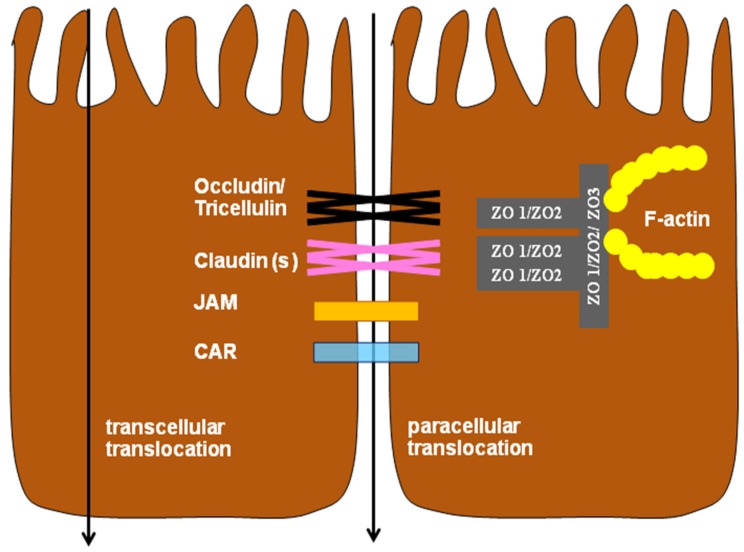
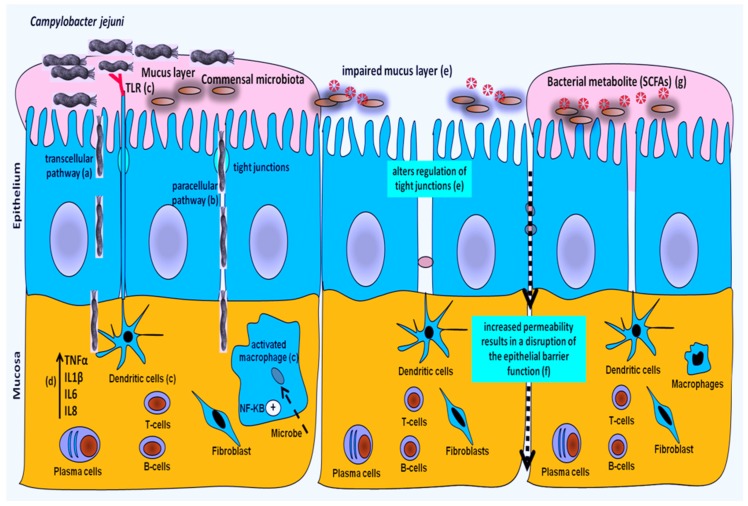
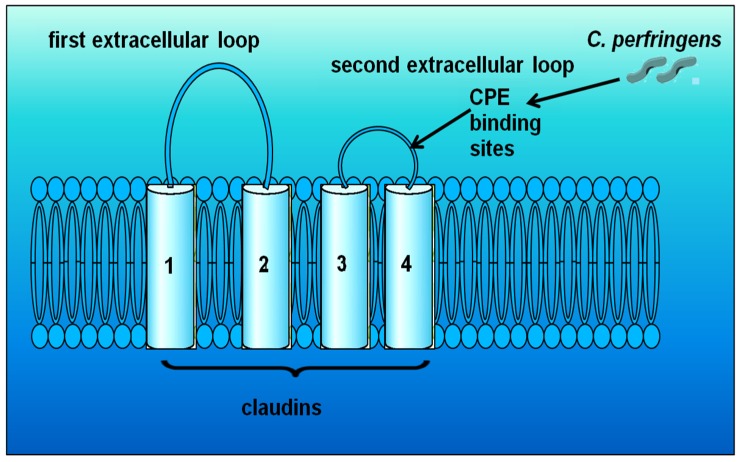
Maintaining a healthy gut environment is a prerequisite for sustainable animal production. The gut plays a key role in the digestion and absorption of nutrients and constitutes an initial organ exposed to external factors influencing bird's health. The intestinal epithelial barrier serves as the first line of defense between the host and the luminal environment. It consists of a continuous monolayer of intestinal epithelial cells connected by intercellular junctional complexes which shrink the space between adjacent cells. Consequently, free passing of solutes and water via the paracellular pathway is prevented. Tight junctions (TJs) are multi-protein complexes which are crucial for the integrity and function of the epithelial barrier as they not only link cells but also form channels allowing permeation between cells, resulting in epithelial surfaces of different tightness. Tight junction's molecular composition, ultrastructure, and function are regulated differently with regard to physiological and pathological stimuli. Both in vivo and in vitro studies suggest that reduced tight junction integrity greatly results in a condition commonly known as "leaky gut". A loss of barrier integrity allows the translocation of luminal antigens (microbes, toxins) via the mucosa to access the whole body which are normally excluded and subsequently destroys the gut mucosal homeostasis, coinciding with an increased susceptibility to systemic infection, chronic inflammation and malabsorption. There is considerable evidence that the intestinal barrier dysfunction is an important factor contributing to the pathogenicity of some enteric bacteria. It has been shown that some enteric pathogens can induce permeability defects in gut epithelia by altering tight junction proteins, mediated by their toxins. Resolving the strategies that microorganisms use to hijack the functions of tight junctions is important for our understanding of microbial pathogenesis, because some pathogens can utilize tight junction proteins as receptors for attachment and subsequent internalization, while others modify or destroy the tight junction proteins by different pathways and thereby provide a gateway to the underlying tissue. This review aims to deliver an overview of the tight junction structures and function, and its role in enteric bacterial pathogenesis with a special focus on chickens. A main conclusion will be that the molecular mechanisms used by enteric pathogens to disrupt epithelial barrier function in chickens needs a much better understanding, explicitly highlighted for Campylobacter jejuni, Salmonella enterica and Clostridium perfringens. This is a requirement in order to assist in discovering new strategies to avoid damages of the intestinal barrier or to minimize consequences from infections.
Keywords: chickens; enteric pathogens; gut health; intestinal barrier; leaky gut; paracellular permeability; tight junction.
Conflict of interest statement
The authors declare no conflict of interest.
Figures
References
-
- Di Pierro M., Lu R., Uzzau S., Wang W., Margaretten K., Pazzani C., Maimone F., Fasano A. Zonula occludens toxin structure-function analysis. Identification of the fragment biologically active on tight junctions and of the zonulin receptor binding domain. J. Biol. Chem. 2001;276:19160–19165. doi: 10.1074/jbc.M009674200. - DOI - PubMed
-
- Hecht G. Microbes and microbial toxins: Paradigms for microbial–mucosal interactions. VII. Enteropathogenic Escherichia coli: Physiological alterations from an extracellular position. Am. J. Physiol. Gastrointest. Liver Physiol. 2001;281:G1–G7. - PubMed
Publication types
MeSH terms
Substances
LinkOut - more resources
Full Text Sources
Other Literature Sources
Medical
