


The Impact of Heat Exposure and Sleep Restriction on Firefighters' Work Performance and Physiology during Simulated Wildfire Suppression
- PMID: 28208688
- PMCID: PMC5334734
- DOI: 10.3390/ijerph14020180
The Impact of Heat Exposure and Sleep Restriction on Firefighters' Work Performance and Physiology during Simulated Wildfire Suppression
Abstract
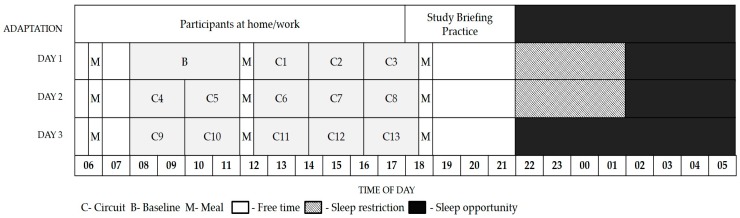
This study was designed to examine the effects of ambient heat on firefighters' physical task performance, and physiological and perceptual responses when sleep restricted during simulated wildfire conditions. Thirty firefighters were randomly allocated to the sleep restricted (n = 17, SR; 19 °C, 4-h sleep opportunity) or hot and sleep restricted (n = 13, HOT + SR; 33 °C, 4-h sleep opportunity) condition. Firefighters performed two days of simulated, intermittent, self-paced work circuits comprising six firefighting tasks. Heart rate, and core temperature were measured continuously. After each task, firefighters reported their rating of perceived exertion and thermal sensation. Effort sensation was also reported after each work circuit. Fluids were consumed ad libitum. Urine volume and urine specific gravity were analysed. Sleep was monitored using polysomnography. There were no differences between the SR and HOT + SR groups in firefighters' physiological responses, hydration status, ratings of perceived exertion, motivation, and four of the six firefighting tasks (charged hose advance, rake, hose rolling, static hose hold). Black out hose and lateral repositioning were adversely affected in the HOT + SR group. Working in hot conditions did not appear to consistently impair firefighters work performance, physiology, and perceptual responses. Future research should determine whether such findings remain true when individual tasks are performed over longer durations.
Keywords: firefighting; physical performance; sleep restriction; work physiology.
Conflict of interest statement
The authors declare no conflict of interest.
References
-
- McLennan J., Birch A. A potential crisis in wildfire emergency response capacity? Australia's volunteer firefighters. Environmental Hazards. 2005;6:101–107. doi: 10.1016/j.hazards.2005.10.003. - DOI
-
- Lieberman H.R., Niro P., Tharion W.J., Nindl B.C., Castellani J.W., Montain S.J. Cognition during sustained operations: Comparison of a laboratory simulation to field studies. Aviat. Space Environ. Med. 2006;77:929–935. - PubMed
Publication types
MeSH terms
LinkOut - more resources
Full Text Sources
Other Literature Sources
Research Materials
