


Pediatric, Adolescent, and Young Adult Thyroid Carcinoma Harbors Frequent and Diverse Targetable Genomic Alterations, Including Kinase Fusions
- PMID: 28209747
- PMCID: PMC5344643
- DOI: 10.1634/theoncologist.2016-0279
Pediatric, Adolescent, and Young Adult Thyroid Carcinoma Harbors Frequent and Diverse Targetable Genomic Alterations, Including Kinase Fusions
Abstract
Background: Thyroid carcinoma, which is rare in pediatric patients (age 0-18 years) but more common in adolescent and young adult (AYA) patients (age 15-39 years), carries the potential for morbidity and mortality.
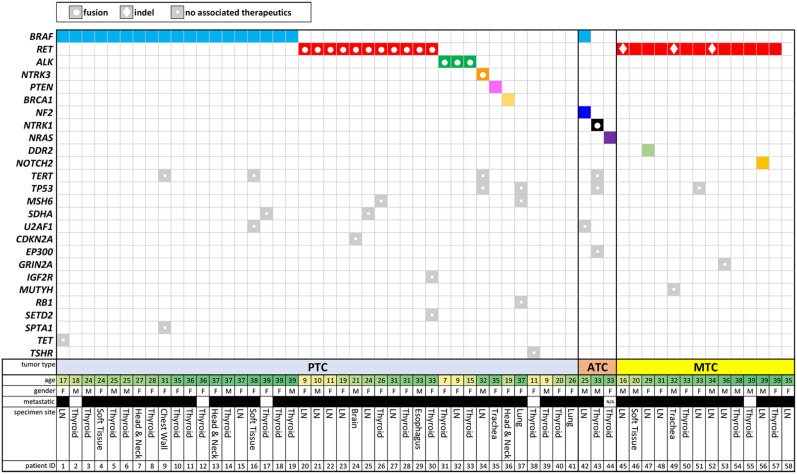
Methods: Hybrid-capture-based comprehensive genomic profiling (CGP) was performed prospectively on 512 consecutively submitted thyroid carcinomas, including 58 from pediatric and AYA (PAYA) patients, to identify genomic alterations (GAs), including base substitutions, insertions/deletions, copy number alterations, and rearrangements. This PAYA data series includes 41 patients with papillary thyroid carcinoma (PTC), 3 with anaplastic thyroid carcinoma (ATC), and 14 with medullary thyroid carcinoma (MTC).
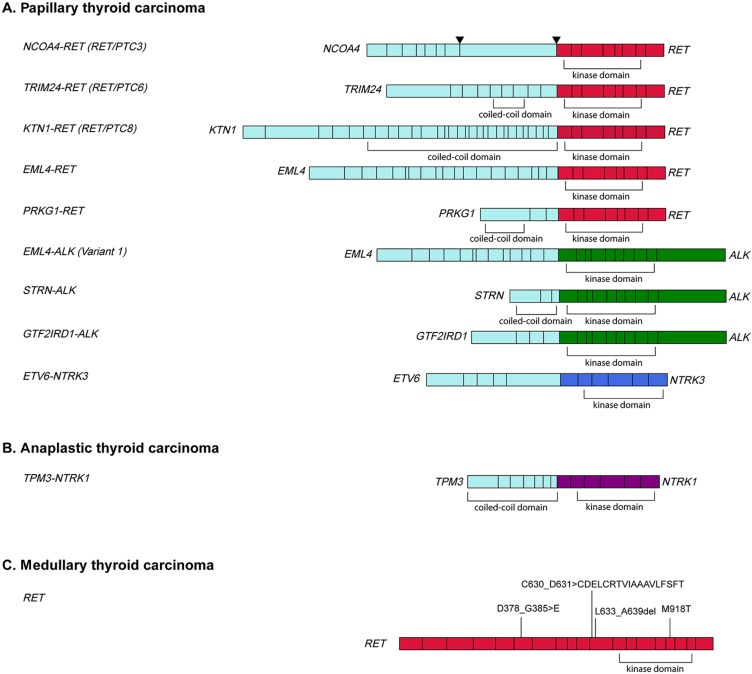
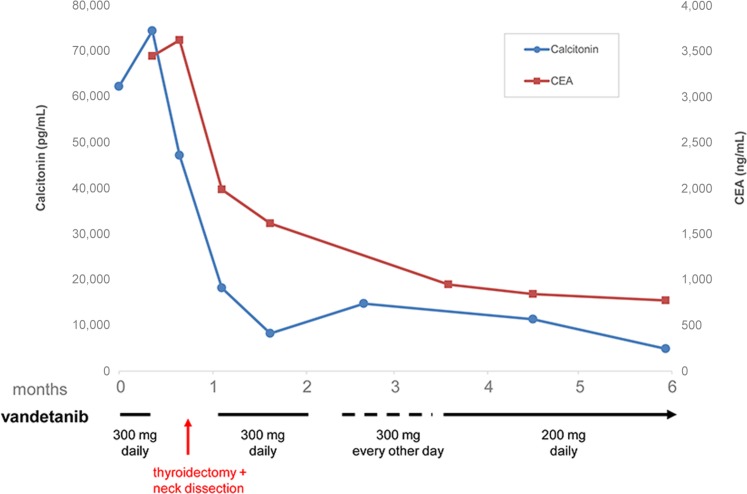
Results: GAs were detected in 93% (54/58) of PAYA cases, with a mean of 1.4 GAs per case. In addition to BRAF V600E mutations, detected in 46% (19/41) of PAYA PTC cases and in 1 of 3 AYA ATC cases, oncogenic fusions involving RET, NTRK1, NTRK3, and ALK were detected in 37% (15/41) of PAYA PTC and 33% (1/3) of AYA ATC cases. Ninety-three percent (13/14) of MTC patients harbored RET alterations, including 3 novel insertions/deletions in exons 6 and 11. Two of these MTC patients with novel alterations in RET experienced clinical benefit from vandetanib treatment.
Conclusion: CGP identified diverse clinically relevant GAs in PAYA patients with thyroid carcinoma, including 83% (34/41) of PTC cases harboring activating kinase mutations or activating kinase rearrangements. These genomic observations and index cases exhibiting clinical benefit from targeted therapy suggest that young patients with advanced thyroid carcinoma can benefit from CGP and rationally matched targeted therapy. The Oncologist 2017;22:255-263 IMPLICATIONS FOR PRACTICE: The detection of diverse clinically relevant genomic alterations in the majority of pediatric, adolescent, and young adult patients with thyroid carcinoma in this study suggests that comprehensive genomic profiling may be beneficial for young patients with papillary, anaplastic, or medullary thyroid carcinoma, particularly for advanced or refractory cases for which clinical trials involving molecularly targeted therapies may be appropriate.
Keywords: Comprehensive genomic profiling; Fusion; Genomics; Molecular targeted therapy; Oncogene proteins; Thyroid carcinoma; Vandetanib.
© AlphaMed Press 2017.
Conflict of interest statement
Figures


References
-
- Vergamini LB, Frazier AL, Abrantes FL et al. Increase in the incidence of differentiated thyroid carcinoma in children, adolescents, and young adults: A population‐based study. J Pediatr 2014;164:1481–1485. - PubMed
-
- Cordioli MI, Moraes L, Cury AN et al. Are we really at the dawn of understanding sporadic pediatric thyroid carcinoma? Endocr Relat Cancer 2015;22:R311–324. - PubMed
-
- Hogan AR, Zhuge Y, Perez EA et al. Pediatric thyroid carcinoma: Incidence and outcomes in 1753 patients. J Surg Res 2009;156:167–172. - PubMed
-
- Keegan TH, Ries LA, Barr RD et al. Comparison of cancer survival trends in the United States of adolescents and young adults with those in children and older adults. Cancer 2016;122:1009–1016. - PubMed
MeSH terms
Substances
Supplementary concepts
LinkOut - more resources
Full Text Sources
Other Literature Sources
Medical
Molecular Biology Databases
Research Materials
