


Klapp method effect on idiopathic scoliosis in adolescents: blind randomized controlled clinical trial
- PMID: 28210027
- PMCID: PMC5300793
- DOI: 10.1589/jpts.29.1
Klapp method effect on idiopathic scoliosis in adolescents: blind randomized controlled clinical trial
Abstract
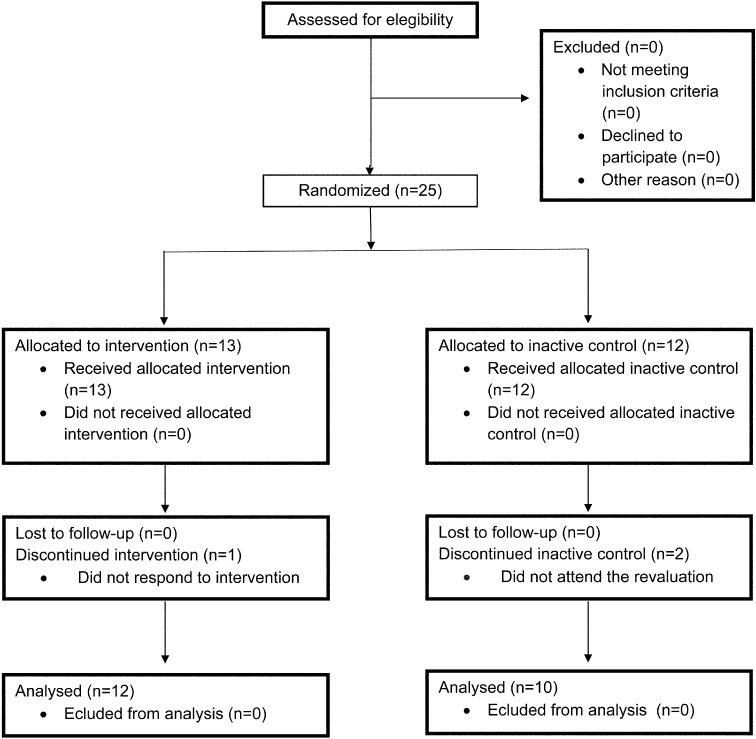
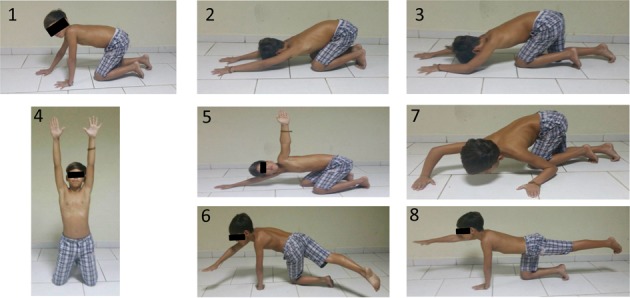
[Purpose] To estimate the effect of Klapp method on idiopathic scoliosis in school students. [Subjects and Methods] A single-blind randomized clinical trial with 22 students randomly divided into intervention group (n=12) and inactive control group (n=10). Exercise protocol consisted of Klapp method, 20 sessions, three times a week for intervention group, and inactivity for control group. Dorsal muscle strength was measured by dynamometer; body asymmetries and gibbosity angles were measured by biophotogrammetry. Data were obtained by Generalized Estimated Equation, with 5% significance level. Clinical impact for dependent variables was estimated by "d" Cohen. [Results] There was no change in intragroup analysis and intergroup for all postural symmetry variables. However, it was detected intergroup difference in extensor muscle strength and intergroup difference with marginal significance of gibbosity angles. Regarding extensor muscle strength, intervention group produced average improvement of 7.0 kgf compared to control group. Gibbosity angles progressed less in intervention group, with 5.71° average delay compared to control group. [Conclusion] Klapp method was effective for gibbosity stabilization and it improves spine extensor muscle strength.
Keywords: Physical therapy; Posture; Scoliosis.
Figures
References
-
- Santos CI, Cunha AB, Braga VP, et al. : Ocorrência de desvios posturais em escolares do ensino público fundamental de Jaguariúna, São Paulo. Rev Paul Pediatr, 2009, 27: 74–80.
LinkOut - more resources
Full Text Sources
Other Literature Sources