. 2017:2017:4024672.
doi: 10.1155/2017/4024672. Epub 2017 Jan 22.

The Parenteral Vitamin C Improves Sepsis and Sepsis-Induced Multiple Organ Dysfunction Syndrome via Preventing Cellular Immunosuppression

Affiliations

The Parenteral Vitamin C Improves Sepsis and Sepsis-Induced Multiple Organ Dysfunction Syndrome via Preventing Cellular Immunosuppression

Yu-Lei Gao et al. Mediators Inflamm. 2017.

Retraction in

Abstract

Cellular immunosuppression appears to be involved in sepsis and sepsis-induced multiple organ dysfunction syndrome (MODS). Recent evidence showed that parenteral vitamin C (Vit C) had the ability to attenuate sepsis and sepsis-induced MODS. Herein, we investigated the impact of parenteral Vit C on cellular immunosuppression and the therapeutic value in sepsis. Using cecal ligation and puncture (CLP), sepsis was induced in WT and Gulo-/- mice followed with 200 mg/Kg parenteral Vit C administration. The immunologic functions of CD4+CD25+ regulatory T cells (Tregs) and CD4+CD25- T cells, as well as the organ functions, were determined. Administration of parenteral Vit C per se markedly improved the outcome of sepsis and sepsis-induced MODS of WT and Gulo-/- mice. The negative immunoregulation of Tregs was inhibited, mainly including inhibiting the expression of forkhead helix transcription factor- (Foxp-) 3, cytotoxic T lymphocyte associated antigen- (CTLA-) 4, membrane associated transforming growth factor-β (TGF-βm+), and the secretion of inhibitory cytokines [including TGF-β and interleukin- (IL-) 10], as well as CD4+ T cells-mediated cellular immunosuppression which was improved by parenteral Vit C in WT and Gulo-/- septic mice. These results suggested that parenteral Vit C has the ability to improve the outcome of sepsis and sepsis-induced MODS and is associated with improvement in cellular immunosuppression.


Conflict of interest statement

The authors declare that they have no competing financial interests. This work is attributed to Tianjin Medical University General Hospital, Tianjin, China.

Figures
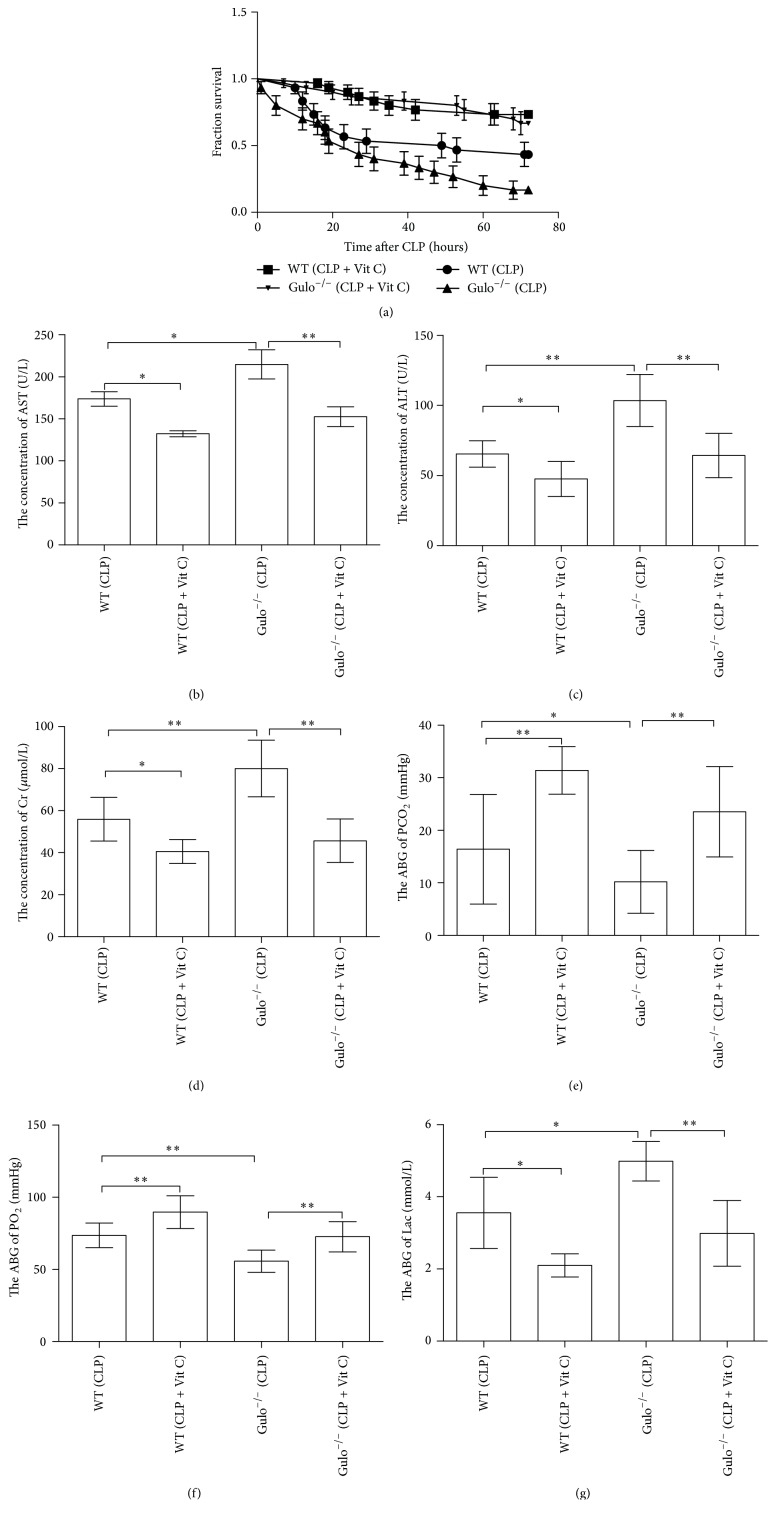
Figure 1
Figure 1
The impact of parenteral Vit C treatment on the 72-hour survival rate of septic mice and sepsis-induced MODS. The 72-hour survival rate of WT mice and Gulo−/− mice was improved on administration of 200 mg/Kg parenteral Vit C twice after CLP (a). Parenteral Vit C improved the biomarkers of liver (b and c), renal (d), respiratory (e and f), and circulatory (g) function in CLP-exposed WT mice and Vit C deficient Gulo−/− mice. The survival rate was analyzed by Kaplan-Meier via the log-rank test, n = 50 per group. WT (CLP) versus WT (CLP + Vit C), p < 0.01. Gulo−/− (CLP) versus Gulo−/− (CLP + Vit C), p < 0.01. WT (CLP) versus Gulo−/− (CLP), p < 0.05. Data were represented as mean ± standard deviation (SD) and analyzed by software SPSS 17.0 with one-way ANOVA, n = 4 per group, p < 0.05 or ∗∗p < 0.01.
Figure 2
Figure 2
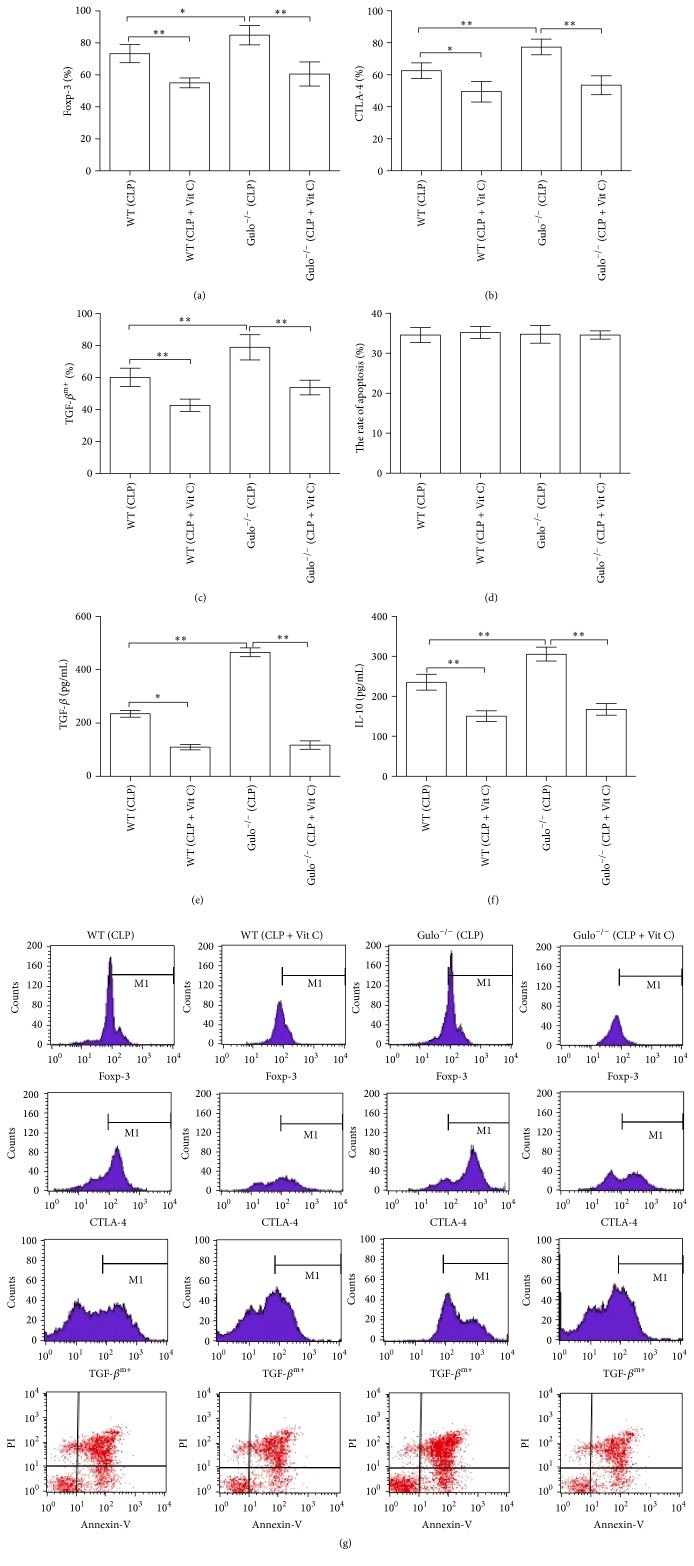
Parenteral Vit C markedly weakened the stability of CD4+CD25+ Tregs in sepsis. The expressions of Foxp-3, CTLA-4, and TGF-βm+, as well as the apoptotic ability of splenic CD4+CD25+ Tregs, were subjected to flow cytometric analysis by flow cytometer (g). Parenteral Vit C downregulated the expression of Foxp-3 (a), CTLA-4 (b), and TGF-βm+ (c) of CD4+CD25+ Tregs in sepsis. Parenteral Vit C did not alter the apoptotic ability of splenic CD4+CD25+ Tregs in sepsis (d). Parenteral Vit C inhibited the secretion of TGF-β (e) and IL-10 (f) from CD4+CD25+ Tregs in sepsis. Data were represented as mean ± standard deviation (SD) and analyzed by software SPSS 17.0 with one-way ANOVA, n = 4 per group, p < 0.05 or ∗∗p < 0.01.
Figure 3
Figure 3
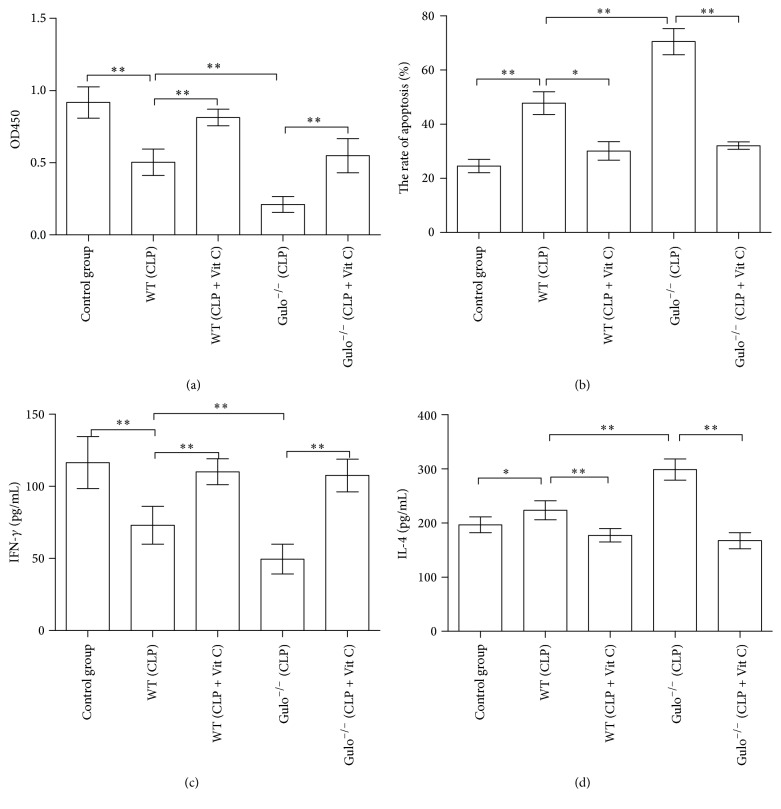
The impact of parenteral Vit C on the immunosuppressive function of CD4+CD25+ Tregs. The parenteral Vit C inhibited the immunosuppressive function of CD4+CD25+ Tregs which upregulated the proliferative response (a) and release of IFN-γ (c) but significantly downregulated the apoptotic rate (b) and release of IL-4 (d) of splenic conventional CD4+CD25 T cells. Data were represented as mean ± standard deviation (SD) and analyzed by software SPSS 17.0 with one-way ANOVA, n = 4 per group, p < 0.05 or ∗∗p < 0.01.
Figure 4
Figure 4
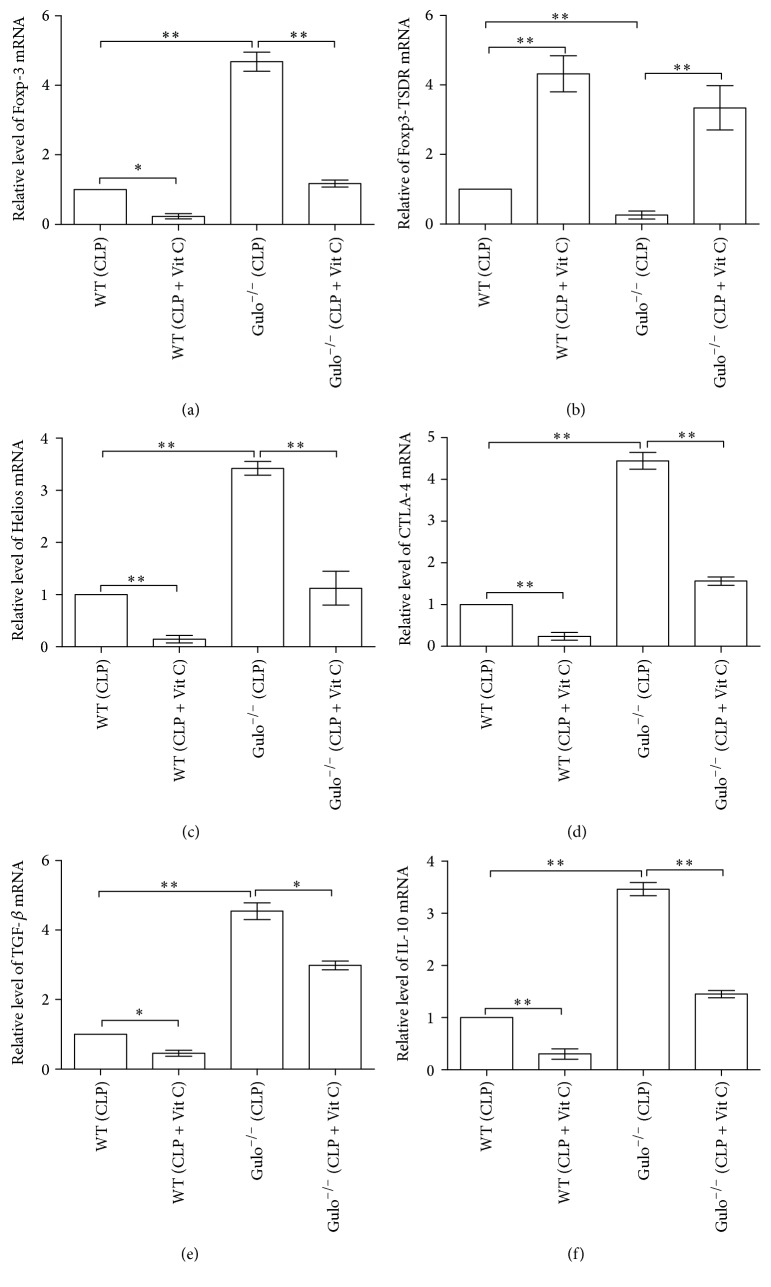
The impact of parenteral Vit C on the mRNA expression of Foxp-3, Helios, CTLA-4, TGF-β, IL-10, and the methylation level of Foxp3-TSDR mRNA in CD4+CD25+ Tregs; CD4+CD25+ Tregs were harvested for SYBR Green and Methylation-Sensitive RT-PCRT from every group after CLP. The parenteral Vit C inhibited the expression of Foxp-3 (a), Helios (c), CTLA-4 (d), TGF-β  (e), and IL-10 (f) but increased the methylation level of Foxp3-TSDR (b) in CD4+CD25+ Tregs. Data were represented as mean ± standard deviation (SD) and analyzed by software SPSS 17.0 with one-way ANOVA, n = 4 per group, p < 0.05 or ∗∗p < 0.01.
Figure 5
Figure 5
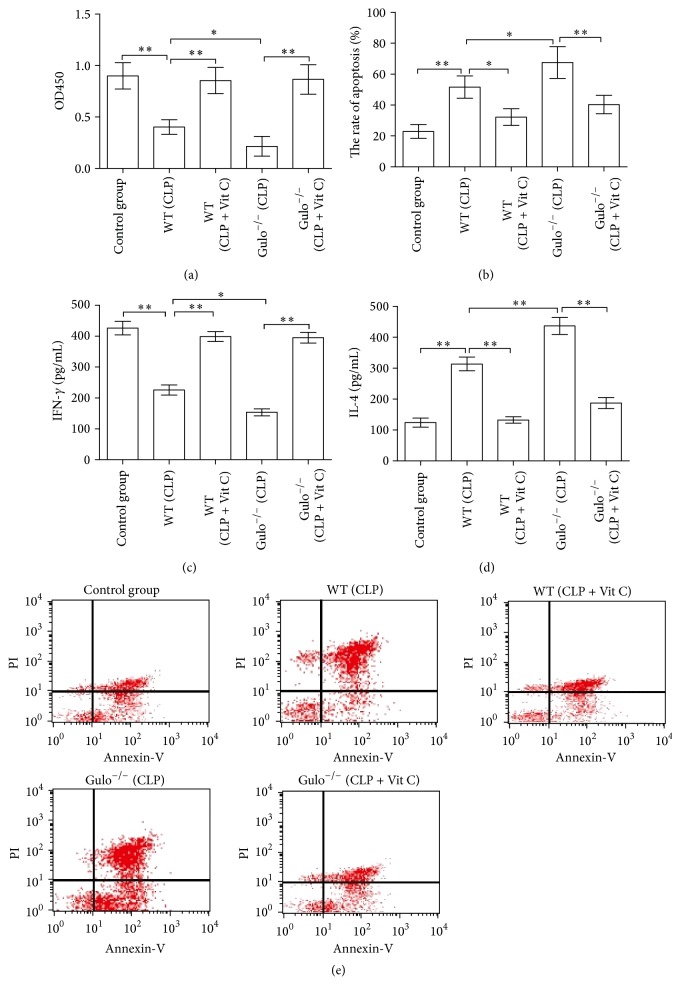
The impact of parenteral Vit C on CD4+ T cells-mediated cellular immunosuppression in sepsis. Treatment with 200 mg/Kg parenteral Vit C upregulated the proliferative response of CD4+CD25 T cells of WT mice and Gulo−/− mice in sepsis (a). The apoptotic rate of splenic CD4+CD25 T cells was analyzed with Annexin-V-FITC/PI by flow cytometry at 24 hours after CLP-induced midgrade sepsis (e). The apoptotic level of splenic CD4+CD25 T cells was decreased when 200 mg/Kg parenteral Vit C was administered after CLP to WT mice and Gulo−/− mice in sepsis (b). Parenteral Vit C increased the serum level of IFN-γ (c) as well as decreasing the serum levels of IL-4 (d) of WT mice and Gulo−/− mice in sepsis. Data were represented as mean ± standard deviation (SD) and analyzed by software SPSS 17.0 with one-way ANOVA, n = 4 per group, p < 0.05 or ∗∗p < 0.01.

References

    1. Singer M., Deutschman C. S., Seymour C. W., et al. The third international consensus definitions for sepsis and septic shock (Sepsis-3) The Journal of the American Medical Association. 2016;315(8):801–810. - PMC - PubMed
    1. Kaukonen K.-M., Bailey M., Pilcher D., Cooper D. J., Bellomo R. Systemic inflammatory response syndrome criteria in defining severe sepsis. The New England Journal of Medicine. 2015;372(17):1629–1638. doi: 10.1056/nejmoa1415236. - DOI - PubMed
    1. Gaieski D. F., Edwards J. M., Kallan M. J., Carr B. G. Benchmarking the incidence and mortality of severe sepsis in the united states. Critical Care Medicine. 2013;41(5):1167–1174. doi: 10.1097/CCM.0b013e31827c09f8. - DOI - PubMed
    1. Winters B. D., Eberlein M., Leung J., Needham D. M., Pronovost P. J., Sevransky J. E. Long-term mortality and quality of life in sepsis: a systematic review. Critical Care Medicine. 2010;38(5):1276–1283. doi: 10.1097/ccm.0b013e3181d8cc1d. - DOI - PubMed
    1. Inoue S., Suzuki-Utsunomiya K., Okada Y., et al. Reduction of immunocompetent T cells followed by prolonged lymphopenia in severe sepsis in the elderly. Critical Care Medicine. 2013;41(3):810–819. doi: 10.1097/CCM.0b013e318274645f. - DOI - PubMed

Publication types

MeSH terms