


Respiratory illness in children with disability: a serious problem?
- PMID: 28210329
- PMCID: PMC5297954
- DOI: 10.1183/20734735.017416
Respiratory illness in children with disability: a serious problem?
Abstract
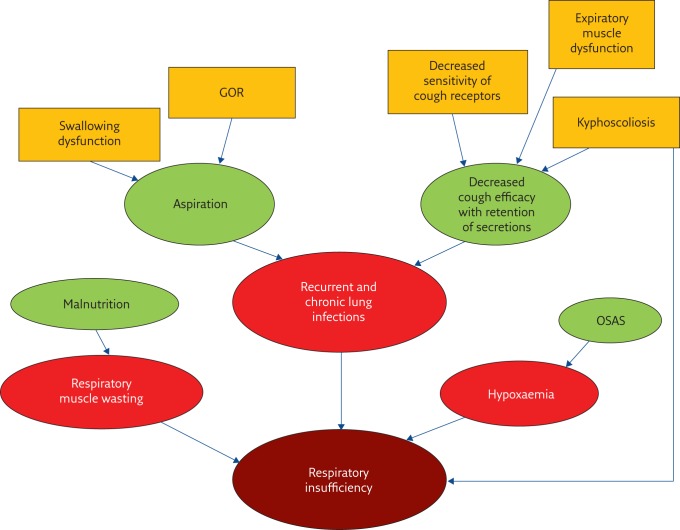
Key points: Children with neurocognitive impairment often present with chronic or recurrent respiratory problems.The respiratory problems have an important impact on quality of life and life expectancy.The underlying causes are multiple: risk of aspiration, insufficient cough, upper airway obstruction and progressive kyphoscoliosis.There is often a complex interplay between these known risk factors.The diagnostic and therapeutic approach should be multidisciplinary.
Educational aims: To provide data on the prevalence of respiratory problems in children with disability and to increase awareness on this topic.To provide insight into the complex interplay of the underlying causes and risk factors for chronic lung infection and respiratory failure.To give an overview of the diagnostic approaches relevant in this context.To highlight possible therapeutic approaches.To touch on ethical considerations in this group of vulnerable and complex patients.
Conflict of interest statement
Conflict of interest None declared.
Figures
References
-
- Hollins S, Attard MT, von Fraunhofer N, et al. . Mortality in people with learning disability: risks, causes, and death certification findings in London. Dev Med Child Neurol 1998; 40: 50–56. - PubMed
-
- Plioplys AV, Kasnicka I, Lewis S, et al. . Survival rates among children with severe neurologic disabilities. South Med J 1998; 91: 161–172. - PubMed
-
- Westbom L, Bergstrand L, Wagner P, et al. . Survival at 19 years of age in a total population of children and young people with cerebral palsy. Dev Med Child Neurol 2011; 53: 808–814. - PubMed
-
- Young NL, McCormick AM, Gilbert T, et al. . Reasons for hospital admissions among youth and young adults with cerebral palsy. Arch Phys Med Rehabil 2011; 92: 46–50. - PubMed
Publication types
LinkOut - more resources
Full Text Sources
Other Literature Sources