


Efficacy of HBM-Based Dietary Education Intervention on Knowledge, Attitude, and Behavior in Medical Students
- PMID: 28210498
- PMCID: PMC5301994
- DOI: 10.5812/ircmj.23584
Efficacy of HBM-Based Dietary Education Intervention on Knowledge, Attitude, and Behavior in Medical Students
Abstract
Background: Using various models of behavior change, a number of studies in the area of nutrition education have confirmed that nutrition habits and behaviors can be improved.
Objectives: This study sought to determine the effects of education on patterns of dietary consumption among medical students at the military university of Tehran, with a view to correcting those patterns.
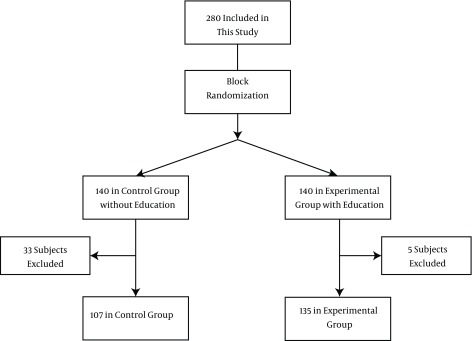
Methods: In this quasi-experimental study, 242 medical students from the Military University of Tehran were chosen by convenience sampling and then divided into control (n = 107) and intervention groups (n = 135) by block randomization. The self-administered questionnaire involving six categories of item (knowledge, perceived benefits, perceived barriers, perceived threats, self-efficacy and behavior) has been validated (Cronbach alpha > 0.7 for each).
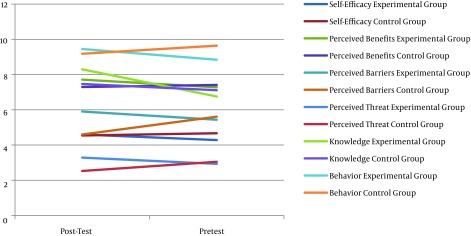
Results: Following the educational intervention, the mean score of knowledge, health belief model (HBM) structure, and behavior of students in relation to healthy patterns of food intake increased significantly (P < 0.05). The mean pre-intervention knowledge score was 6.76 (1.452), referring to threats to HBM constructs including perceived threat 2.93 (1.147), perceived benefits 7.28 (1.07), perceived barriers 5.44 (1.831), self- efficacy 4.28 (1.479), and behavior 8.84 (2.527). The post-intervention scores all improved as follows: knowledge 8.3 (1.503), perceived threats 3.29 (1.196), perceived benefits 7.71 (0.762), perceived barriers 5.9 (1.719), self- efficacy 4.6 (1.472), and behavior 9.45 (2.324). This difference in mean scores for knowledge, health belief structures and employee behavior before and after educational intervention was significant (P ≤ 0.05).
Conclusions: The significant improvement in the experimental group's mean knowledge, HBM structures , and behavior scores indicates the positive effect of the intervention.
Keywords: Education; Health; Nutrition Status; Students.
Figures
References
-
- Mirmiran P, Noori N, Zavareh M, Azizi F. Fruit and vegetable consumption and risk factors for cardiovascular disease. Metabolism. 2009;58(4):460–8. - PubMed
-
- Pourfarzi F, Whelan A, Kaldor J, Malekzadeh R. The role of diet and other environmental factors in the causation of gastric cancer in Iran—a population based study. Int J Care. 2009;125(8):1953–60. - PubMed
-
- Anisi J, Tavakoli H, Rahmati Najarkolaei F. A Survey to the Connection between Nutrition and Mental Health of the Staff of a Medical Sciences University. Journal Mil Med. 2013 Jul 15;15(2):149–56.
-
- Popkin BM. What can public health nutritionists do to curb the epidemic of nutrition‐related noncommunicable disease? Nutr Rev. 2009;67(s1):S79–82. - PubMed
LinkOut - more resources
Full Text Sources
Other Literature Sources