


Angiogenesis and Fibrogenesis in Chronic Liver Diseases
- PMID: 28210697
- PMCID: PMC5301407
- DOI: 10.1016/j.jcmgh.2015.06.011
Angiogenesis and Fibrogenesis in Chronic Liver Diseases
Abstract
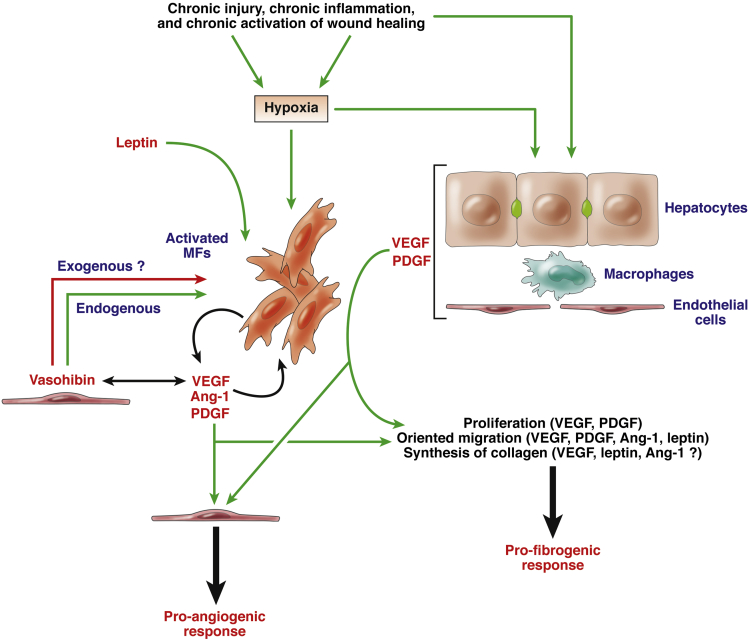
Pathologic angiogenesis appears to be intrinsically associated with the fibrogenic progression of chronic liver diseases, which eventually leads to the development of cirrhosis and related complications, including hepatocellular carcinoma. Several laboratories have suggested that this association is relevant for chronic liver disease progression, with angiogenesis proposed to sustain fibrogenesis. This minireview offers a synthesis of relevant findings and opinions that have emerged in the last few years relating liver angiogenesis to fibrogenesis. We discuss liver angiogenesis in normal and pathophysiologic conditions with a focus on the role of hypoxia and hypoxia-inducible factors and assess the evidence supporting a clear relationship between angiogenesis and fibrogenesis. A section is dedicated to the critical interactions between liver sinusoidal endothelial cells and either quiescent hepatic stellate cells or myofibroblast-like stellate cells. Finally, we introduce the unusual, dual (profibrogenic and proangiogenic) role of hepatic myofibroblasts and emerging evidence supporting a role for specific mediators like vasohibin and microparticles and microvesicles.
Keywords: ANGPTL3, angiopoietin-like-3 peptide; Akt, protein kinase B; Ang-1, angiopoietin-1; CCL2, chemokine ligand 2; CCR, chemokine receptor; CLD, chronic liver disease; ET-1, endothelin 1; HCC, hepatocellular carcinoma; HIF, hypoxia-inducible factor; HSC, hepatic stellate cell; HSC/MFs, myofibroblast-like cells from activated hepatic stellate cells; Hh, Hedgehog; Hypoxia; LSEC, liver sinusoidal endothelial cell; Liver Angiogenesis; Liver Fibrogenesis; MF, myofibroblast; MP, microparticle; Myofibroblasts; NAFLD, nonalcoholic fatty liver disease; NASH, nonalcoholic steatohepatitis; NO, nitric oxide; PDGF, platelet-derived growth factor; ROS, reactive oxygen species; VEGF, vascular endothelial growth factor; VEGF-R2, vascular endothelial growth factor receptor type 2; eNOS, endothelial nitric oxide synthase; α-SMA, α-smooth muscle actin.
Figures
References
-
- Medina J., Arroyo A.G., Sánchez-Madrid F., Moreno-Otero R. Angiogenesis in chronic inflammatory liver disease. Hepatology. 2004;39:1185–1195. - PubMed
-
- Lee J.S., Semela D., Iredale J. Sinusoidal remodeling and angiogenesis: a new function for the liver-specific pericyte? Hepatology. 2007;45:817–825. - PubMed
-
- Fernández M., Semela D., Bruix J. Angiogenesis in liver disease. J Hepatol. 2009;50:604–620. - PubMed
-
- Valfrè di Bonzo L., Novo E., Cannito S. Angiogenesis and liver fibrogenesis. Histol Histopathol. 2009;23:1324–1341. - PubMed
Publication types
LinkOut - more resources
Full Text Sources
Other Literature Sources
Miscellaneous
