


A Review on the Phytochemistry, Pharmacology, and Pharmacokinetics of Amentoflavone, a Naturally-Occurring Biflavonoid
- PMID: 28212342
- PMCID: PMC6155574
- DOI: 10.3390/molecules22020299
A Review on the Phytochemistry, Pharmacology, and Pharmacokinetics of Amentoflavone, a Naturally-Occurring Biflavonoid
Abstract
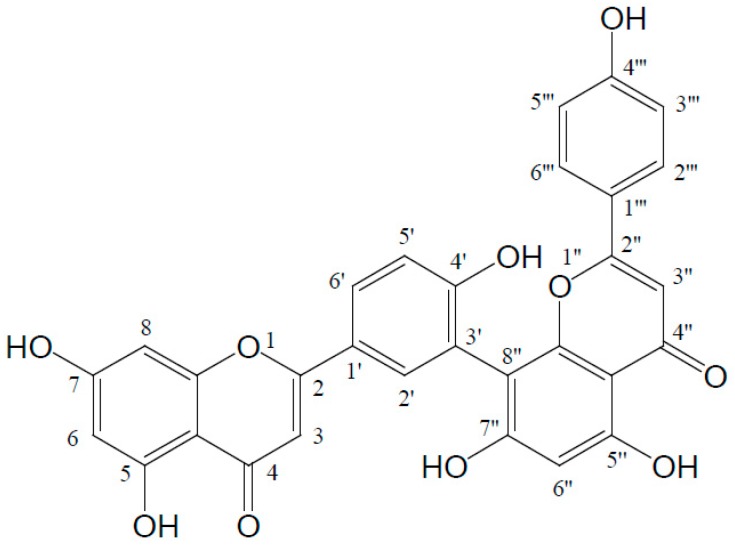
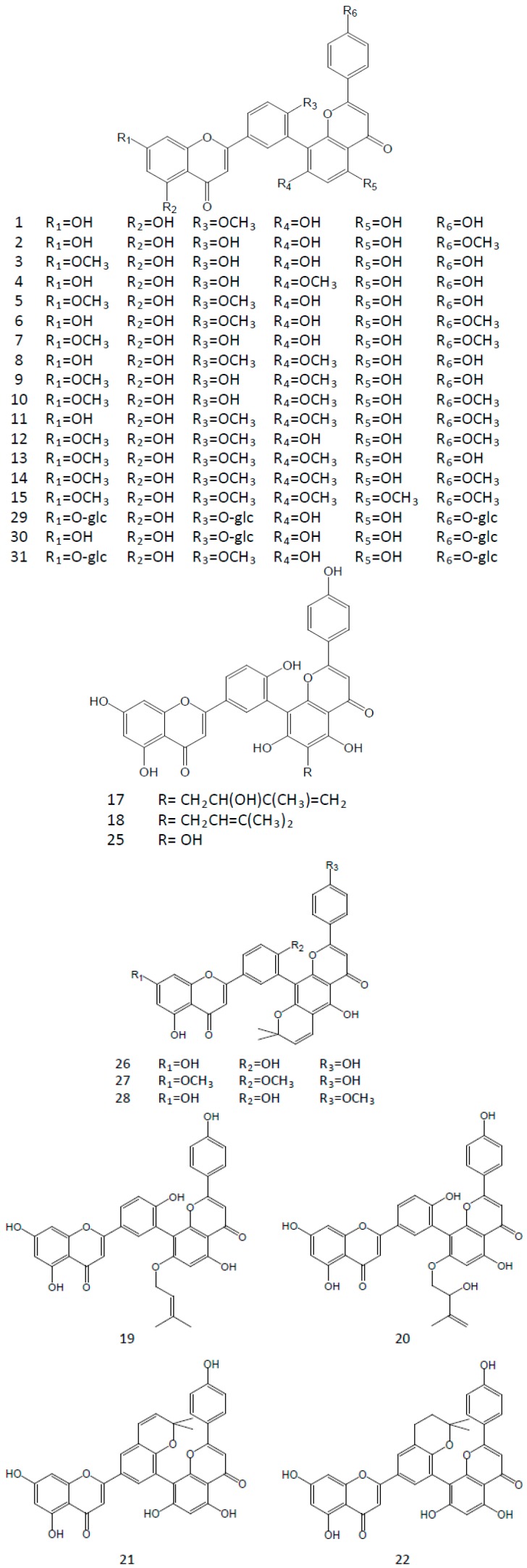
Amentoflavone (C30H18O10) is a well-known biflavonoid occurring in many natural plants. This polyphenolic compound has been discovered to have some important bioactivities, including anti-inflammation, anti-oxidation, anti-diabetes, and anti-senescence effects on many important reactions in the cardiovascular and central nervous system, etc. Over 120 plants have been found to contain this bioactive component, such as Selaginellaceae, Cupressaceae, Euphorbiaceae, Podocarpaceae, and Calophyllaceae plant families. This review paper aims to profile amentoflavone on its plant sources, natural derivatives, pharmacology, and pharmacokinetics, and to highlight some existing issues and perspectives in the future.
Keywords: amentoflavone; biflavonoid; natural derivatives; pharmacokinetics; pharmacology; phytochemistry.
Conflict of interest statement
All the authors declare no conflict of interest.
Figures
References
-
- Okigawa M., Hwa C.W., Kawano N., Rahman W. Biflavones in Selaginella species. Phytochemistry. 1971;10:3286–3287. doi: 10.1016/S0031-9422(00)97392-8. - DOI
-
- Arwa P.S., Zeraik M.L., Ximenes V.F., da Fonseca L.M., Bolzani V.S., Silva D.H.S. Redox-active biflavonoids from Garcinia brasiliensis as inhibitors of neutrophil oxidative burst and human erythrocyte membrane damage. J. Ethnopharmacol. 2015;174:410–418. doi: 10.1016/j.jep.2015.08.041. - DOI - PubMed
-
- Abdallah H.M., Almowallad F.M., Esmat A., Shehata I.A., Abdel-Sattar E.A. Anti-inflammatory activity of flavonoids from Chrozophora tinctoria. Phytochem. Lett. 2015;13:74–80. doi: 10.1016/j.phytol.2015.05.008. - DOI
Publication types
MeSH terms
Substances
LinkOut - more resources
Full Text Sources
Other Literature Sources
