


Prognostic and clinicopathological value of poly (adenosine diphosphate-ribose) polymerase expression in breast cancer: A meta-analysis
- PMID: 28212434
- PMCID: PMC5315304
- DOI: 10.1371/journal.pone.0172413
Prognostic and clinicopathological value of poly (adenosine diphosphate-ribose) polymerase expression in breast cancer: A meta-analysis
Abstract
Background: Previous studies have shown that the poly (adenosine diphosphate-ribose) polymerase (PARP) level is a promising indicator of breast cancer. However, its prognostic value remains controversial. The present meta-analysis evaluated the prognostic value of PARP expression in breast cancer.
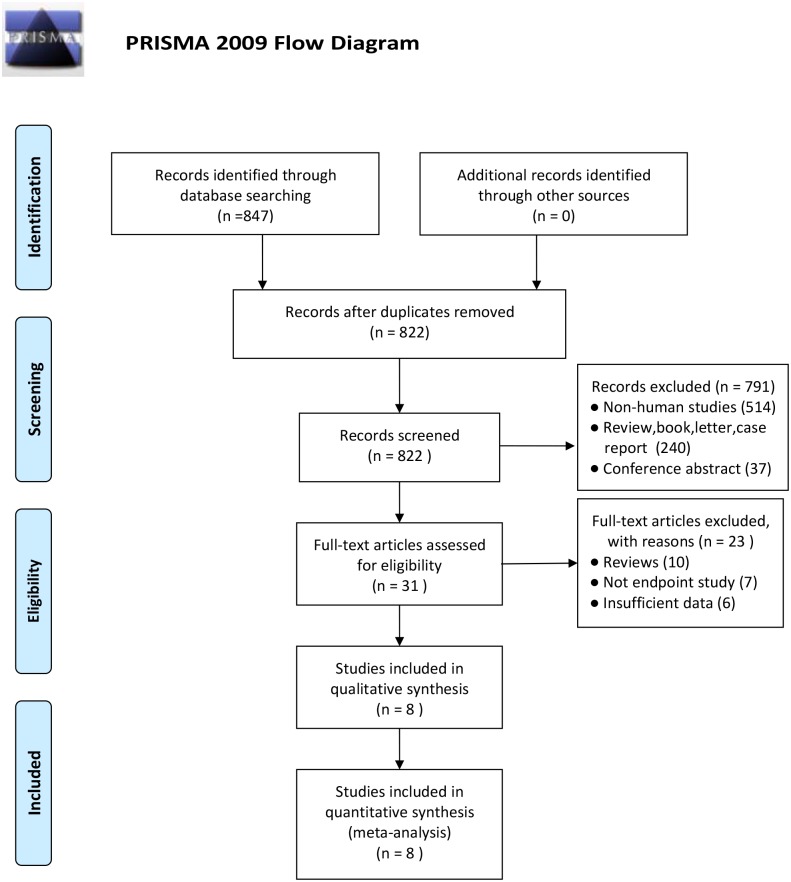
Materials and methods: Eligible studies were retrieved from the PubMed, Web of Science, Embase, and Cochrane Library databases through July 20, 2016. Studies investigating PARP expression as well as reporting survival data in breast cancer were included. Two independent reviewers carried out all literature searches. The pooled relative risk (RR) and hazard ratio (HR) with 95% confidence interval (95% CI) were applied to assess the association between PARP expression and the clinicopathological features and survival outcome in breast cancer.
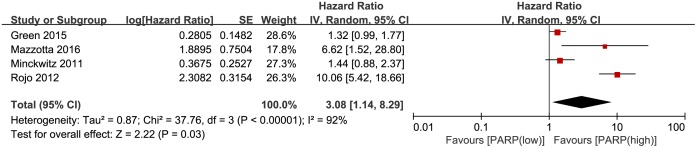
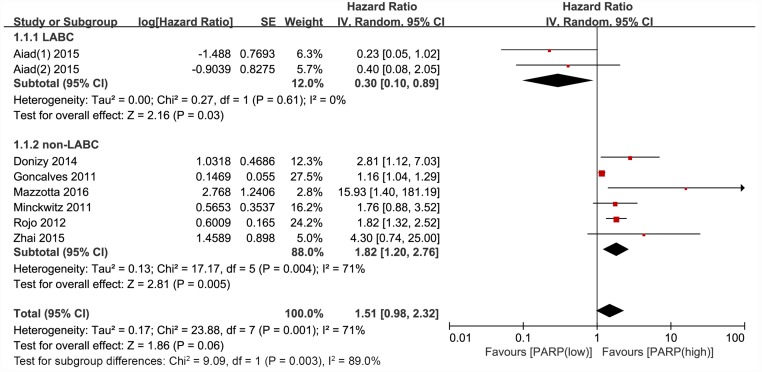
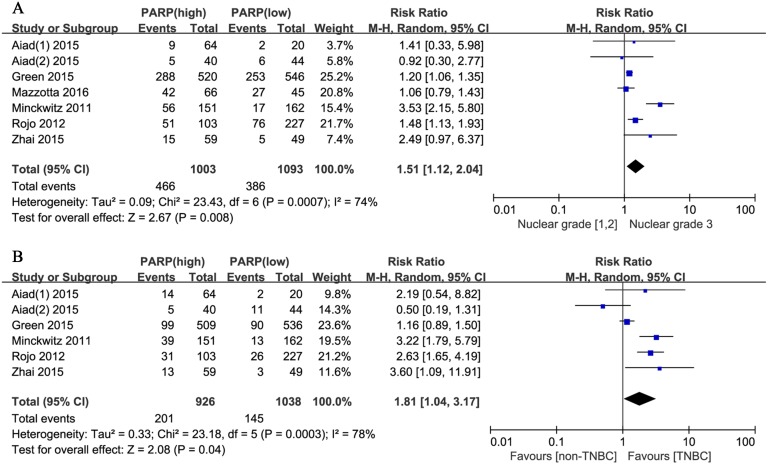
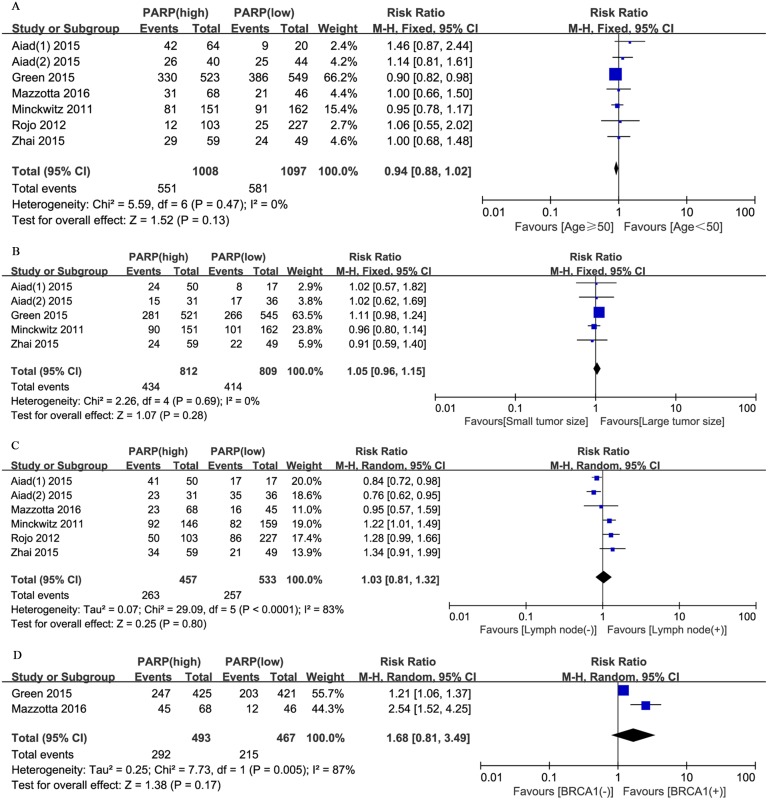
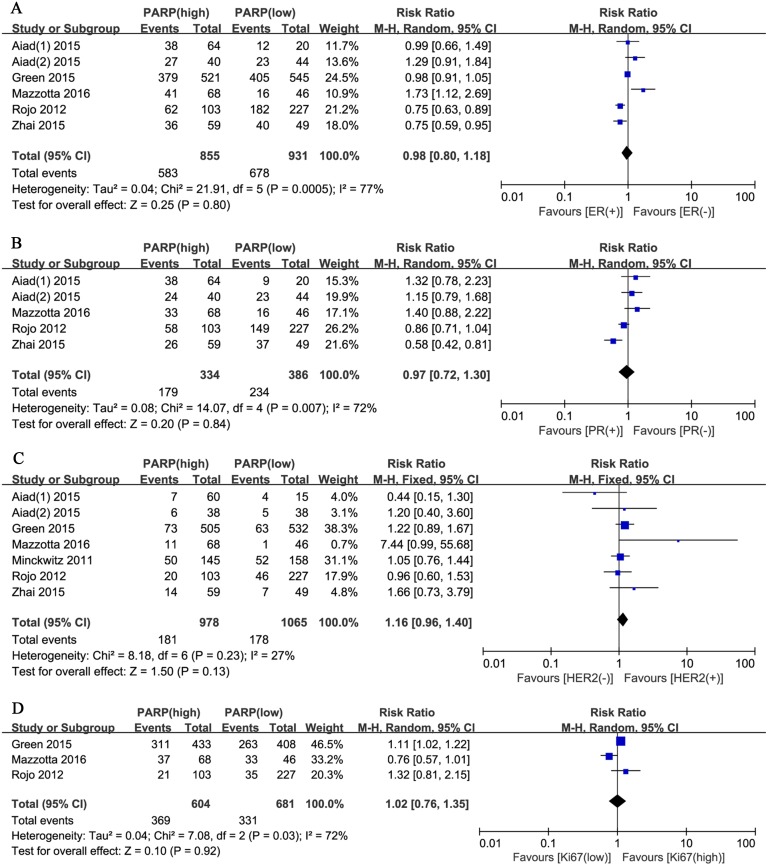
Results: A total of 3506 patients from eight eligible studies were included. We found that higher PARP expression indicated a worse clinical outcome in early stage breast cancer, with a HR of 3.08 (95% CI, 1.14-8.29, P = 0.03) for disease-free survival and a HR of 1.82 (95% CI, 1.20-2.76; P = 0.005) for overall survival. Moreover, increased PARP expression was significantly associated with higher nuclear grade (RR, 1.51; 95% CI, 1.12-2.04; P = 0.008) in breast cancer. A similar correlation was detected in triple-negative breast cancer (TNBC; RR, 1.81; 95% CI, 1.04-3.17; P = 0.04).
Conclusions: Our findings indicated that elevated PARP expression correlated with worse prognosis in early stage breast cancer. Furthermore, high PARP expression was associated with higher nuclear grade and TNBC.
Conflict of interest statement
Figures
References
-
- Goldhirsch A, Winer EP, Coates AS, Gelber RD, Piccart-Gebhart M, Thurlimann B, et al. Personalizing the treatment of women with early breast cancer: highlights of the St Gallen International Expert Consensus on the Primary Therapy of Early Breast Cancer 2013. Annals of oncology: official journal of the European Society for Medical Oncology / ESMO. 2013;24(9):2206–23. Epub 2013/08/07. - PMC - PubMed
-
- Ame JC, Spenlehauer C, de Murcia G. The PARP superfamily. BioEssays: news and reviews in molecular, cellular and developmental biology. 2004;26(8):882–93. Epub 2004/07/27. - PubMed
Publication types
MeSH terms
Substances
LinkOut - more resources
Full Text Sources
Other Literature Sources
Medical
